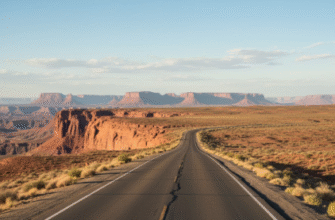
I’ve driven Highway 95 through Idaho more times than I care to count, and every single time I approach the Hell’s Canyon turnoff near Riggins, I get this weird knot in my stomach.
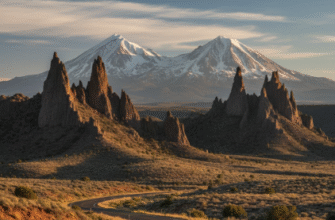
The Seven Devils Mountains loom up on the eastern side of the road like they’re trying to make a point about scale and human insignificance, which—honestly—they do pretty well. These peaks, the tallest hitting around 9,393 feet at He Devil Mountain, form this jagged wall between you and Hell’s Canyon, which is, for the record, the deepest river gorge in North America at roughly 7,993 feet deep (give or take, depending on where you measure). The Snake River carved this thing over something like 6 million years, slicing through basalt flows and older rock formations with the kind of patience that makes you feel exhausted just thinking about it. The Seven Devils themselves are remnants of an island arc that collided with North America way back in the Mesozoic, around 150 million years ago, which geologists love to bring up at parties. The Columbia River basalts didn’t reach this far south with the same intensity, so you get this mix of volcanic and metamorphic rock that creates these sharp, hostile-looking ridgelines.
Wait—maybe hostile isn’t fair. They’re just indifferent, which is somehow worse. You can access some of the Seven Devils via Forest Service roads that branch off Highway 95, but here’s the thing: those roads aren’t always maintained, and cell service is a joke up there.
The Drive Itself Is a Study in Contradictions and Occasional White Knuckles
Highway 95 doesn’t actually go through Hell’s Canyon—it runs parallel to it, north-south, hugging the western edge of Idaho like it’s trying to avoid commitment. Between Riggins and the Oregon border, the road twists through the Salmon River canyon first, then climbs and drops through these weird little valleys where you’ll pass ghost towns and active ranches in the same mile. The pavement quality varies wildly; some stretches are smooth enough to lull you into complacency, then you hit a section that feels like it was resurfaced during the Carter administration. I used to think the scenic overlooks were the main attraction, but turns out the real drama is in the transitions—when you crest a ridge and suddenly the whole Hell’s Canyon complex spreads out to the east, these layers of ridges fading into blue haze.
The lighting changes everything, obviously. Morning drives give you this sharp, almost clinical clarity where every rock face stands out. Late afternoon, though, the whole landscape goes amber and soft, and the Seven Devils lose their menace.
Traffic is light most of the year, except during hunting season when every other vehicle is a pickup with an ATV in the bed. The locals drive like they know exactly where every pothole and tight curve is, which they probably do. Tourists—and I include myself in this category, even after all those drives—tend to pull over too much, jamming up the few turnouts trying to get photos that never quite capture the verticality of it all. There’s this one spot near the Kleinschmidt Grade where the elevation change is so abrupt you can see weather systems stacking up against the mountains, clouds just sort of piling into the peaks like they’ve hit a wall, which I guess they definately have.
Why the Seven Devils Got Their Name and Why It Probably Should Have Been Worse
The naming story is predictably grim. Indigenous peoples—primarily the Nez Perce—had their own names for these peaks, which we mostly ignored in favor of a legend about seven giant devils who supposedly terrorized the area until Coyote (the trickster figure, not the animal, though the distinction gets blurry in some tellings) turned them to stone. Early white settlers heard some version of this story, or made it up, or just thought the mountains looked evil, and the name stuck. He Devil and She Devil are the two highest peaks, because apparently 19th-century settlers couldn’t resist gendering their mountains. The whole range has this reputation for being difficult to navigate—steep approaches, unstable scree fields, weather that changes hourly—but modern climbers tackle it regularly, usually starting from the Windy Saddle trailhead.
I tried hiking up to the Devils Throne once, got maybe three miles in before my knees started filing complaints. The trail gains something like 4,000 feet over seven miles, which doesn’t sound that bad until you’re actually doing it with wildflowers blooming all around you like they’re mocking your cardiovascular limitations. The views from up there—assuming you make it—give you the full Hell’s Canyon perspective, the Snake River just this thin silver thread way down below.
Anyway, if you’re driving Highway 95 for the scenery, budget extra time. The temptation to stop is constant, and the road doesn’t forgive distraction.