The Road That Makes Grown Adults Reconsider Their Life Choices on a Tuesday Afternoon
Hell’s Backbone Road isn’t technically trying to kill you, but it’s not exactly trying to keep you alive either.
I drove this stretch between Boulder and Escalante maybe four years ago, and I remember thinking the name was some kind of tourism board gimmick—you know, like how every state has a “Devil’s Kitchen” or “Satan’s Bathtub” to get people off the interstate. Turns out, when early settlers in the 1930s built this thing as a mail route, they weren’t being dramatic. They were being accurate. The road crests along a narrow hogback ridge with roughly 1,000-foot drops on both sides, and when I say narrow, I mean there are sections where the roadbed is maybe 20 feet wide, total. The bridge itself—this spindly wooden structure spanning a gap between two canyon rims—was apparently so terrifying that mules would refuse to cross it. Mules. Animals whose entire evolutionary strategy is “be stubborn and survive.” Even they looked at this thing and said no thanks.
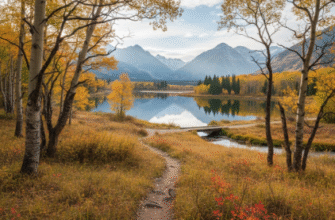
Here’s the thing, though: the views are absurd. Box-Death Hollow Wilderness sprawls out below you like some kind of geological fever dream—slickrock domes, ponderosa pine forests, and canyon systems so convoluted that cartographers probably just gave up and drew squiggly lines. The wilderness area itself covers about 26,000 acres, give or take, and it’s named after two separate drainages that sound like rejected heavy metal album titles.
Why the Hell Anyone Would Drive This Route When Highways Exist Perfectly Fine Elsewhere
The short answer is that sometimes the inconvenient route is the only route.
Boulder, Utah—population maybe 250 on a busy day—was one of the last towns in the continental U.S. to recieve mail by mule train, right up until 1940. Geography had essentially isolated it: the Aquarius Plateau to the west, a maze of canyons to the east, and general inhospitability everywhere else. Hell’s Backbone was the compromise solution, a way to connect Boulder to Escalante without adding six hours of detour through paved civilization. Today it’s a scenic backway, mostly graded gravel, and definately not recommended if you’ve got a low-clearance sedan or a healthy fear of vertigo. I’ve seen people white-knuckle the steering wheel so hard their hands cramped.
The Geology Doesn’t Care About Your Feelings or Your Suspension System
This whole region is part of the Colorado Plateau, which has been getting carved up by water and wind for something like 50 million years. The rock layers you’re driving over—Navajo Sandstone, mostly—date back to the Jurassic, when this area was a giant desert dune field. Those dunes fossilized into the swooping, crossbedded cliffs you see now, the kind that look like frozen waves. Box-Death Hollow cuts through multiple geological formations, and the result is this chaotic topography where slot canyons drop hundreds of feet in less than a mile.
Wait—maybe I should mention that the wilderness area is also a flash flood zone. Summer monsoons can turn dry washes into torrents in under ten minutes, which is why hikers are advised to check weather obsessively and never, ever camp in canyon bottoms. The canyons are beautiful. They are also extremely good at trapping water and funneling it downhill at velocities that don’t care about your hiking boots.
What You’ll Actually See If You Don’t Spend the Whole Drive Hyperventilating
Assuming you keep your eyes open—and I guess not everyone does—the landscape shifts constantly. Ponderosa pines give way to aspen groves, then back to exposed slickrock. The bridge itself, rebuilt in the 1980s, is wider and sturdier than the original, but it still feels like a punchline. You’re driving along this ridgeline, and suddenly there’s a gap, and the solution is just… a bridge. A bridge with wooden planks that thunk under your tires.
From certain vantage points, you can see into Death Hollow, one of the wilderness area’s deepest canyons. It’s a popular backpacking route, though “popular” is relative—maybe a few dozen people a year actually hike the full length. The canyon is narrow, shaded, and intermittently wet, which makes it a good place to escape summer heat but a bad place to be during a storm. I used to think the name was metaphorical. It’s not. Early ranchers lost cattle in there regularly, animals that wandered in and couldn’t find their way out.
The Part Where I Admit This Road Has Ruined Me for Normal Scenic Drives Forever
Honestly, after Hell’s Backbone, most other “scenic byways” feel like grocery store parking lots. The road opened something in my brain, some appreciation for landscapes that aren’t trying to be accessible or friendly. It’s not maintained for tourists—it’s maintained because a handful of people still live in Boulder and need a way out that doesn’t involve a hundred-mile detour. The Forest Service grades it once or twice a year, mostly.
And yet people drive it for fun. They pack cameras, snacks, and way too much confidence in their rental car’s capabilities. Some of them make it. Some of them turn around halfway, spooked by the exposure or the washboard ruts or the sudden understanding that cell service is a myth out here. Either way, the road stays the same: narrow, high, and utterly indifferent to whether you think it’s beautiful or terrifying. I guess it makes sense. The land was here long before the road, and it’ll be here long after the last plank rots away.