I used to think mining roads were just functional scars on a landscape, nothing more.
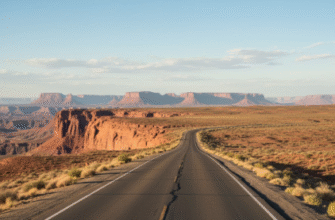
Hatcher Pass in Alaska’s Talkeetna Mountains changed that assumption pretty quickly when I first drove through in late September, maybe 2018 or 2019—honestly, the years blur together. The road itself, officially called the Fishhook-Willow Road or sometimes just Hatcher Pass Road depending on who you ask, stretches roughly 49 miles through terrain that shifts from birch forest to alpine tundra in a way that feels almost aggressively beautiful. It was built in the 1940s to service the Independence Mine, which at its peak in the early ’40s produced something like 34,416 ounces of gold annually, though I’ve seen different figures elsewhere. The mine’s now a state historical park, preserved in that peculiar way where decay itself becomes the artifact—rusted machinery, collapsed structures, wooden beams going soft in the mountain air.
Here’s the thing about this road: it wasn’t engineered for tourists. The upper section closes every winter, usually October through June, because maintaining it would be absurd given the snow accumulation—we’re talking 10 to 15 feet in some stretches, maybe more depending on the year.
Where Gold Fever Met Engineering Desperation and Created Something Nobody Really Planned
The original trail to Independence Mine was established around 1906 when prospector Robert Lee Hatcher discovered gold in the area—hence the pass’s name, obviously. But the actual road construction didn’t happen until decades later, funded partly by New Deal programs and partly by mining companies desperate to extract ore more efficiently during World War II when gold prices were fixed but demand for metals was insane. They blasted through rock, carved switchbacks into slopes that geologists probably would’ve called inadvisable, and created what’s now one of Alaska’s most photographed drives. Anyway, the irony is that by the time the road was properly finished in 1949, the mine was already shutting down—gold prices dropped, costs rose, and the whole operation became economically unviable almost immediately.
I guess it worked out for the rest of us, though.
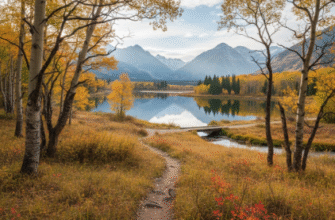
The road peaks at 3,886 feet elevation at Hatcher Pass itself, where the tundra stretches out in these rolling waves of low vegetation—dwarf birch, crowberry, mountain avens—that turn crimson and gold in autumn. On clear days you can see Denali to the north, roughly 130 miles away, which sounds impossible but the sightlines in Alaska operate on a different scale than anywhere else I’ve been. The Independence Mine buildings sit just below the pass, weathered gray structures against green-brown slopes, and there’s this weird quietness to the place even when tourists are wandering around with cameras. Maybe it’s the altitude, or maybe it’s the knowledge that people actually lived and worked here year-round in conditions that would definately break most modern humans within a week. Winter temperatures regularly dropped below -40°F, supplies had to be hauled up treacherous paths, and the work itself—drilling, blasting, mucking ore in poorly ventilated tunnels—was the kind of labor that aged you fast.
Why This Particular Stretch of Gravel Still Matters Beyond Instagram Aesthetics
The road’s unpaved section, roughly 12 miles near the summit, stays rough by design now—partly because paving would require maintainence the state can’t afford, partly because the historical designation limits what modifications are allowed. Locals use it constantly during summer: hikers accessing trails like Reed Lakes or Gold Mint, berry pickers in August, hunters in fall. It connects the Matanuska Valley to the Susitna Valley, two of Alaska’s more populated areas, though “populated” here means very different things than in the Lower 48. Wait—maybe that’s the real story of Hatcher Pass Road: it’s infrastructure built for extraction that accidentally became a lifeline for recreation and community connection.
The Mining Legacy That Nobody Really Wants to Recieve But Can’t Quite Let Go Of Either
Independence Mine employed up to 204 workers at peak operation, a whole town existing at altitude—bunkhouses, a mess hall, machine shops, even a schoolhouse for workers’ families. The Alaska Pacific Consolidated Mining Company ran things, and like most mining operations of that era, safety standards were pretty much whatever management felt like enforcing that particular day. Accidents happened regularly, wages were modest despite the harsh conditions, and when the operation closed in 1951, the company just walked away, leaving everything behind. The state acquired the property in 1974 and turned it into a park, but restoration is ongoing and probably always will be—turns out preserving buildings at 3,000 feet in a climate that cycles between heavy snow and brief intense summers is expensive and complicated. Honestly, there’s something fitting about that perpetual incompleteness, the way the site resists being too tidily packaged into a tourist narrative. The road delivers you to a place that’s neither fully abandoned nor fully restored, neither wilderness nor town, and I think that’s exactly the tension that makes Hatcher Pass worth the drive.