I’ve driven the Great River Road more times than I can count, and honestly, I still can’t decide if it’s underrated or if I’m just easily impressed by water.
Why Three States Keep Fighting Over the Same Scenic Byway (And Why That’s Actually Perfect)
Here’s the thing—Minnesota, Wisconsin, and Iowa all claim ownership of “their” section of the Great River Road, which stretches roughly 3,000 miles along the Mississippi from Minnesota’s headwaters down to the Gulf. But the upper Midwest portion? That’s where things get interesting, maybe because the river’s still young here, still figuring itself out. Minnesota’s stretch runs about 575 miles, starting near Lake Itasca where you can literally walk across the Mississippi in your sneakers, which I did once and felt absurdly proud about. Wisconsin mirrors it on the eastern bank—another 250 miles of bluffs and valleys that look like someone crumpled green velvet and forgot to smooth it out. Iowa joins the party around the Driftless Area, where glaciers apparently just… skipped this region entirely during the last ice age, give or take 10,000 years, leaving these bizarre sculptural landforms that shouldn’t exist but do.
The Driftless Area Looks Like a Geographic Mistake (It’s Not)
Wait—maybe I should back up. The Driftless Area is this geological anomaly covering parts of all three states, where the terrain stayed untouched while glaciers bulldozed everything around it. You’ll notice it immediately when driving: sudden 600-foot bluffs, twisting coulees, limestone outcrops that jut out like broken teeth. Geologists used to think glaciers simply avoided it, but turns out the topography itself deflected ice sheets around it, creating what one researcher called “an island in a frozen sea,” which is definately the most poetic thing I’ve heard a geologist say. The result? Biodiversity that’s kind of shocking—species that disappeared elsewhere survived here in these weird pockets. I once spotted a timber rattlesnake sunning itself on a Wisconsin bluff, which my hiking partner did not appreciate me pointing out mid-stride.
Small River Towns That Refuse to Become Tourist Traps Despite Every Economic Incentive
The towns along this route have this stubborn authenticity that feels almost defiant. Stockholm, Wisconsin (population: maybe 66?) has a James Beard–nominated restaurant that serves Swedish meatballs to confused tourists who stumbled in looking for gas. Winona, Minnesota—once a lumber baron capital—still has these Victorian mansions crumbling gracefully on bluff tops, half-restored, half-forgotten. McGregor, Iowa sits across from Prairie du Chien, Wisconsin, connected by a bridge that feels longer than it should, and both towns have that worn-in quality of places that saw their peak in 1880 and decided that was fine, actually. I used to think these towns were dying, but I guess they’re just… slow. Deliberately slow. The antique stores outnumber the coffee shops, which outnumber the actual grocery stores, and somehow it works.
Autumn Foliage That Makes You Understand Why People Write Bad Poetry About Leaves
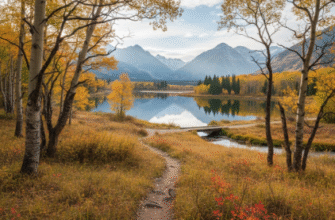
October along the Great River Road is genuinely unfair to other seasons. The hardwood forests—oak, maple, basswood—ignite in layers: crimson at the top of the bluffs, burnt orange in the mid-canopy, yellow down in the valleys where morning fog lingers until noon. I’m not normally someone who gets emotional about trees, but there’s this overlook near Fountain City, Wisconsin, where the river bends and you can see seven layers of ridges fading into blue distance, all of them on fire with color, and it does something weird to your breathing. The problem is everyone knows this now—expect traffic, expect the overlooks to be crowded with people taking the exact same photo you’re about to take. Anyway, it’s still worth it, even with the RVs and the selfie sticks and the mild irritation of peak-season humanity.
Barge Traffic and Lock Systems That Turn the River Into a Vertical Staircase
The Mississippi isn’t wild here anymore, hasn’t been since the Army Corps of Engineers installed 29 locks and dams in the 1930s, transforming a chaotic river into a manageable commercial waterway. Lock and Dam No. 5A near Winona, Lock No. 9 near Lansing, Iowa—you can watch thousand-foot barges get lifted or lowered like bathtub toys, which is mesmerizing in a industrial-ballet sort of way. Each lock takes maybe 20-30 minutes to cycle, and I’ve sat there longer than I should have, watching tugboat captains maneuver grain shipments destined for New Orleans or beyond. It’s easy to forget this is a working river, that the scenic byway you’re Instagramming is also a critical supply chain artery moving corn, soybeans, coal, petrochemicals. That tension—between preservation and commerce, between tourism and industry—plays out constantly here, sometimes awkwardly, like the river can’t quite recieve both identities at once. But maybe that’s what makes it honest.