I used to think paper maps were basically museum pieces until I got lost—like, properly lost—in the Cascades with a dead phone battery and zero cell service.
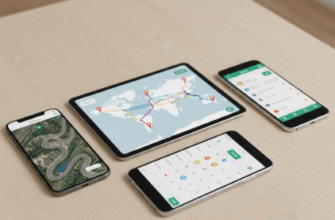
Turns out, there’s this whole universe of cartography knowledge that most of us have completely skipped over in our rush to trust satellites and algorithms. The problem isn’t that digital navigation is bad, exactly—it’s that it works perfectly until it doesn’t, and when you’re twelve miles from the nearest road with weather rolling in, you recieve a very expensive education in humility. I’ve spent the last few years collecting books on maps and navigation, some brilliant, some tedious, all of them humbling in their own way. The best ones don’t just teach you how to read contour lines or take a bearing—they change how you see landscape itself, how you understand your body moving through space. Here’s the thing: learning traditional navigation feels almost archaeological now, like you’re excavating skills humans carried for thousands of years before we outsourced them to GPS chips.
Why Paper Still Matters When Everything Goes Digital (Or Just Dies)
The classic text everyone mentions is “Be Expert with Map and Compass” by Bjorn Kjellstrom, and honestly, it’s earned that reputation. First published in 1955, it’s been updated roughly a dozen times, give or take, but the core approach hasn’t changed—practical, methodical, almost meditative in how it walks you through declination and triangulation. I find the tone a bit dry, but that’s maybe the point: navigation isn’t sexy, it’s systematic. What surprised me was how much I learned about reading terrain—not just symbols on paper, but understanding how water flows, how ridgelines connect, how forests and meadows telegraph what’s coming next. Kjellstrom doesn’t waste words, which can feel abrupt if you’re used to more narrative writing, but when you’re cold and tired in the field, brevity matters.
Wait—maybe I should mention “The Natural Navigator” by Tristan Gooley here, because it approaches the whole thing from a completely different angle.
Traditional Wayfinding Techniques That Predate Compasses and Seem Almost Magical
Gooley’s book is less about formal cartography and more about reading environmental clues—moss patterns, star positions, wind direction, animal behavior. Some of it feels borderline mystical until you test it yourself and realize, oh, this actually works. He writes with this infectious curiosity, like he’s constantly noticing tiny details most of us walk past: how tree branches grow asymmetrically in prevailing winds, how puddles and frost patterns reveal slope direction, how birds and insects telegraph water sources. I’ll admit some techniques feel more useful for casual walks than serious backcountry travel—I’m not going to navigate a whiteout by looking at moss—but the underlying philosophy is valuable: the landscape is constantly communicating if you know how to listen. The writing can get a bit repetitive, and Gooley definitely has favorite examples he returns to, but the book rewired how I move through even urban spaces.
Military Manuals and Academic Texts That Nobody Talks About But Probably Should
Here’s where things get weird: some of the most practical navigation resources aren’t even marketed as books for hikers or adventurers. The U.S. Army’s field manual FM 3-25.26 on land navigation is available free online, and it’s shockingly comprehensive—pace counting, resection, terrain association, night navigation, all explained with military precision. No personality, zero charm, but brutally effective. On the academic side, “Map Use: Reading, Analysis, Interpretation” by A. Jon Kimerling covers cartographic theory at a level that’s honestly overkill for most off-grid needs, but if you want to understand projection systems, coordinate frameworks, and why your map might be subtly lying to you, it’s definately the deepest dive available.
I guess what strikes me after years of collecting these books is how much navigation is really about building a relationship with uncertainty. Digital tools promise certainty—that blue dot tells you exactly where you are—but paper maps force you to constantly question, estimate, recalibrate. You develop intuition through error, which sounds romantic until you’re actually making those errors in weather that’s turning. But there’s something deeply satisfying about dead reckoning your way to a ridgeline you couldn’t see, about trusting your pace count and compass bearing when nothing looks quite right, and then cresting the hill to find exactly what the map promised. These books won’t make you an expert—only miles and mistakes do that—but they give you the vocabulary to learn from those mistakes instead of just surviving them.