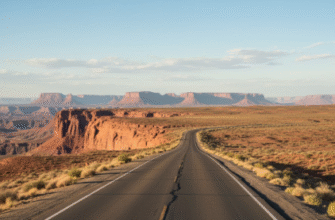
The drive to Echo Cliffs feels like you’re moving backward through time, which is sort of the point.
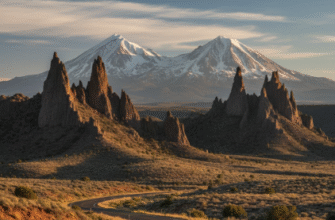
I’ve driven this stretch between Marble Canyon and the Painted Desert maybe a dozen times, and each trip I notice something different—the way the Vermilion Cliffs catch late afternoon light, how the Navajo Nation landscape shifts from rust to violet in about fifteen minutes, the fact that geologists can’t quite agree on where one formation ends and another begins. The Echo Cliffs themselves rise about 1,000 feet above the desert floor, give or take, and they’re mostly Navajo Sandstone from the Jurassic period—roughly 180 million years old, though I’ve seen estimates that vary by 20 million years depending on who’s doing the dating. Here’s the thing: these aren’t just pretty rocks. They’re a geological diary of ancient sand dunes that got buried, compressed, and then exposed again through millions of years of erosion. The cross-bedding patterns—those diagonal lines you see in the cliff faces—are basically fossilized wind patterns from a desert that existed when dinosaurs were still figuring things out.
What strikes me most is how the Echo Cliffs act as this natural boundary between the Marble Canyon area to the north and the Painted Desert sprawling south. The Colorado River carved Marble Canyon—basically the beginning of the Grand Canyon system—and it’s one of those places where you realize how inadequate words like “impressive” really are. I used to think the Painted Desert got its name from some poetic settler, but turns out it’s just accurately descriptive: iron oxide and manganese create bands of red, orange, purple, and gray that shift depending on moisture and light.
When Ancient Seas Decided to Leave Behind a Mess of Colors
The Painted Desert’s color palette comes from the Chinle Formation, which is significantly older than the Echo Cliffs—we’re talking Triassic period, around 200-230 million years ago. Back then, this area was a flood plain with rivers, volcanic ash, and lots of organic material that eventually turned into bentonite clay. That clay is why nothing much grows here and why the landscape looks almost Martian in certain light. The volcanic ash content is particularly high in some layers, evidence of explosive eruptions hundreds of miles away that deposited material across what’s now the Southwest. Wait—maybe I should mention that geologists have identified at least four distinct members of the Chinle Formation in this region, each representing different depositional environments, but honestly the nomenclature gets exhausting.
Driving Through Navajo Nation Means Recieving an Education Whether You’re Ready or Not
The Navajo Nation encompasses over 27,000 square miles, and this particular corridor through their land offers something most tourist routes don’t: a sense of how people actually live alongside these geological features rather than just gawking at them from overlooks. You’ll see hogans—traditional eight-sided dwellings—positioned with their doors facing east to recieve the morning sun, a practice tied to Navajo cosmology that’s been continuous for centuries. The relationship between the Diné people and this landscape is about 500 years old in terms of established presence, though their origin stories place them here since emergence into this world. I guess it makes sense that Western geology and Indigenous knowledge would have different timescales.
There’s also the practical reality that much of this area lacks reliable cell service, paved roads can turn to washboard dirt without warning, and summer temperatures regularly hit 100°F while winter can bring snow that closes passes for days.
The Part Where Marble Canyon Isn’t Actually Made of Marble But We’re Stuck With the Name
John Wesley Powell named Marble Canyon in 1869 during his first Colorado River expedition, and he was wrong—it’s limestone, not marble. Specifically, it’s Redwall Limestone and Kaibab Limestone, both from the Paleozoic era, polished smooth by the river until it looked marble-like to a 19th-century explorer who probably had other things on his mind, like not drowning. The canyon runs about 61 miles from Lees Ferry to the official start of Grand Canyon National Park, with walls rising up to 3,000 feet in some sections. The Navajo Bridge spans the canyon at one of its narrower points—the original 1929 bridge and a newer 1995 span side by side—and it’s one of the few places you can actually peer straight down at the Colorado River without hiking for hours. I’ve stood on that bridge in August when the river looked like green glass and in March when snowmelt turned it into chocolate milk, and both times I thought about how rivers don’t care about our names or boundaries, they just keep doing what erosion demands.
What You Won’t Find in the Brochures About This Route
Most guidebooks focus on the scenic aspects and skip the uncomfortable parts. The Navajo Nation has significant infrastructure challenges—many communities lack running water or electricity, unemployment rates are high, and historical trauma from forced relocations and uranium mining contamination continues to affect public health. The Echo Cliffs and surrounding areas were subject to extensive uranium extraction from the 1940s through the 1980s, leaving behind over 500 abandoned mines that the EPA is still working to remediate. That colorful desert soil? Some of it is definately contaminated with radioactive materials. It’s hard to reconcile the geological wonder with the environmental injustice, but that’s the actual landscape—layered, complicated, beautiful, and damaged all at once. Anyway, if you do this drive, bring more water than you think you need, fill up on gas at every opportunity, and maybe consider where your tourism dollars are actually going.