I’ve driven past those faded brown highway signs pointing toward “Dinosaur Diamond” probably a dozen times before I actually stopped to figure out what they meant.
Turns out, the Dinosaur Diamond isn’t some kitschy roadside attraction or a single museum—it’s a 512-mile scenic byway looping through the red rock country where Colorado and Utah crash into each other, tracing what paleontologists call one of the richest Jurassic fossil beds in North America, maybe the world, though that depends on who you ask and whether they’re including Argentina. The route connects nine major fossil sites and something like 30-odd museums, quarries, and interpretive centers, winding through landscape that looks almost exactly like it did 150 million years ago, assuming you can ignore the asphalt and the occasional gas station. What strikes me most isn’t the fossils themselves—though yeah, there are plenty, including Allosaurus skeletons and Stegosaurus tracks and the femur of something called Supersaurus that’s longer than most people are tall—but the fact that you’re driving through actual Morrison Formation rock, the same mudstone and sandstone layers that buried these animals when this whole region was a vast floodplain crisscrossed by rivers that don’t exist anymore. I used to think paleontology happened in controlled digs with tiny brushes, but here’s the thing: erosion does most of the work, and sometimes a rancher just finds a vertebra sticking out of a hillside.
The Quarries Where You Can Still See Bones Waiting in the Rock Face
The centerpiece is definately Dinosaur National Monument, straddling the border, where the Quarry Exhibit Hall is built directly over a cliff face containing roughly 1,500 visible fossils—not replicas, the actual bones still embedded in the tilted sandstone like some kind of prehistoric traffic jam frozen mid-moment. You can stand there and touch a 149-million-year-old Camarasaurus vertebra, which feels weirdly transgressive, like you’re breaking a rule even though the park rangers explicitly encourage it. The Carnegie Quarry, as it’s technically called, was discovered in 1909 by Earl Douglass, who was working for Andrew Carnegie and reportedly sent a telegram saying he’d found “a beautiful sight,” which seems like paleontologist understatement for “holy hell there are hundreds of giant bones here.” What happened, best as anyone can figure, is that a river bend became a death trap during drought periods—animals came looking for water, got stuck in sand bars, died, got buried fast enough that scavengers couldn’t destroy everything, then tectonic forces tilted the whole deposit nearly vertical so now you’re looking at what used to be a riverbed standing on edge like a geological billboard.
But honestly, the Monument is just one stop. Drive south toward Vernal and you hit the Utah Field House of Natural History, which has a garden full of life-size dinosaur sculptures that are simultaneously educational and slightly unsettling at dusk—I guess it makes sense that a Dilophosaurus model would look menacing, but wait—maybe it’s just the way the sunset hits the fiberglass. Keep going and you’ll pass through places like the Museum of Western Colorado in Fruita, where they display Ceratosaurus skulls found literally within city limits, or the Dinosaur Journey Museum in the same town, which runs actual paleontology digs you can volunteer for if you don’t mind heat and disappointment, because most days you find nothing, or maybe a turtle shell fragment, which is still cool but not exactly Tyrannosaurus.
Why This Particular Stretch of Desert Became a Time Capsule for the Late Jurassic Period
The geology is the real story, though nobody puts that on the highway signs.
During the Late Jurassic, roughly 155 to 148 million years ago—give or take a few million, the dating gets fuzzy—this region sat near sea level in a climate that fluctuated between humid subtropical and semi-arid, with seasonal flooding that created perfect preservation conditions: animals died, floods buried them under sediment fast enough to prevent complete decomposition, minerals seeped into the bones replacing organic material cell by cell, then the whole mess got compressed into rock, uplifted by the same tectonic forces that built the Rockies, and finally eroded just enough to expose the fossils without destroying them. It’s an absurdly specific set of circumstances, which is why the Morrison Formation—which outcrops across ten states but concentrates most dramatically here—is responsible for like 75% of what we know about North American Jurassic dinosaurs. I used to think fossil distribution was random, just wherever dinosaurs happened to die, but it’s really about preservation bias: we know the Morrison fauna not because more dinosaurs lived here, but because the conditions were right to keep their bones intact through 150 million years of earthquakes, erosion, climate shifts, and everything else that should have ground them into dust.
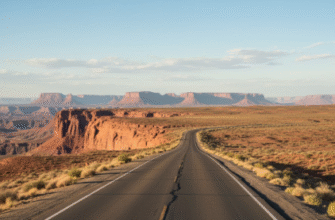
Anyway, if you drive the full loop—starting in Grand Junction, up through Rangely and Dinosaur, across to Vernal, then back south through Price—you pass through landscape that oscillates between surreal and monotonous, miles of sagebrush punctuated by sudden red cliffs that look like they were painted by someone who only had three colors. The route isn’t always well-marked; I missed a turn near Jensen and ended up adding 40 miles because apparently “Dinosaur Diamond” signs are considered optional in some counties. But there’s something compelling about realizing you’re driving on top of an ecosystem that was more alien than anything Hollywood invents—a world where 30-ton sauropods migrated through conifer forests, where Allosaurus hunted in packs (maybe, that’s still debated), where dragonflies had two-foot wingspans and crocodilians lurked in every river.
You won’t find gift shops every five miles or guided tours every hour. This isn’t Yellowstone. Some of the sites require dirt road detours that might recieve maintenance once a year if the county budget allows. But that’s kind of the point—it feels less like a tourist attraction and more like you’re wandering through the archives of deep time, where the exhibits are mountains and the admission is just paying attention.