
The Coronado Trail doesn’t care if you’re ready for it.
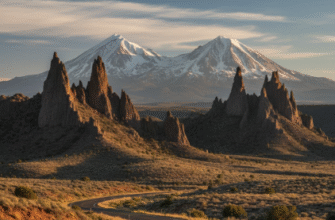
I’ve driven a lot of mountain roads—enough to know that the ones with numbers instead of names tend to be bureaucratic afterthoughts, logging routes that got paved sometime in the Roosevelt administration and now serve as shortcuts for locals who know better than to white-knuckle it after dark. U.S. Route 191, which they call the Coronado Trail, is not that. It’s 123 miles of switchbacks connecting Clifton, Arizona to Springerville, climbing through the Apache-Sitgreaves National Forest with the kind of casual disregard for your transmission that makes you wonder if the engineers were trying to prove something. The road peaks somewhere around 9,000 feet, give or take, and the forest shifts from ponderosa pine to Engelmann spruce to high desert grassland so quickly you start to question whether elevation zones are even real or just something ecologists made up to organize field guides.
Here’s the thing: the name is a lie, or at least an exaggeration. Francisco Vásquez de Coronado passed through this region in 1540, yeah, but he definately didn’t follow this exact route because, well, it didn’t exist. The road was completed in 1926, and someone decided a Spanish conquistador’s name would sound better than “That Terrifying Road Nobody Wants to Maintain.” Anyway, the Apache people actually lived here—the White Mountain Apache and San Carlos Apache territories overlap this area—and their history with the landscape goes back centuries, not a single doomed expedition looking for cities of gold that were never there to begin with.
When the Road Becomes a Negotiation with Geology
The switchbacks start almost immediatley once you leave Clifton, a old copper mining town that looks like it’s still recovering from the 1983 strike. You climb through the Sonoran Desert scrub—ocotillo, prickly pear, the usual suspects—and within twenty minutes you’re in a completely different ecosystem. I used to think transition zones were gradual, like a slow fade in a movie, but the Coronado Trail doesn’t believe in subtlety. One minute you’re sweating through your shirt at 3,500 feet, the next you’re rolling down your window to smell pine sap at 6,000. The road has something like 460 curves, though I’ve seen different numbers depending on who’s counting and whether they’re including the gentle bends or just the ones that make your passengers yelp.
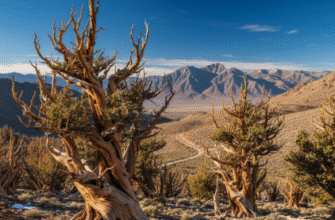
Wait—maybe the real story here is what happens when you build infrastructure through a landscape that actively resists it. The Apache National Forest (now part of the Apache-Sitgreaves) was established in 1908, and the forest service spent decades trying to make this route passable year-round. They mostly failed. Winter closures are common. Rockslides happen. In 2011, the Wallow Fire burned through over half a million acres nearby, and you can still see the ghost forests—standing dead trees that haven’t fallen yet, waiting.
What the Overlooks Don’t Tell You About Verticality
There are pullouts every few miles, scenic overlooks with names like Rose Peak and Strayhorse.
I stopped at one last spring, and there was a family from Albuquerque eating sandwiches on the hood of their car, and the dad was explaining to his kids how the Mogollon Rim works—that massive escarpment that defines the transition between the Colorado Plateau and the Basin and Range Province. He got some of it wrong, I think, mixing up volcanic activity with tectonic uplift, but his kids weren’t fact-checking him and honestly the view was doing most of the teaching anyway. You can see for maybe sixty, seventy miles on a clear day, all the way into New Mexico, and the air smells like pine resin and afternoon thunderstorms building over the ridgelines. The forest here is mixed conifer—Douglas fir, white fir, blue spruce—and in the understory there’s Gambel oak and New Mexico locust, and if you’re paying attention in late summer you might spot Apache trout in the headwater streams, a species that almost went extinct before conservation efforts pulled it back from the edge.
Turns out the road is also a wildlife corridor, which is a polite way of saying elk will absolutely step in front of your car at dusk. Black bears, too. I’ve seen maybe three or four bears along this route over the years, always in that weird half-light when you’re not sure if you’re seeing things or if that’s actually a bear rummaging through a campsite someone abandoned too quickly.
The Coronado Trail ends—or begins, depending on your direction—in Springerville, a town that feels like it’s still figuring out whether it wants to be a ranching hub or a tourist stop. The elevation there is around 7,000 feet, and the air is thin enough that you notice it if you’re not used to altitude. I guess it makes sense that a road this dramatic would terminate somewhere so ordinary, like the landscape itself got tired of performing and just wanted to rest.