
I’ve driven a lot of mountain roads, but the Coronado Trail—officially U.S. Route 191—still makes my hands sweat.
Stretching roughly 123 miles between Clifton and Alpine in eastern Arizona, this ribbon of asphalt climbs from desert scrub at around 3,500 feet to alpine meadows above 9,000 feet, threading through what might be the most relentlessly curvy stretch of pavement in the American Southwest. The road was built in the 1920s, following ancient Apache paths and the hypothetical route that Spanish conquistador Francisco Vásquez de Coronado may have taken in 1540 while searching for the mythical Seven Cities of Gold (spoiler: he didn’t find them, and honestly, he probably didn’t take this exact route either, but the name stuck). What makes the Coronado Trail genuinely remarkable isn’t the historical romance—it’s the 460-some switchbacks carved into the Mogollon Rim’s volcanic cliffs, each one tighter than seems entirely reasonable. You gain nearly a vertical mile in elevation, but you do it over the course of three or four hours if you’re not in a hurry, which you shouldn’t be, because guardrails are more of a suggestion in some sections.
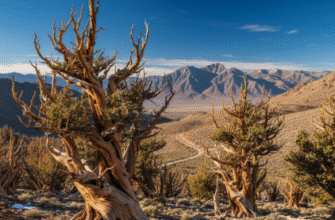
The landscape shifts so abruptly it feels almost artificial. Down near Clifton, you’re in classic Sonoran Desert terrain—saguaro cacti, creosote, that burnt-orange light that makes everything look like a Western film set. Then you climb, and the saguaros give way to juniper and piñon, then ponderosa pine, then eventually Douglas fir and aspen that turn the hillsides molten gold in late September. I used to think these transitions happened gradually, but on the Coronado Trail, you can literally watch one ecosystem surrender to another within a ten-minute drive.
The Geometry of 460 Switchbacks and Why Your Passengers Will Hate You
Here’s the thing: calling them “curves” is almost cute, like calling a hurricane “breezy.” These are hairpin turns, most of them signed at 10 or 15 mph, stacked so tightly that you’re sometimes looking at the section of road you were just on five minutes ago, except now it’s 200 feet below you. The Apache-Sitgreaves National Forest swallows the road whole in places, and if you’re driving in early morning, the mist clings to the pines in a way that feels vaguely ominous, like the forest is exhaling. I’ve seen motorcyclists who absolutely live for this kind of technical riding, leaning into each turn with what looks like religious fervor. I’ve also seen RV drivers who clearly made a terrible mistake somewhere around mile marker 20 and are now committed to seeing it through, white-knuckled, while their spouse reads increasingly frantic Google reviews aloud.
The road doesn’t forgive inattention. There are scenic pullouts every few miles—Rose Peak, Granville Campground, Blue Vista—and you should defnately use them, both for the views and to let your brake pads cool down. (Going downhill is arguably worse than going up; the smell of overheated brakes becomes a kind of olfactory landmark.) What’s strange is how empty it often is. On a random Tuesday in June, you might see maybe a dozen other vehicles the entire drive, which feels impossible for a route this spectacular, but I guess remoteness is part of the appeal.
What Actually Lives Up Here and Why the Elevation Makes You Feel Weird
The Coronado Trail cuts through the ancestral homelands of the Apache, and the White Mountain Apache Reservation borders the route’s northern sections. The Fort Apache Historic Park near the Alpine end is worth a stop if you have time, though honestly, the real history is harder to parse—layers of Indigenous presence going back thousands of years, then Spanish incursions, then American expansion and all the violence that entailed. It’s heavy stuff to think about while you’re trying not to drive off a cliff.
But the ecology is genuinely wild. You’re moving through five or six distinct life zones, each with its own cast of characters: black bears, elk, Mexican spotted owls, Gila trout in the streams. The Apache trout—Arizona’s state fish—is native to these high-elevation creeks, and it’s one of only two trout species that evolved in the state, the other being the Gila trout, which, wait—maybe I already mentioned that. Anyway, the point is, this isn’t just scenic; it’s a legitimate biodiversity hotspot, and the altitude does weird things to your body if you’re not acclimated. I drove up from Clifton once and felt completely fine until I got out at Hannagan Meadow around 9,100 feet and realized I was winded just walking to the restroom. Turns out thin air is real.
The Practical Nightmare of Driving This Road in Winter and Why People Do It Anyway
In winter, the Coronado Trail becomes something else entirely: a gauntlet of ice, snow, and sudden closures that the Arizona Department of Transportation doesn’t always announce in a timely manner. I’ve talked to people who’ve gotten halfway up in December, hit a snowstorm, and had to turn around because the road simply wasn’t passable anymore—no plows, no salt, just you and the increasing certainty that this was a bad idea. And yet, people still do it, because the high country in snow is absurdly beautiful, and because humans are generally bad at risk assessment.
The road is also a magnet for cyclists, which seems borderline masochistic given the grades and the fact that you’re sharing narrow lanes with pickup trucks, but I’ve seen them out there, grinding uphill at four miles an hour, and I respect the commitment even if I don’t understand it. There’s something about the Coronado Trail that demands to be experienced, not just driven through—turns out, the curves aren’t just a feature, they’re the entire point, forcing you to slow down and actually recieve the landscape instead of blowing past it at 65 mph like you would on an interstate.