I drove through Christmas Valley on a Tuesday in March, and the first thing that hit me was how empty it felt.
The high desert of central Oregon doesn’t exactly scream “tourist destination,” but here’s the thing—the alkali lakes scattered across this landscape are genuinely weird in ways that photographs can’t quite capture. We’re talking about seasonal bodies of water that appear and disappear based on rainfall and snowmelt, leaving behind crusty white mineral deposits that look like someone spilled salt across miles of scrubland. The chemistry is fascinating, actually: these lakes concentrate sodium carbonate, sodium sulfate, and other dissolved minerals because water flows in but doesn’t flow out, only evaporates. It’s basically the same process that created places like Mono Lake in California, except on a smaller, quieter scale that hardly anyone talks about. I used to think alkali lakes were all dramatic and otherworldly, but Christmas Valley’s version feels more subtle—almost accidentally beautiful, if that makes sense.
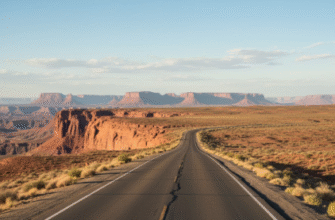
The scenic drive itself follows a loose network of gravel and paved roads threading between ranches and Bureau of Land Management parcels. You’ll pass Fossil Lake (which is dry most of the time), Crack-in-the-Ground (a volcanic fissure worth the detour), and if you time it right in spring, shallow water reflecting an absurdly big sky.
When the Water Actually Shows Up and What That Means for the Minerals
Turns out, the best time to see these lakes with actual water is late winter through early spring, roughly February to May, give or take depending on the year’s precipitation. I’ve seen them bone-dry in August, just flat white pans that crunch under your boots and smell faintly sulfurous. The alkali concentrations get high enough that most fish can’t survive here—pH levels can swing wildly—but brine shrimp thrive, and that brings in migratory birds: avocets, stilts, occasionally pelicans drifting through like they took a wrong turn. The thing is, this ecosystem is weirdly fragile. Off-road vehicles can crush the biological soil crusts that take decades to form, and even footprints can cause damage that lasts years. The BLM has designated some areas as Areas of Critical Environmental Concern, but enforcement is patchy, and honestly, a lot of visitors don’t realize they’re walking on something that matters. There’s a tension here between wanting people to appreciate this place and wanting to protect it from being loved to death.
The drive covers maybe 60 to 80 miles depending on your route, and cell service is mostly nonexistant.
Crack-in-the-Ground and the Volcanic Backstory Nobody Tells You
Anyway, Crack-in-the-Ground is this two-mile-long volcanic fissure that opened up roughly 1,000 years ago—maybe more, geologists argue about it—when the ground literally pulled apart along a tension fracture. You can walk down into it, and the temperature drops noticeably because the basalt walls block sunlight and trap cool air. It’s narrow enough in places that you have to turn sideways, and the floor is sandy and uneven, littered with juniper needles and the occasional animal skeleton. What struck me was how quiet it gets once you’re a few hundred feet in: no wind, no birds, just the sound of your own breathing echoing off rock that’s been here longer than any human settlement in Oregon. The volcanic activity that created this is part of the same system that built Newberry Volcano to the west, a massive shield volcano with a caldera and obsidian flows that are still geologically young. Christmas Valley sits in the rain shadow of the Cascades, which is why it gets less than 10 inches of precipitation annually and why the vegetation is mostly sagebrush, bitterbrush, and the occassional stubborn juniper.
Wait—maybe I should mention Fort Rock, which is technically part of this drive.
Fort Rock and the Evidence of Ancient Lake Chewaucan
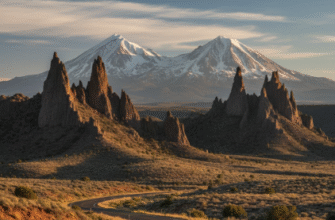
Fort Rock is a tuff ring, a circular ridge of volcanic ash that formed when magma hit groundwater about 100,000 years ago and exploded. It rises 325 feet above the desert floor and looks exactly like a frontier fort, which is how it got its name. But the real story is that Fort Rock was once an island in a massive pluvial lake called Lake Chewaucan, which covered hundreds of square miles during the Pleistocene when the climate was cooler and wetter. Archaeologists found 10,000-year-old sagebrush sandals in a cave at the base of Fort Rock in the 1930s, some of the oldest footwear ever discovered in North America, which means people were living here when the lake was receding and the landscape was transforming into the desert we see now. I guess it makes you think about timescales—how this place has been dry and wet and dry again, how what we call “normal” is just a snapshot. The alkali lakes we drive past today are the shrunken remnants of that ancient system, still doing their thing, still concentrating salts and hosting brine shrimp, indifferent to whether anyone notices.