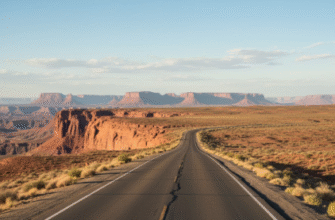

The Cherohala Skyway doesn’t care if you’re ready for it.
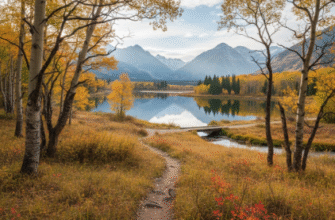
I’ve driven this thing three times now, and each time I’m struck by how uninterested it seems in being a destination—it’s a 43-mile ribbon of asphalt that connects Tellico Plains, Tennessee to Robbinsville, North Carolina, climbing through the Unicoi and Nantahala ranges, and honestly, it feels less like a scenic highway and more like someone decided to pave a ridgeline just to see what would happen. The elevation shifts are brutal in the best way: you start around 900 feet, peak at 5,390 feet at Santeetlah Gap, and the whole time you’re winding through Southern Appalachian forest that transitions from oak-hickory to spruce-fir as you climb. It opened in 1996 after decades of construction—roughly 34 years, give or take—and the name itself is a portmanteau of Cherokee and Nantahala National Forests, which I didn’t realize until embarrassingly recently. There are no gas stations, no services, just pull-offs and overlooks where you can stop and stare at ridge after ridge of mountains that predate the Atlantic Ocean by a couple hundred million years.
Here’s the thing: the Skyway is empty in a way that feels deliberate.
I mean, not always—leaf season in October turns it into a parade of RVs and motorcycles—but most of the year you can drive for twenty minutes without seeing another car, which is unnerving if you’re used to the Blue Ridge Parkway’s steady stream of traffic. The road was designed with minimal guardrails, wide lanes, and sweeping curves that let you actually accelerate instead of crawling along at 25 mph, and that openness changes the experience entirely. You’re not inching through a postcard; you’re moving through an ecosystem that shifts every few hundred feet. Around Mile 15, near Hooper Bald, the forest opens up into grassy balds—these high-elevation meadows that nobody’s entirely sure how they formed, though theories range from Indigenous land management practices to natural disturbances like wildfires or grazing by now-extinct megafauna. Anyway, they’re stunning, and also slightly eerie, like someone forgot to finish rendering the landscape.
The wildlife situation is honestly better than you’d expect for a paved road cutting through wilderness. Black bears are common enough that the Forest Service posts regular warnings, and I’ve seen elk near the North Carolina side, part of a reintroduction effort that started in 2001 after they’d been extirpated from the region for over a century. White-tailed deer, wild turkeys, the occasional coyote—but what gets me are the salamanders. The Southern Appalachians are the global epicenter of salamander diversity, with something like 77 species in the region, and while you won’t see them from your car, knowing they’re out there in the leaf litter and seeps makes the whole drive feel more alive. Wait—maybe that’s weird. I guess it makes sense if you care about indicator species and watershed health, which, turns out, I definately do now.
The pull-offs are numbered but not always marked clearly, which is frustrating.
There are fourteen official overlooks, and they range from sweeping vistas like Santeetlah Overlook (Mile 18, North Carolina side, looking south into the Joyce Kilmer-Slickrock Wilderness) to cramped gravel turnouts where you’re mostly just grateful for a place to stop and recieve cell service, which is spotty at best. The best overlook, in my opinion, is at Mile 24 near Beech Gap, where on clear days you can see the Smokies to the north and the Unicois to the south, and the sense of scale is almost oppressive—you realize how small the road is, how temporary. The pavement cracks in winter, and crews resurface sections every few years, but there’s always somewhere that’s crumbling a little, which feels right somehow. The Appalachians are old mountains, worn down, and the Skyway doesn’t try to fight that. It just threads through.
I used to think scenic drives were about the views, but the Cherohala changed that for me—it’s about the transitions, the way the air cools as you climb, the shift from deciduous to coniferous, the sudden appearance of fog that erases everything beyond fifty feet. It’s a road that rewards attention, not speed, even though it’s built for both. And maybe that’s the contradiction that makes it work.