I’ve driven past Cedar Mesa three times before I actually understood what I was looking at.
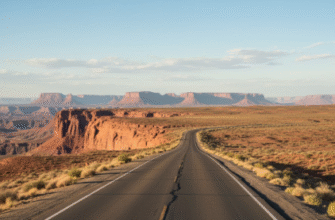
The thing about this corner of southeastern Utah—roughly 400 square miles of sandstone plateau cut through with slot canyons and alcoves—is that it doesn’t announce itself the way Monument Valley does, or even Canyonlands. You’re driving along Highway 261, maybe headed toward Mexican Hat or Bluff, and the landscape just sort of opens up around you in layers: first the sagebrush flats, then the rimrock, then these deep gouges in the earth that geologists call “drainages” but which feel, when you’re standing at the edge, more like invitations. Or warnings. The Grand Gulch Primitive Area sits at the heart of Cedar Mesa, a 52-mile-long canyon system that drops anywhere from 400 to 600 feet below the plateau surface, and it’s been cutting deeper—slowly, imperceptibly—for something like 2 million years, give or take. The Ancestral Puebloans knew this, obviously, which is why they built cliff dwellings into the alcoves starting around 200 CE, tucking their granaries and kivas into the Navajo and Wingate sandstone like secrets.
Here’s the thing: you can’t really drive *through* Grand Gulch. You can drive *to* it, sure—there are a handful of access points along the mesa’s edge, most of them requiring high-clearance vehicles and a certain tolerance for washboard roads that rattle your fillings loose. But the wilderness itself is foot traffic only, which I guess makes sense given that the whole point is preservation.
What People Get Wrong About Driving the Cedar Mesa Loop (and Why the Plateau Matters More Than You Think)
Most visitors do what’s called the Moki Dugway loop: a 17-mile dirt road that includes a genuinely unnerving series of graded switchbacks dropping 1,100 feet in three miles. I drove it in 2019 in a rented Subaru—probably not the best choice—and I remember thinking, about halfway down, that the view was stunning but also that I’d made a terrible mistake. The road was built in the 1950s for uranium hauling, which tells you something about its original engineering priorities. Anyway, it’s passable, and it gets you close to the Valley of the Gods, which is sort of a mini Monument Valley without the crowds. But what you’re really circling, whether you realize it or not, is the Cedar Mesa plateau itself: a 300,000-acre expanse managed by the Bureau of Land Management, part of the Bears Ears National Monument since 2016 (though the boundaries have been, let’s say, contested). The plateau’s defining feature isn’t what’s on top—it’s what’s been carved out of it. Aside from Grand Gulch, there’s Slickhorn Canyon, Owl Creek, Fish Creek—each one a tributary system laced with seeps and hanging gardens and, if you know where to look, rock art panels that predate the cliff dwellings by a thousand years or more.
Honestly, I used to think the appeal was just the archaeology. Turns out the hydrology might be even weirder.
The Sandstone Holds Water Like a Secret, Except When It Doesn’t (A Geologist Once Told Me This Over Beer and I Still Think About It)
Cedar Mesa is what’s called a perched aquifer system, meaning water doesn’t behave the way you’d expect. The Navajo sandstone is porous—it soaks up snowmelt and summer monsoons like a sponge—but underneath it sits a layer of less-permeable Halgaito shale. So the water moves laterally, through the rock, until it hits a fracture or a canyon wall, and then it just… seeps out. This is why you’ll find springs in the most unlikely places, tucked into alcoves 400 feet above the canyon floor, sustaining pockets of monkeyflower and columbine even in late summer when everything else has crisped to dust. The Ancestral Puebloans built near these seeps, obviously, because water is water, but also because the alcoves themselves—formed by differential erosion where the harder Navajo sandstone overhangs the softer Kayenta formation—provided shelter. It’s a landscape that teaches you, pretty quickly, that survival here has always been about reading stone. And timing. The cryptobiotic soil crusts that carpet the plateau between the canyons take roughly 50 to 250 years to develop, which means every bootprint matters, every tire track is a wound that won’t heal in your lifetime. I’ve definately stepped on some by accident, and I still feel bad about it. Wait—maybe that’s the real reason permits are required now for overnight stays in Grand Gulch. Not just to manage crowds, but to manage the weight of us.