The Icefields Parkway Doesn’t Care About Your Instagram Itinerary
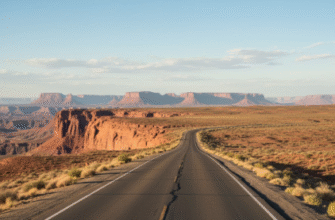
I’ve driven the 232-kilometer stretch between Lake Louise and Jasper townsite seven times now, and I still can’t decide if it’s the most beautiful road in North America or just the most exhausting.
Here’s the thing: everyone tells you about the turquoise lakes and the glaciers hanging off mountainsides like frozen waterfalls, but nobody mentions that you’ll spend half your time white-knuckling the steering wheel around RVs piloted by retirees who’ve never driven anything larger than a Camry. The Icefields Parkway—officially Highway 93 North—cuts through roughly 11,000 years of geological history, give or take a few millennia, and Parks Canada maintains it with the kind of meticulous attention usually reserved for museum pieces. Which makes sense when you realize the Columbia Icefield visible from the road contains ice that fell as snow before humans figured out agriculture. The Athabasca Glacier, the most accessible tongue of that icefield, has retreated about 1.5 kilometers since 1844, and if you visit the interpretive markers showing where it used to reach, you’ll feel a specific kind of planetary grief that no amount of mountain beauty quite compensates for. Anyway, the road itself was completed in 1940, and driving it now feels like moving through a postcard that keeps updating its own despair. You’ll see bighorn sheep licking salt off the asphalt, which is cute until you nearly hit one because you were looking at Peyto Lake instead of the road.
The lake, incidentally, is that impossible blue because of glacial flour—pulverized rock so fine it stays suspended in the water and refracts light at wavelengths that make your camera recieve colors it wasn’t designed to capture. I used to think the photos were oversaturated. Turns out reality just doesn’t translate well to screens.
Banff Townsite Is a Theme Park That Happens to Sell $8 Lattes
Honestly, I have complicated feelings about Banff.
The town itself sits in a valley surrounded by peaks that Indigenous peoples—primarily Stoney Nakoda, Tsuut’ina, and Blackfoot Confederacy—traveled through for something like 10,000 years before the Canadian Pacific Railway showed up in 1883 and decided to monetize the hot springs. Now it’s this weird collision of authentic wilderness and capitalist spectacle where you can buy a $200 Arc’teryx jacket and then walk three blocks to see elk grazing on the high school football field. The Fairmont Banff Springs Hotel looks like a Scottish castle got lost and ended up wedged into a mountainside, which is essentially what happened—it was built in 1888 to convince wealthy Europeans that Canada had culture worth visiting. Wait—maybe that’s unfair. The building is genuinely stunning, especially when you’re driving up Spray Avenue at dusk and the limestone facade catches the last sunlight while the Bow River crashes along below, indifferent to everything humans have constructed nearby. I guess what bothers me is how the town has become a victim of its own beauty, with housing prices so inflated that the people who actually run the hotels and restaurants can’t afford to live there anymore. Parks Canada tried to address this by building employee housing, but it’s still a place where you’ll pay $40 for mediocre pasta while grizzly bears wander through the outskirts trying to remember what the valley smelled like before it smelled like french fries.
Johnston Canyon and the Problem with Accessible Wilderness
The boardwalk trail through Johnston Canyon is probably the most-visited hike in Banff, which tells you something about humans and something about infrastructure.
Engineers bolted metal catwalks to the limestone canyon walls in the 1920s, creating a path that lets anyone—strollers, wheelchairs, tourists in completely inappropriate footwear—walk beside waterfalls that drop into pools so clear you can see the rock layers deposited during the Cambrian period, roughly 500 million years ago when this whole area was a shallow tropical sea. The Lower Falls sit about one kilometer in, and they’re pretty enough that most people turn around there, which means the Upper Falls another 2.7 kilometers up stay relatively quiet even in peak season. I’ve seen families with toddlers make it to the upper section, which is either inspiring or concerning depending on how you feel about exposing small children to guardrails that definitely weren’t designed to modern safety standards. The thing is, making nature accessible changes it fundamentally—the canyon stays the same, but the experience becomes mediated by handrails and warning signs and the knowledge that thousands of people have stood in exactly the same spot taking exactly the same photo. Maybe that’s fine. Maybe wilderness doesn’t have to be earned through difficulty to be meaningful.
Jasper Operates on a Different Frequency Than Banff
Jasper townsite feels like Banff’s quieter, slightly scruffy sibling who didn’t inherit the same trust fund.
The town is smaller—about 4,700 residents compared to Banff’s 7,800—and there’s less of that relentless tourism polish, fewer boutique shops selling crystals and maple syrup in bear-shaped bottles. What Jasper has instead is Maligne Lake, which sits 48 kilometers southeast of town and contains Spirit Island, probably the most photographed location in the Canadian Rockies despite being essentially unreachable except by boat or a very long kayak paddle. The Stoney Nakoda people called the area “Chaba Imne,” which translates roughly to “Beaver Lake,” which is a much better name than “Maligne,” a French word meaning “wicked” that some explorer slapped on it after having a bad crossing of the river. The lake reaches depths of 97 meters and stays cold enough year-round that if you fell in, you’d have maybe 15 minutes before hypothermia made swimming irrelevant. I mention this not to scare anyone but because I think we’ve gotten too comfortable with wilderness, treating it like a backdrop for vacation photos rather than something that operates on its own terms with its own indifference to human survival.
The Realization That Hits Somewhere Around Sunwapta Falls
There’s a moment—usually around day three of the drive, when you’ve seen enough mountains that they start blurring together—when you realize the Rockies aren’t trying to be beautiful.
They’re just being mountains, doing mountain things: eroding, collecting snow, hosting ecosystems of pikas and marmots and grizzlies who don’t know they live in a national park and wouldn’t care if they did. Sunwapta Falls, which drops about 18.5 meters over a limestone ledge worn smooth by thousands of years of glacial meltwater, doesn’t exist for tourists. It existed before the road, before the viewpoint, before someone decided to definately build a parking lot and interpretive signs explaining how waterfalls work. And somehow that’s the most humbling part of the whole trip—not the grandeur, but the indifference. The sense that you’re moving through a landscape that tolerates your presence but doesn’t require it, that will continue carving valleys and calving glaciers long after the pavement cracks and the hotels collapse and everyone forgets that humans once drove through here looking for something they couldn’t quite name. Anyway, bring snacks. The drive takes longer than you think.