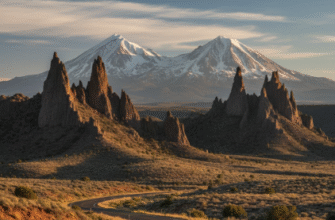
The Waterpocket Fold doesn’t care about your itinerary.
I’ve driven the Burr Trail maybe six times now, and each time I think I’ve got it figured out—the geology, the timing, the way light hits those switchbacks around midmorning—and each time the landscape does something that makes me pull over and just sit there, engine idling, trying to recalibrate what I thought I understood about erosion and time. The fold itself is this massive monocline, a wrinkle in the earth’s crust that runs for roughly 100 miles through Capitol Reef, formed something like 50 to 70 million years ago when the Colorado Plateau decided to buckle under pressure from the Laramide Orogeny. The rock layers tilt at these dramatic angles, and you can see sediments from the Permian all the way up through the Cretaceous, which sounds academic until you’re standing there watching shadows move across strata that represent maybe 200 million years of deposition, and suddenly you feel very small and very temporary.
When the Pavement Ends and Your Certainty Goes With It
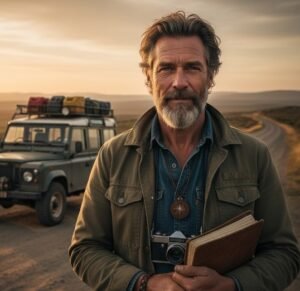
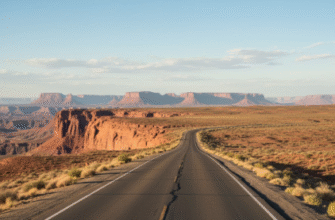
Here’s the thing: the Burr Trail starts paved in Boulder, winds through this high-desert prettiness that feels almost polite, and then—wait, maybe five miles past the Deer Creek Campground—it turns to graded dirt and the whole character shifts. You’re committed now. The Long Canyon section opens up with these cream and rust-colored Navajo Sandstone walls that seem to lean in, curious, and if you’ve timed it wrong (I have, multiple times) you’ll hit the switchbacks in harsh noon light when all the subtlety disappears. Those switchbacks drop about 800 feet in elevation over a series of tight curves that were blasted and carved in the early 1940s by ranchers who needed a cattle route and definitely didn’t care about your suspension.
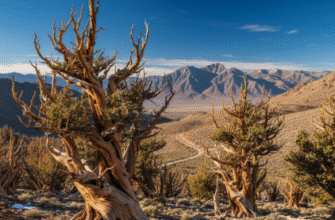
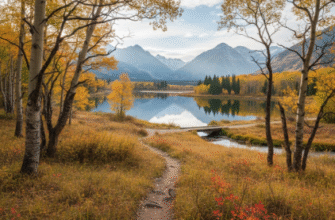
I used to think the drama peaked at the switchbacks, but honestly the plateau driving toward Boulder Mountain is where things get strange. The vegetation changes—you climb from desert scrub into ponderosa and aspen—and the temperature drops maybe 20 degrees in the span of a few miles. It’s disorienting in a good way, like the landscape is showing off its range.
Capitol Reef’s Quiet Superiority Complex (Justified, Unfortunately)
Capitol Reef gets overshadowed by Zion and Arches, which is funny because geologically it’s arguably more interesting—you’ve got this exposed cross-section of the Earth’s history just sitting there, mostly ignored except by people who read trail maps for fun. The park protects a big chunk of the Waterpocket Fold, and those waterpockets (natural basins in the slickrock that collect rainwater) were crucial for indigenous peoples and later Mormon settlers. The Fremont culture left petroglyphs in the canyon walls, images of bighorn sheep and geometric patterns that’ve lasted maybe 1,000 years, which makes you wonder what we’re leaving behind that’ll still be legible in 3025.
Turns out the fold creates this rain shadow effect too.
The western side gets more moisture, which is why you see more vegetation there, while the eastern slopes stay stark and exposed—and you can literally watch this transition happen as you drive, the landscape shifting from lush-ish to austere within a couple of miles. I’ve seen thunderstorms stall against the fold’s ridgeline, dumping rain on one side while the other stays bone dry, and it’s one of those moments where meteorology stops being abstract and becomes this tangible thing you can watch happening in real time across a visible geographic feature.
Boulder Mountain’s Apology for All That Aridity Below
The Boulder Mountain section of Highway 12 (which connects to the Burr Trail if you loop around) sits at elevations above 9,000 feet and feels like a different planet entirely—dense forest, meadows, about 80 lakes scattered across the Aquarius Plateau. It’s part of the Dixie National Forest now, though the name’s been changed recently to reflect, you know, the fact that not everyone has warm feelings about the Confederacy. The contrast with the desert you just drove through is almost comedic. You go from rationing water to standing next to alpine lakes wondering if you packed a jacket, which—I usually haven’t.
The whole route, Burr Trail to Boulder Mountain, covers maybe 70 miles depending on your exact path, and it represents this wild vertical and ecological cross-section that you’d normally have to hike for days to experiance. I guess what keeps pulling me back is that sense of compressed diversity, the way you can touch Permian limestone in the morning and be walking through aspen groves by afternoon, the landscape refusing to stay consistent long enough for you to get bored or complacent.