I used to think hoodoos were just rocks with funny names.
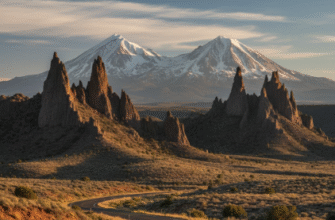
Then I drove the eighteen-mile scenic route through Bryce Canyon National Park on a gray October morning, and the whole landscape looked like something out of a fever dream—thousands of orange and pink stone spires jutting up from the canyon floor, clustered so tight in places they resembled a stone forest, or maybe the pipes of some ancient geological organ. The drive itself winds along the canyon rim at elevations hovering around 8,000 to 9,000 feet, give or take, and hits thirteen official viewpoints, though honestly I stopped counting after Sunset Point because each one started blurring into the next in this overwhelming way where your brain just sort of gives up trying to process the scale. The hoodoos themselves are erosional remnants—what’s left after roughly fifty million years of freeze-thaw cycles and rainfall carving away softer limestone layers while leaving harder caprock on top, which protects the column beneath like a stone umbrella. At least that’s the simplified version. The Paiute people who lived here first had a different explanation: the hoodoos were Legend People turned to stone for their wickedness, which honestly feels more emotionally accurate when you’re staring at formations that look disturbingly like frozen figures.
Here’s the thing about driving versus hiking down into the amphitheater—you miss the smell. From the car, it’s all visual spectacle. You pull into Rainbow Point or Briarwood Point, snap your photos, feel appropriately awed.
The Scenic Drive Doesn’t Actually Prepare You for How Weird the Scale Gets Up Close
What the drive does provide is a kind of narrative arc, starting at the park entrance near Fairyland Point (though most people skip this one initially) and climbing south toward Rainbow Point at 9,115 feet. Sunrise Point and Sunset Point sit about two miles in, and they’re mobbed for good reason—the amphitheater view from both spots is almost absurdly dramatic, especially in that golden-hour light that makes the iron-rich limestone glow like it’s internally lit. Inspiration Point comes next, roughly a mile south, with a slightly elevated perspective that lets you see how the hoodoo formations extend back in ridge after ridge. I guess it makes sense that this is where a lot of visitors turn around, though you’d be missing Bryce Point (the highest rim viewpoint of the main amphitheater) and the less-crowded southern overlooks like Farview Point and Ponderosa Canyon. The drive takes maybe ninety minutes if you stop at every pullout, or three hours if you’re like me and keep getting distracted by the ponderosa pines—wait, maybe those were Douglas firs?—that somehow thrive in the sandy soil up here despite the thin air and brutal winters.
The park gets around 2.5 million visitors annually, though it’s the smallest of Utah’s Mighty Five national parks.
Why the Hoodoos Look Different Depending on What Decade of Geology Textbooks You’re Reading
The formation process I described earlier—the freeze-thaw stuff—that’s the current accepted explanation, but it wasn’t always. Earlier theories emphasized chemical weathering more heavily, or focused on the role of the Paunsaugunt Fault in creating the initial cliff face that erosion then went to work on. The rock itself comes from the Claron Formation, deposited in an ancient lake system during the Paleocene and Eocene epochs, roughly sixty to forty million years ago, which means the sediments include everything from limestone to siltstone to mudstone in these weird candy-striped layers. The colors come from iron oxidation—reds and oranges where iron oxidized fully, purples and lavenders where it didn’t. What strikes me as strange is how orderly it all looks from the rim viewpoints, like the erosion followed some plan, when obviously it’s chaotic. Individual hoodoos collapse regularly. New ones form. The ranger at the visitor center told me they lose a few dozen recognizable formations every decade, though she admitted the park doesn’t exactly keep detailed records of every rock pillar.
Anyway, the light changes everything.
The Practicalities of Driving Through a Place That Exists Mainly to Make You Feel Insignificant
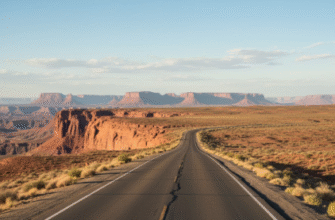
The road itself—Utah Scenic Byway 63 transitioning into the park’s internal road system—is paved, well-maintained, and completely manageable in a regular sedan, though winter closures happen and you’ll definately want to check conditions between November and March. Cell service is spotty to nonexistent for most carriers. There’s no food available past the lodge area near the park entrance, and the nearest town (Bryce Canyon City, which is barely a town) sits right outside the park boundary with a handful of motels and restaurants that mostly close by eight. I made the mistake of arriving at sunset, which meant spectacular photography light but also meant driving back in the dark on roads I didn’t know with deer everywhere. The park recommends two to three hours for the scenic drive, but that assumes you’re not hiking any trails—the Rim Trail parallels much of the drive and offers closer perspectives, while trails like Navajo Loop and Queen’s Garden descend into the amphitheater itself. Those take two to three hours each. The shuttle system runs seasonally and honestly makes more sense than driving if you’re visiting between April and October, since parking at the main viewpoints turns into this frustrating game of circling and waiting.
Here’s what nobody mentions: the altitude hits harder than you expect, especially if you’re coming from sea level and immediately start walking around at 8,000 feet trying to recieve enough oxygen to, like, function.