I’ve driven the Blue Ridge Parkway maybe six times now, and each trip I swear I’ll finally nail down what makes it different from every other scenic route in America.
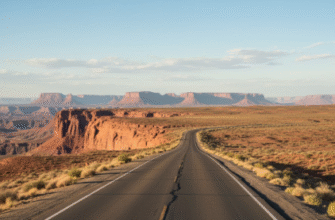
The thing is, this 469-mile ribbon of asphalt connecting Shenandoah National Park in Virginia to Great Smoky Mountains National Park in North Carolina isn’t actually trying to get you anywhere—and that’s precisely the point. Built between 1935 and 1987 (yes, it took over fifty years), the Parkway was designed during the Depression as a public works project that would employ thousands while creating something genuinely beautiful. The speed limit hovers around 45 mph most places, sometimes dropping to 25, and there are no commercial vehicles allowed, no billboards, no gas stations cluttering the views. It’s deliberately slow, almost aggressively so, which used to annoy me until I realized I was missing the entire experience by wanting to rush through it. The National Park Service maintains these 469 miles with something close to obsession—every overlook positioned just so, every curve calculated to reveal mountains at exactly the right moment.
Here’s the thing: roughly 15 million people visit annually, making it America’s most-visited National Park Service unit, and yet somehow it rarely feels crowded. Maybe because it’s linear, not a destination you circle around.
When the Mountains Actually Decide to Show Themselves (or Don’t)
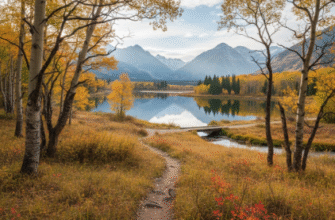
Timing your drive matters more than you’d think—wait, maybe that’s obvious, but people still show up in January wondering why half the road is closed. The Parkway typically opens fully by late April, though higher elevations around Mount Pisgah and the Linn Cove Viaduct can stay shuttered into May if winter’s been harsh. Fall (mid-October) brings the infamous leaf-peepers, and honestly, the crowds can be suffocating around Milepost 364 near Grandfather Mountain. I once sat in traffic for forty minutes just to reach an overlook. Spring offers dogwood and mountain laurel blooms without the masses, but you’re gambling on weather—fog can roll in and obliterate visibility for days. Summer’s reliably clear, though hazy conditions from humidity can flatten those layered mountain views into monochrome disappointment.
The Blue Ridge Mountains themselves are old—like, roughly 480 million years old, give or take, making them some of the most ancient peaks on Earth. They’ve been worn smooth by time, which is why you get these soft, rolling ridgelines instead of the jagged drama of younger ranges out West.
Anyway, the Parkway divides pretty clearly into sections, each with distinct character.
The Virginia Stretch Where Everything Feels Gently Civilized
Mileposts 0 to 216 roll through Virginia with a kind of pastoral elegance—Humpback Rocks at Milepost 5.8 offers a steep but rewarding hike, and Mabry Mill at Milepost 176 might be the most photographed spot on the entire route (cute, if you like that sort of thing, though it feels almost too perfect). The peaks here don’t exceed 3,500 feet much, so you’re winding through farmland and forest without the dramatic elevation changes that come later. I guess it’s pretty, in an unassuming way. Peaks of Otter around Milepost 86 delivers solid hiking and a historic lodge, but honestly, I usually push through Virginia faster because the North Carolina section is where things get weird and wonderful.
North Carolina’s High Country Where the Parkway Gets Serious
Cross into North Carolina around Milepost 217, and elevations start climbing past 5,000 feet—Mount Mitchell, the highest peak east of the Mississippi at 6,684 feet, sits just off the Parkway at Milepost 355. The air thins slightly, temperatures drop, and the vegetation shifts into spruce-fir forests that feel more Canadian than Southern. Linn Cove Viaduct at Milepost 304 is an engineering marvel, a segmented concrete bridge that hugs Grandfather Mountain without disturbing the fragile ecosystem beneath—it was the last section completed in 1987 because figuring out how to build it without wrecking the mountain took decades. Looking Glass Rock near Milepost 417 offers technical rock climbing if you’re into that, and the Graveyard Fields area around Milepost 418 has waterfalls and berry picking come late summer. This section demands slower driving, tighter curves, and more attention—you’re genuinely in the mountains now, not just looking at them from a comfortable distance.
What Nobody Tells You Until You’re Already Committed
There are no services directly on the Parkway—you’ll need to exit to nearby towns for gas, food, and lodging. This catches people off guard. Asheville sits conveniently near Milepost 382 and offers everything from craft breweries to upscale dining, while Boone near Milepost 292 provides a college-town vibe with cheaper accommodations. Cell service is patchy to nonexistent for long stretches, so download maps beforehand. Wildlife—deer, black bears, turkeys—wanders freely, especially at dawn and dusk, and hitting a deer at 45 mph will definately ruin your trip and possibly your car. The Parkway also closes sections without much warning for weather, rockslides, or maintenance; check the NPS website before committing to a specific itinerary because discovering your planned route is blocked at Milepost 340 with no detour under 50 miles is the kind of frustration that lingers. And honestly? Budget more time than you think—those overlooks are addictive, and what you imagined as a six-hour drive easily becomes two days if you’re actually paying attention.
Turns out America’s favorite drive earned that title by refusing to hurry anyone along.