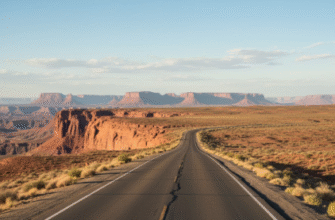
Where the Outlaw Trail Actually Runs Through Mountains That Remember
I’ve driven this route three times now, and each time I forget how the light changes once you hit the Capitan range.
The Billy the Kid Scenic Byway stretches roughly 84 miles through Lincoln County, New Mexico, weaving through the Capitan Mountains where William H. Bonney—yeah, that Billy—allegedly hid from posses in the 1870s. The route connects Ruidoso to Capitan along Highway 48 and 380, climbing through ponderosa forests at elevations that shift from around 5,200 feet to just over 8,000 feet at its highest point. Here’s the thing: the byway isn’t just named for kitsch value. Lincoln, the tiny town at its heart, was ground zero for the Lincoln County War of 1878, the violent cattle-rustling conflict that made Billy famous—or infamous, depending on who’s keeping score. The county courthouse where he escaped custody, killing two deputies, still stands with bullet holes in the wood.
Anyway, the Capitans themselves are older than the outlaw mythology by about 50 million years, formed during the Laramide orogeny when tectonic plates decided to crumple the landscape. The mountains run east-west, unusual for this region, creating microclimates that support Douglas fir and aspen at higher elevations while desert scrub clings to the lower slopes.
What Actually Happens When You Drive It In Early Morning Versus Afternoon
Turns out timing matters more than I thought it would. Morning drives catch mule deer crossing near mile marker 12, and the air smells like wet pine even when it hasn’t rained—something about how the altitude holds moisture overnight, I guess. By afternoon, though, the whole route bakes under direct sun, and the glare off the limestone outcrops near Nogal makes you squint even with sunglasses. I used to think the byway was just a straight shot, but there are at least seven significant curves between the ski area and Lincoln that require genuine attention, especially in winter when black ice forms in shadowed sections. The speed limit drops to 25 mph through Capitan itself, where Smokey Bear—the actual orphaned cub rescued from a 1950 wildfire here—has a museum and burial site that attracts way more visitors than you’d expect for a small-town fire prevention mascot.
The Geology Nobody Mentions But You’ll Definately Notice
The rock layers tilt at weird angles as you climb.
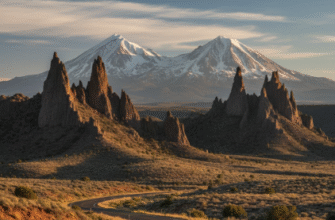
Geologists classify the Capitan Mountains as part of the Sacramento Mountain range, but the exposed Permian-age limestone here is distinct—roughly 250 million years old, formed when this whole area sat under a shallow tropical sea. You can see fossilized marine organisms in roadcuts if you pull over near the turnoff to Bonito Lake, though most people speed past without noticing. The Sierra Blanca peak looms to the south at 11,981 feet, still holding snowpack in May some years, creating a stark contrast with the drier Capitan ridges. Wait—maybe the most disorienting part is how quickly the ecosystem shifts: you’ll pass through Chihuahuan Desert grassland, then suddenly you’re surrounded by 300-year-old ponderosa pines, then back to juniper scrub within five miles.
Why Lincoln Feels Like It Stopped Somewhere Around 1881
The town has about 40 full-time residents now. Most of the original buildings from Billy’s era remain intact because Lincoln became a state monument in the 1930s, freezing development. You can walk into the Wortley Hotel where the Kid ate meals, or the Tunstall Store where his employer John Tunstall—whose murder sparked the Lincoln County War—once sold dry goods. There’s no cell service in the town center, which isn’t charming when you need directions, but does make the experience feel genuinely disconnected from 2025. Honestly, the silence there is uncomfortable at first, like the buildings are waiting for something to resume.
What I Didn’t Expect About The Wildlife Patterns Along This Specific Stretch
Black bears are common enough that the Forest Service posts warning signs every few miles, but I’ve only ever seen scat and claw marks on aspen bark. Elk, though—they congregate in the meadows near Alto in early autumn, and during rutting season you can hear bulls bugling from the roadside, this guttural sound that carries for miles in the thin air. Turkey vultures circle the thermals above the byway constantly, which used to creep me out until I learned they’re just riding updrafts from the heated rock faces, not necessarily hunting. The New Mexico Department of Game and Fish did a population study in 2019 that documented over 200 bird species along this route, including Mexican spotted owls in the higher canyons—though you’d have to hike in to see those, they don’t hang out near the pavement. I guess it makes sense that a mountain corridor would concentrate biodiversity, but the density here surprised researchers because the Capitans are relatively low elevation compared to the Sangre de Cristos up north.