I’ve driven a lot of desolate roads, but the Big Bend Ranch Loop—this 67-mile circuit through the Chihuahuan Desert in far west Texas—sits different in my memory.
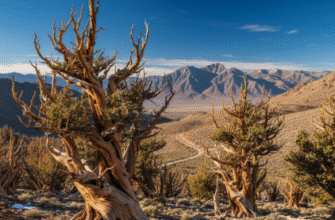
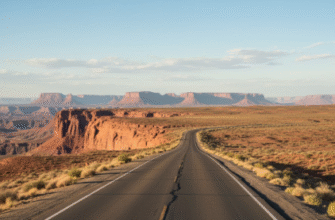
The loop threads through Big Bend Ranch State Park, which spans roughly 311,000 acres and is technically the largest state park in Texas, though nobody seems to agree on whether it’s actually more remote than the national park next door. You enter from either Lajitas or Presidio along Ranch Road 170, the River Road, which hugs the Rio Grande with Mexico visible across the muddy water. Then you veer north onto the interior roads—Fresno-Sauceda Road mostly—and here’s the thing: you’re suddenly in terrain that feels more like another planet than another state. The volcanic tuff formations, ancient lava flows, and this persistent sense that if your car dies out here you’re going to have a very long walk. I used to think desert meant sand dunes, but the Chihuahuan is all creosote bush, lechuguilla agave, and fractured igneous rock that looks like the earth’s crust got bored and shattered itself for entertainment.
Cell service? Gone after about mile three. The ranger station at Sauceda sits roughly at the midpoint, and when I stopped there last spring the guy working told me they’d gone four days without seeing another visitor. “We get maybe 20,000 people a year total,” he said, which sounds like a lot until you remeber Big Bend National Park next door gets 500,000.
When the Road Decides It’s Done With Pavement and What That Means for Your Suspension
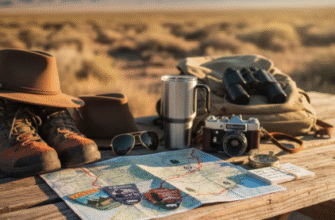
Wait—maybe I should mention that portions of this loop aren’t paved. Like, significantly not paved. The interior section is maintained graded dirt, which sounds fine until you hit it after a rain and realize “maintained” is doing some heavy lifting in that sentence. I’ve seen sedans out there, but I’ve also seen sedans with oil pans that definately weren’t attached anymore. High clearance is recommended; four-wheel drive is better. The park literature says to carry extra water, food, a spare tire, and I guess it makes sense when you’re three hours from the nearest mechanic and the temperature regularly hits 110°F in summer.
The views, though. Honestly, they sneak up on you.
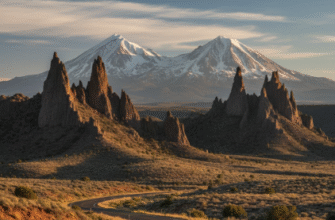
You’ll round a curve and suddenly there’s the Solitario—this massive circular geological formation, an eroded dome roughly 400 million years old—just sitting there like someone carved a giant bowl into the desert and walked away. Then Closed Canyon, where you can park and hike into a slot canyon so narrow your shoulders brush both walls, the limestone streaked with mineral deposits and swallow nests. Farther along: Contrabando Movie Set, a fake frontier town built for some Western films in the ’80s that’s now just weathered facades and lizards. It feels apocalyptic, which I think was the point. The movie was called “Uphill All the Way” and nobody remembers it, but the set remains, slowly reclaiming itself into the landscape.
Anyway, wildlife: you might see javelinas, roadrunners, maybe a desert mule deer if you’re lucky. Mountain lions exist here but operate on a strict “I see you, you don’t see me” policy. At night the sky does that thing where there’s so little light pollution you can see the Milky Way’s structure with your naked eye, which sounds romantic until you realize you’re also standing in prime scorpion territory and should probably check your boots in the morning.
The River Road Section Where Every Photo Looks Fake But Isn’t and Why That Matters
The southern leg along Ranch Road 170 between Lajitas and Presidio is legitimately one of those roads that photographers obsess over—twisting along the Rio Grande through canyons with names like Colorado Canyon and Santa Elena downstream. The rock strata are visible in bands: limestone, shale, volcanic deposits layered like a geological timeline you can read while driving. Mexico’s Sierra Rica range rises on the opposite bank, and there are moments where the two countries feel less like political divisions and more like arbitrary lines drawn across continuous desert. Which, I mean, they are.
Here’s what nobody tells you: the loop isn’t a loop you do casually. Budget six to eight hours minimum, more if you actually want to stop and hike or photograph anything. Fuel up completely before entering—there’s nothing inside the park. The nearest gas after Lajitas is Presidio, 50 miles west, or Study Butte back east. And if you’re planning this between June and September, reconsider. The heat isn’t just uncomfortable; it’s the kind that makes your brain feel like it’s expanding against your skull.
I last drove it in March, when temperatures hovered around 75°F and the desert was doing its brief green phase after winter rains. A park ranger told me they’d had wildflowers earlier that week—desert marigolds, bluebonnets in the higher elevations—but I missed them. That’s the Chihuahuan for you: brief moments of color swallowed immediately back into the predominant brown-gray-tan palette that defines most of your experience out there. Still, I’d go back. There’s something about driving roads where you genuinely might not see another human for hours, where the landscape doesn’t care about you at all, that recalibrates your sense of scale. Or maybe I just like feeling small sometimes.