Why Your Standard Roadside Kit Probably Won’t Save You When Things Go Sideways
I used to think those pre-packaged emergency kits were enough.
Then I spent three hours on the shoulder of I-40 watching a family try to change a tire with a scissor jack that buckled under their SUV’s weight, and honestly, it changed how I think about automotive preparedness entirely. The dad—let’s call him Mark—had one of those $30 kits from a big-box store, the kind with jumper cables so thin they might as well be shoelaces, and a flashlight that died after maybe eight minutes of use. He’d done everything right on paper: kept an emergency kit in the trunk, checked it once when he bought it, assumed he was covered. But here’s the thing—most commercial kits are designed to meet a price point, not to actually function when your alternator dies in a rainstorm or you slide into a ditch on black ice. The gap between what people think they need and what actually works in a crisis is, roughly speaking, about as wide as the Grand Canyon, give or take. I watched Mark’s frustration turn to genuine fear as darkness fell and his phone battery drained to 4%, and I realized that survival gear isn’t about checking boxes—it’s about understanding what failure actually looks like when you’re alone and everything’s gone wrong.
Multi-Tools That Actually Earn Their Weight When You’re Stranded
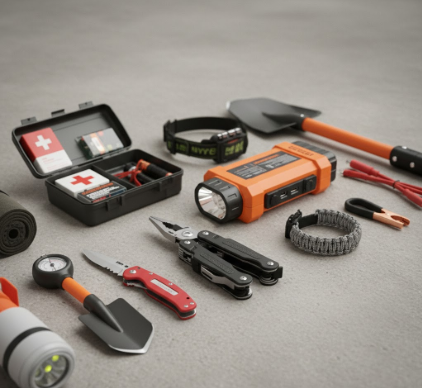
The Leatherman Wave+ keeps showing up in my trunk for a reason. It’s got 18 tools, sure, but more importantly it has needle-nose pliers that can grip a stripped bolt, wire cutters that can handle actual automotive wire, and a saw that—wait, maybe this sounds like marketing copy, but I’ve used that saw to cut through a seatbelt when a door wouldn’t open after a minor collision. The thing costs around $120, which seems steep until you’re trying to pry open a jammed hood latch at 11 PM.
I guess the Gerber Suspension-NXT makes sense for people on tighter budgets—about $35, and it covers maybe 70% of what the Leatherman does. The spring-loaded pliers are surprisingly decent, though I’ve noticed the knife blade dulls faster than I’d like. Some folks swear by the Victorinox SwissTool, and I get it—the build quality is absurd, almost overengineered—but it’s also $140 and feels like overkill unless you’re also using it for wilderness camping. Honestly, the best multi-tool is the one you actually keep in your vehicle and know how to use, which sounds obvious but you’d be surprised how many people buy expensive gear and leave it in a drawer at home.
Flashlights and Power Banks That Don’t Quit After Ten Minutes of Actual Use
Here’s where most emergency kits completely fall apart.
I’ve tested maybe a dozen automotive flashlights over the last five years—cheap ones, expensive tactical ones, those weird dynamo crank things—and the pattern is always the same: advertised lumens mean nothing if the battery dies or the switch breaks after three months in a hot trunk. The Streamlight ProTac HL-X is one of the few that’s consistently worked for me—1,000 lumens, runs on either CR123A batteries or a rechargeable pack, and it’s survived summer trunk temperatures that probably violated several laws of thermodynamics. Cost is around $70, which feels like a lot until you’re changing a tire in the dark and can actually see what you’re doing. The magnetic base is clutch too—stick it on your car’s frame and suddenly you have hands-free lighting, which turns out to be essential when you’re trying to thread a lug nut with cold fingers. But the flashlight is only half the equation, because if your phone dies you can’t call for help, and that’s where power banks enter the picture. I keep an Anker PowerCore 20000mAh in my glove box year-round—it’s held its charge for months at a time, can jump-start my phone from dead to 50% in maybe twenty minutes, and costs about $50. Some people prefer solar-charging models, and I respect the impulse, but I’ve found that solar panels need consistent sun exposure to be useful, and emergencies don’t typically wait for good weather. The RAVPower 25000mAh model has built-in jumper cables that can actually start a small engine, which sounds gimmicky but genuinely works on most four-cylinder cars—I’ve used it twice, once on my own Civic and once to help a stranded couple in a Walmart parking lot.
Tire Repair and Inflation Tools That Might Actually Get You Home
Scissor jacks are basically designed to fail. I don’t know why manufacturers still include them, except that they’re cheap and take up minimal space, but I’ve seen three collapse under normal use—one of them nearly took off someone’s hand. A proper hydraulic jack like the Torin Big Red costs around $40, weighs maybe fifteen pounds, and can lift two tons without breaking a sweat.
Pair it with a four-way lug wrench instead of that ridiculous L-shaped thing that comes with your spare tire kit, and suddenly changing a tire becomes manageable instead of impossible. But here’s the thing—modern low-profile tires fail differently than the tires our parents dealt with. A nail in a 2015 sidewall often means you’re not driving on that tire again, period, because the structural damage is too severe. That’s where tire plug kits and portable air compressors become essential. The ARB CKMP12 compressor is stupid expensive at around $200, but it can inflate a completely flat tire in under five minutes, runs off your cigarette lighter, and doubles as an air source for air mattresses or sports equipment when you’re not having a roadside crisis. For tire plugs, the Boulder Tools kit ($15, comes in a little plastic case) has saved me probably four tow truck calls over the years—you ream out the puncture, insert the plug, trim it, and re-inflate, and if you’ve done it right you can drive another 5,000 miles on that repair. It’s not a permanent fix, technically, but I’ve definately pushed that boundary further than mechanics would reccommend.
The Unglamorous Stuff That Matters More Than You’d Think in Real Winter Breakdowns
Nobody wants to think about being stranded overnight. But it happens—a lot more than people realize, especially in rural areas where tow trucks might take three or four hours to arrive, or in blizzard conditions where they’re not coming at all until morning. I carry a Mylar emergency blanket (costs maybe $2, weighs nothing, reflects 90% of body heat), a box of protein bars that I rotate out every six months, and two liters of water in metal bottles because plastic can crack in extreme cold.
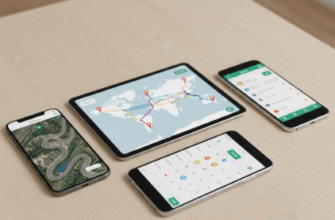
Anyway, I also keep a small folding shovel—the Gerber Gorge costs about $25 and has gotten my car unstuck from snow three times—and a bag of cat litter for traction, which sounds like folk wisdom but genuinely works when your tires are spinning on ice. Road flares or LED emergency beacons are critical too; the Osram LEDguardian costs $30 for a two-pack and they’re visible for over half a mile, which matters when you’re parked on a curve and worried about someone rear-ending you at highway speed. First aid supplies are obvious but often overlooked—I keep a real kit, not the band-aid-and-alcohol-wipe nonsense, with trauma gauze, a tourniquet, and burn gel, because car accidents can involve injuries that need immediate treatment before EMTs arrive. And honestly, a physical paper map of your region belongs in every glove box, because GPS fails when your phone dies and cell towers go down more often than we like to admit, especially in severe weather. I used to think that was paranoid prepper stuff, but I’ve been lost enough times to know that digital convenience has made us fragile in ways we don’t recognize until the systems fail and we’re alone with our poor planning.