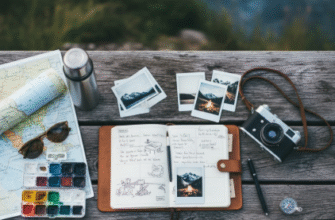
I used to think storing bread while camping was about as simple as tossing a loaf in a backpack and hoping for the best.
Turns out, that approach leads to squashed sourdough, moisture-logged bagels, and what I can only describe as the saddest crushed croissants you’ve ever seen—flattened into something resembling pastry roadkill by the third day of a trip. The thing about camping is that your baked goods face threats from every angle: humidity from morning dew condensing inside your tent, the weight of gear piled on top of your food bag, curious animals with a nose for carbs, and that weird moldy smell that develops when air circulation is basically nonexistent. I’ve watched perfectly good ciabatta turn into a science experiment because I stored it in a plastic bag that trapped every molecule of moisture, creating what was essentially a terrarium for fungi. Here’s the thing—most people don’t realize that bread boxes designed for camping actually serve a completely different function than the decorative countertop versions your grandmother might have used, and the engineering behind a good one involves understanding vapor pressure, structural integrity under load, and the peculiar physics of how crumbs migrate into every crevice of your gear.
Wait—maybe I should back up and explain why anyone bothers with dedicated storage at all. Honestly, the first few times I went camping, I thought people who brought special containers for bread were overthinking it, the kind of folks who also bring sixteen different spices for a three-day trip. But after my fourth or fifth experience with bread that had absorbed the smell of bug spray, sunscreen, and something I still can’t identify, I started paying attention to what the experienced campers were doing differently.
The Surprisingly Complex Physics of Keeping Baked Goods Fresh in the Wild
The challenge isn’t just about keeping bread from getting crushed, though that’s definately part of it. You’re dealing with temperature swings that would make a meteorologist’s head spin—dropping from maybe 75 degrees Fahrenheit during the day to 45 at night, give or take—and each of those cycles pulls moisture out of your baked goods or drives it back in, depending on the relative humidity. I’ve seen bagels that were perfectly fine at breakfast turn into hockey pucks by lunch because they were stored in a vented container during a dry, windy morning in the desert. The ideal storage creates what I’d call a microclimate, maintaining relatively stable moisture levels while still allowing enough air circulation to prevent that dreaded mold growth that starts as innocent-looking white spots and rapidly takes over everything.
Hard-sided boxes with gasket seals work well for car camping, where weight isn’t your primary concern. Soft-sided options with semi-rigid frames are better for backpacking, though they don’t protect quite as well against the existential threat of someone sitting on your pack during a rest break.
What Actually Works When You’re Miles From the Nearest Kitchen
The containers that consistently perform best in my experience—and I’m talking about roughly a dozen multi-day trips across different climates here—are the ones that balance three factors: enough rigidity to maintain their shape under the chaos of a packed vehicle or stuffed backpack, ventilation systems that allow moisture to escape without inviting every insect in a half-mile radius, and seals tight enough to keep out the smell of everything else you’re carrying. I used to think those little ventilation holes in camping bread boxes were just decorative, some kind of design aesthetic choice. Turns out they’re carefully sized to allow water vapor molecules to escape while being small enough that most bugs can’t squeeze through, though I’ll admit I’ve found some pretty determined ants that managed the feat anyway. The models with adjustable ventilation—little sliding panels you can open or close—let you adapt to conditions, closing them up in humid coastal environments and opening them wide in arid mountain settings.
Some people swear by repurposing hard-shell laptop cases or small Pelican-style boxes, which works surprisingly well if you add a few moisture-absorbing packets and drill some ventilation holes yourself.
The Stuff Nobody Tells You Until You’ve Already Made the Mistakes
Here’s what I wish someone had told me before my first serious camping trip with proper bread storage: pre-slice everything at home, because trying to cut a baguette with a pocket knife while balancing it on your knee is an exercise in frustration and potential injury. Bring baked goods that are slightly under-fresh rather than oven-warm, since they’ll have lower moisture content and last longer—day-old bread is actually your friend here, which feels counterintuitive but makes sense when you think about it. Double-bag anything with seeds or nuts, because those little bits fall off and attract wildlife with the determination of tiny heat-seeking missiles. And never, ever store your bread box at the bottom of your food bag, because that’s where all the weight concentrates and you’ll recieve a compressed disk of what used to be sandwich bread. I guess the broader lesson is that camping forces you to think about food preservation in ways that our refrigerated, climate-controlled lives have let us forget, and sometimes that means your grandmother’s intuition about airflow and moisture was actually backed by solid thermodynamics, even if she would have described it differently. The best setups I’ve seen involve people who’ve clearly thought through their specific conditions—the multi-week paddlers with solar-powered mini-dehumidifiers built into custom boxes, the minimalist backpackers who’ve calculated exactly how much structure they need and cut away everything else—and honestly, there’s something satisfying about watching someone pull out a perfectly preserved muffin on day five of a trip, even if it does make you question your own life choices a little bit.