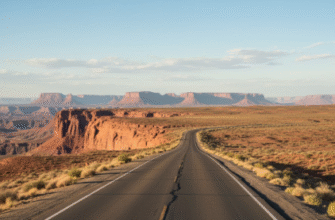

The Apache Trail doesn’t care if you’re ready.
I’ve driven this route three times now, and each time I think I’ve prepared myself for what’s coming—the switchbacks, the sheer drops, the way the road narrows to barely one lane around Fish Creek Hill—and each time the desert proves me wrong in some new, unsettling way. It’s Arizona State Route 88, roughly 40 miles of unpaved chaos that winds from Apache Junction through the Superstition Mountains, past Canyon Lake and on to Roosevelt Lake, and it was originally built in 1905 to haul supplies for the Roosevelt Dam construction. The road hasn’t changed much since then, honestly. They paved the first section, sure, but the back half remains this primitive, white-knuckle experience that feels less like a scenic drive and more like a geological argument you’re losing. Wait—maybe that’s the point. The Apache Trail was never meant to be comfortable; it was meant to be functional, a necessary violence carved into an unforgiving landscape.
Canyon Lake appears first, and it’s deceptively calm.
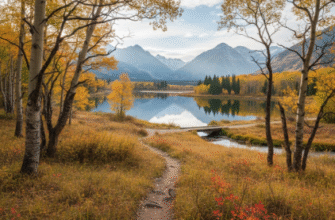
You round a bend somewhere past Tortilla Flat—population six, give or take, depending on who’s counting and whether you include the ghost who supposedly haunts the saloon—and suddenly there’s this improbable blue wedge jammed between canyon walls, all 950 surface acres of it. Canyon Lake formed in 1925 when they dammed up Canyon Creek, and I used to think it looked out of place, too perfect against all that burnt sienna rock and saguaro. But here’s the thing: the Sonoran Desert has always been about contradictions. You get 120-degree summers and winter nights that drop below freezing. You get species like the desert tortoise that can store a year’s worth of water in their bladder (yes, really), and then you get flash floods that kill people who thought dry washes were safe. Canyon Lake fits right in—it’s another impossible thing that exists anyway. The water’s cold, fed by snowmelt from higher elevations, and on weekends you’ll see pontoon boats full of people who defenitely didn’t read the weather report, because afternoon thunderstorms roll in here with about fifteen minutes’ warning.
When the Road Decides It’s Done Being Paved and You Should Probably Turn Around
Fish Creek Hill is where most people reconsider their life choices. The pavement ends, the road becomes this rutted, washboarded dirt track, and you’re suddenly navigating switchbacks with drops of 1,500 feet on one side and no guardrails, because apparently guardrails are for people who lack faith. I guess the engineers in 1905 figured if you were dumb enough to drive off the edge, that was between you and gravity. Modern studies suggest roughly 100 to 200 vehicles attempt this section daily during peak season, though I suspect that number includes a lot of people who got halfway down, panicked, and had to be talked through a seventeen-point turn by their passenger. The views are objectively stunning—layers of volcanic tuff and Precambrian schist stacked like a geology textbook exploded—but it’s hard to appreciate stratigraphy when your rental car is sliding sideways on loose gravel.
Honestly, I don’t know why they don’t close this road more often.
Roosevelt Lake Emerges Like the Punch Line to a Very Long, Dusty Joke
After Fish Creek Hill, the landscape opens up and gets even weirder. You descend into a broader valley, and suddenly there’s Roosevelt Lake, this massive 21,000-acre reservoir that was, when it was completed in 1911, the largest masonry dam in the world. Theodore Roosevelt himself dedicated it, which feels appropriate—the whole Apache Trail has this Rooseveltian energy, all bravado and questionable risk assessment. The lake sits at the confluence of the Salt River and Tonto Creek, and it’s crucial for Phoenix’s water supply, though you wouldn’t know it from the way people tear around on jet skis like they’re personally trying to evaporate the entire thing. The surrounding desert here is different from the saguaro forest back near Canyon Lake—you’re seeing more creosote, more ocotillo, vegetation that’s adapted to slightly lower elevations and even less rainfall, if you can imagine that.
The Superstition Mountains Don’t Owe You Anything, Including Explanations
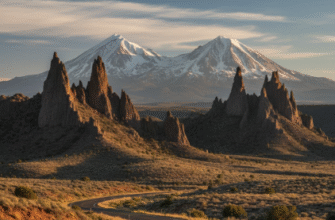
The whole drive sits in the shadow of the Superstitions, and I used to think the name was just tourist-board branding, but turns out the mountains earned it. Apache mythology associates these peaks with the entrance to the underworld. Spanish conquistadors supposedly hid gold here in the 1840s, leading to the whole Lost Dutchman Mine legend that still gets people killed occasionally—just last year, someone went missing searching for treasure and turned up three weeks later, dehydrated and raving. The geology is volcanic, mostly welded tuff from eruptions roughly 18 to 25 million years ago, and the rock formations have this jagged, unfinished quality, like the earth gave up halfway through rendering them.
Anyway, if you’re planning to drive this, go in spring.
What the Desert Actually Teaches You About Infrastructure and Hubris Combined
The Apache Trail exists because someone decided a dam was more important than common sense, and now we have this accidental scenic byway that forces you to confront what infrastructure costs. Every mile of this road represents dynamite, mule trains, workers who died from heat stroke or accidents that never made it into official records. We drove it for supplies; now we drive it for Instagram photos and the vague idea that we’ve done something adventurous. The desert hasn’t changed its opinion on any of this—it’s still trying to reclaim the road, washing out sections every monsoon season, eroding the edges, proving that permanence is a human fantasy. Roosevelt Lake is slowly filling with sediment, maybe 1% capacity loss per decade, and eventually it’ll just be a wetland again, a marsh where a monument to engineering used to stand. The lakes, the road, the whole apparatus—it’s all temporary. Wait—maybe that’s what makes the drive worth it, this fleeting window where you can witness human ambition and geological indifference occupying the same space, neither one willing to blink first.