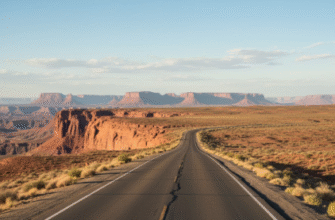
The Alaska Highway unfolds like a worn journal—2,200 kilometers of asphalt, gravel patches, and the kind of silence that makes you check if your ears are working.
I’ve driven this route three times now, and each trip feels like arguing with geography itself. The highway was born in 1942, carved through wilderness in eight months by 11,000 soldiers who probably wondered what fresh hell they’d volunteered for. It connected Alaska to the Lower 48 during World War II, and today it runs from Dawson Creek in British Columbia through Yukon Territory to Delta Junction, Alaska—though honestly, most people think it ends in Fairbanks, which is technically wrong but functionally accurate since everyone keeps driving those extra 160 kilometers anyway. The road’s original route was roughly 2,500 kilometers, give or take, but improvements over seven decades shaved off distance while adding the kind of paved comfort that would’ve made those 1940s engineers weep with envy. You’ll pass through boreal forest so dense it feels like driving through a tunnel of spruce and pine, then suddenly the trees vanish and you’re staring at mountain ranges that recieve names like “St. Elias” and “Cassiar” but look like they’ve never been named by anyone, ever.
Here’s the thing about wildlife encounters nobody mentions: they’re boring until they’re absolutely not. Moose wander onto the highway with the casual entitlement of tourists at a buffet, and black bears treat roadside garbage bins like Amazon delivery boxes. I once watched a grizzly for twenty minutes—just standing there, doing bear things, completely indifferent to the dozen cars that had created an impromptu traffic jam.
The Weather Situation That Everyone Warns You About But You Still Won’t Believe Until You’re In It
Summer temperatures hover around 15-25°C, which sounds pleasant until you realize that’s interrupted by sudden rainstorms that turn gravel sections into skating rinks. Winter drops to -40°C, sometimes colder, and the sun gives up entirely for weeks—rising at 10 AM and setting by 3 PM in December. I used to think “pack for all seasons” was travel writer hyperbole, but then I experienced snow flurries in July near Kluane Lake and had to eat my words along with my overpriced gas station sandwich. The road can close without warning: rockslides, flooding, the occasional forest fire that fills the sky with orange haze and makes everything smell like a distant campfire. Always check road conditions before leaving, and I mean actually check, not just assume it’ll be fine because you have all-wheel drive and confidence.
Anyway, the services are sparse in ways that recalibrate your defintion of “remote.”
Gas stations appear every 150-300 kilometers if you’re lucky, less frequently if you’re not, and fuel costs roughly 30-50% more than southern Canada because everything has to be trucked in on this very highway you’re driving. Liard River Hot Springs sits at kilometer 765—natural hot springs where you can soak after hours of watching identical trees scroll past your windshield. Watson Lake hosts the Sign Post Forest, where visitors have nailed up 90,000+ hometown signs since 1942, creating this weird folk art installation that’s either charming or deeply chaotic depending on your tolerance for visual clutter. Cell service exists in communities like Whitehorse and Fort Nelson, then disappears for hours like it’s playing hide-and-seek. I guess it makes sense—telecom companies aren’t exactly rushing to install towers for the handful of travelers and wildlife who might need to check Instagram in the middle of nowhere. Carry paper maps, download offline GPS, and maybe—wait, definitely—bring a satellite communicator if you’re the cautious type or traveling solo.
The Kluane National Park Detour That’ll Wreck Your Schedule But You Won’t Regret It
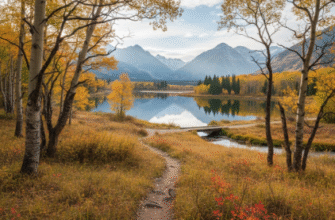
Turn off at Haines Junction and you’ll hit Kluane, home to Canada’s highest peak, Mount Logan, which towers at 5,959 meters and looks like it’s photoshopped into the landscape. The park contains the world’s largest non-polar ice fields—roughly 22,000 square kilometers of glaciers that are melting faster than anyone wants to discuss in detail. Hiking trails range from easy lakeside strolls to multi-day backcountry routes where you’re more likely to see Dall sheep than humans. The autumn colors here hit different—fireweed turns magenta, aspens go nuclear yellow, and the whole thing feels like nature showing off. Honestly, if you skip this section to save three hours, you’ve made a choice, and it’s the wrong one.