The Abajo Mountains don’t announce themselves the way you’d expect a mountain range to.
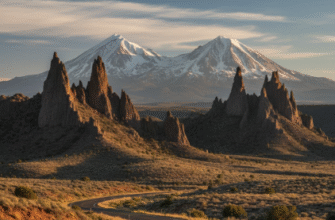
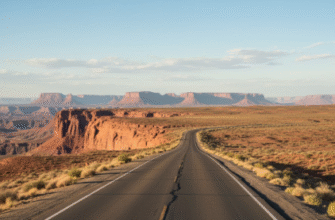
I first drove past them on Highway 191, coming up from the Arizona border on a Tuesday in late September, and what struck me wasn’t their height—they top out around 11,360 feet at Abajo Peak, respectable but not dramatic by Colorado standards—but the way they rise so abruptly from the high desert plateau surrounding Monticello, like someone dropped a chunk of the Rockies into southeastern Utah and forgot to blend the edges. The whole massif is what geologists call a laccolith, basically a blister of igneous rock that pushed up through sedimentary layers roughly 25 to 28 million years ago, give or take, creating this weird dome of ponderosa pine and aspen in a landscape otherwise dominated by sagebrush and slickrock. The Ute people called them the Blue Mountains. Spanish explorers went with “Abajo”—literally “below”—because they sat south of the La Sal range. I guess it makes sense, though it’s a pretty uninspired name for something so geologically strange.
Monticello itself feels like a place people pass through rather than visit, which is probably unfair. The town has maybe 2,000 residents, serves as the San Juan County seat, and functions primarily as a supply hub for ranchers and uranium miners. Wait—maybe that’s harsh.
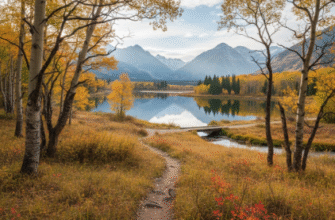
But here’s the thing: the Manti-La Sal National Forest wraps around these mountains like a green belt, and once you start climbing Forest Road 105 toward the Alpine Loop, the landscape transforms so completely it feels like crossing into another state entirely. You move from pinyon-juniper scrubland through gambel oak thickets, then into ponderosa zones where the light filters through in those golden afternoon shafts that make you stop the car for no reason except to stand there. Higher up, Engelmann spruce and subalpine fir take over, the air thinning and cooling, and if you’re there in early October the aspens are doing that thing where they don’t just turn yellow but seem to vibrate with color, this almost painful brightness against the dark conifers.
The Alpine Loop That Doesn’t Quite Loop and Why That Matters Anyway
Turns out the Abajo Alpine Loop isn’t actually a loop.
It’s more of an L-shaped route—Forest Roads 105 and 079—that climbs from around 7,000 feet near Monticello up past timberline and back down, covering maybe 20 miles depending on which spur roads you take. I used to think all “alpine loops” were, you know, loops, but apparently the naming conventions for forest service roads are more aspirational than literal. The route passes through aspen groves so dense you lose sight of the sky, meadows full of lupine and indian paintbrush in July, and overlooks where you can see the La Sal Mountains to the north, the Henrys to the west, and on clear days—I’ve heard, though I haven’t experienced it myself—the San Juan range in Colorado. The road’s condition varies wildly: sometimes graded gravel, sometimes two-track with rocks that’ll scrape your oil pan if you’re not careful.
What Lives Up There When Nobody’s Watching Particularly Closely
The ecology shifts fast with elevation. Mule deer, obviously. Black bears, which I’ve never seen but whose scat I’ve definately stepped around. Elk move through in fall, their bugling echoing across the ridges in a way that sounds less majestic and more like rusty hinges if I’m being honest. Mountain lions are present but cryptic. There’s a surprising amount of beaver activity in the higher drainages—Kigalia Creek, Horsehead Creek—where they’ve built dams that create these small wetlands, little pockets of biodiversity in an otherwise dry region. The bird situation is better than you’d expect: Steller’s jays, mountain bluebirds, northern goshawks, and occasionally someone reports a boreal owl, though I remain skeptical about half those sightings.
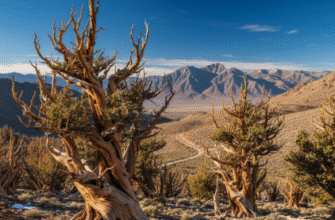
The tree line sits around 10,500 feet, and above that it’s mostly krummholz—those twisted, wind-battered spruce and fir that grow horizontally more than vertically.
Why the Fire History Here Feels Different and Maybe More Complicated Than We’d Like
Fire ecology in the Abajos doesn’t fit neat narratives. The range is small enough and isolated enough that fires historically burned in patchy mosaics rather than the stand-replacing crown fires you see in larger montane systems. Ponderosa zones probably burned every 10 to 30 years pre-settlement, keeping understories open. Higher elevation spruce-fir forests operated on longer cycles, maybe 100 to 300 years. But then came livestock grazing in the late 1800s, which reduced fine fuels and actually suppressed fire for a while—wait, that sounds counterintuitive, but it’s what the fire history studies suggest. Then came active suppression in the 20th century, fuel loading, and now we’re in this awkward phase where the forests are denser and more vulnerable than they’ve been in centuries. A 2021 fire near North Creek burned hotter than ecologists expected, killing aspens that normally resprout aggressively. I don’t know what the management answer is, honestly, and I’m not sure anyone else does either.
Anyway, the Abajos remain this weird pocket of montane habitat, ecologically disconnected from other ranges, quietly doing their thing while most visitors head to Moab or Canyonlands instead.