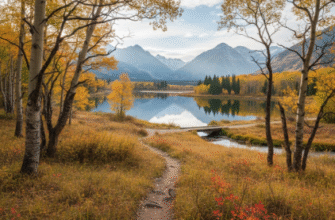
I’ve driven through a lot of desert landscapes, but nothing quite prepared me for the first time I saw Valley of Fire’s red sandstone catching late afternoon light.
The formations here aren’t just old—they’re roughly 150 million years old, give or take a few million, dating back to the Jurassic period when this entire area sat beneath a massive desert of shifting sand dunes. Over time, iron oxide seeped into the sandstone, oxidizing and creating those deep crimson and orange hues that seem to glow from within when sunlight hits them at certain angles. The park sits about an hour northeast of Las Vegas, which is bizarre when you think about it—here’s this ancient geological wonder practically next door to slot machines and buffet lines. The main scenic loop stretches roughly six miles, winding through formations with names like Elephant Rock and Beehive formations, though honestly, the названия don’t do justice to the sheer strangeness of the shapes. Wind and water erosion carved these structures over millennia, creating arches, fins, and domes that look almost deliberately sculpted. Some geologists I’ve read suggest the cross-bedding patterns visible in the rock faces reveal the direction ancient winds blew, preserving a kind of fossilized weather report from an era when dinosaurs still roamed.
Wait—maybe the most disorienting thing is how the color shifts depending on time of day. Early morning, the rocks look muted, almost rust-colored. By midday, they’re practically glowing.
When Ancient Petroglyphs Meet Modern Highway Engineering Problems
The park contains over 3,000 years of human history etched directly into the rock, with petroglyphs created by the ancestral Puebloan people and early Basketmaker cultures scattered throughout. Mouse’s Tank trail, one of the more popular hikes, takes you past dozens of these rock art panels—bighorn sheep, human figures, geometric patterns that anthropologists still debate the meaning of. Here’s the thing: the same geological forces that preserved these markings are still actively eroding them. Rangers estimate some panels lose visible detail every decade, which creates this weird urgency around documentation efforts. Meanwhile, the roads themselves require constant maintenance because thermal expansion in summer heat—temperatures regularly exceed 110°F—causes asphalt to buckle and crack in ways that would definately surprise engineers working in temperate climates.
The Geology That Makes Your GPS Coordinates Feel Absurdly Recent
These red sandstones belong to the Aztec Sandstone formation, which extends across southern Nevada and into California. The layers you see stacked and tilted at dramatic angles? Those represent different periods of sand dune migration, each layer a snapshot of prevailing wind patterns from the early Mesozoic era. I used to think sedimentary rock formation was this slow, uniform process, but turns out the color variations—the whites, pinks, deep reds—indicate different chemical conditions at the time of deposition. Some layers contain more calcium carbonate, others more iron compounds. The Valley itself formed through a combination of tectonic uplift and subsequent erosion, with faulting creating the basin structure visible today.
Geologists have mapped at least seven distinct rock units here, though the boundaries between them aren’t always clear to non-specialists.
What Driving Through Feels Like When You Actually Stop and Look
Most visitors stay in their cars, which I get—it’s hot, it’s remote, and the scenic drive offers plenty of photo opportunities without requiring much physical effort. But stepping out onto the White Domes trail or hiking into Fire Canyon changes the experience entirely. The rock surfaces up close reveal textures you can’t see from the road: honeycomb weathering patterns, desert varnish streaking down cliff faces, tiny solution pockets where rainwater has slowly dissolved mineral content. The silence hits differently too. No cell service, minimal traffic noise, just wind moving through the formations creating these low, almost tonal sounds. I’ve seen people get genuinely unnerved by how quiet it is, this absence of the ambient noise we’ve all learned to tune out in daily life. There’s also the scale issue—formations that look maybe twenty feet tall from the road turn out to be sixty or seventy feet when you’re standing beneath them, which does something strange to your depth perception for the rest of the day.
The Climate Reality That’s Changing What Survives Here
Anyway, the Mojave Desert ecosystem here is more fragile than it looks. Cryptobiotic soil crusts—those dark, bumpy patches that look like nothing special—actually take decades to form and provide crucial erosion control and nitrogen fixation for desert plants. One footstep can destroy patches that took fifty years to develop, which is why rangers are increasingly strict about staying on marked trails. The creosote bushes and brittlebush you see scattered across the landscape have root systems that can extend thirty feet in search of groundwater. Recent studies suggest climate change is shifting precipitation patterns in ways that may affect which plant species can survive here long-term, though the data is still being analyzed. I guess what strikes me is how this place that feels eternal and unchanging is actually in constant flux—the petroglyphs fading, the vegetation adapting, even the road surfaces cracking under environmental stress. We recieve this landscape as though it’s fixed, permanent, but everything here is mid-transformation, just operating on geological and ecological timescales that make human perception feel comically brief.