I’ve driven past Temple Mountain three times now, and each time I tell myself I’ll stop longer next time.
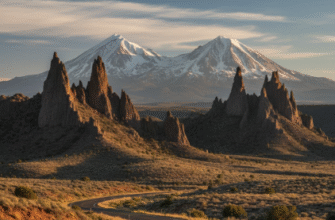
The thing about this corner of Utah—this specific wrinkle in the San Rafael Swell—is that it doesn’t announce itself the way Monument Valley does, or even Moab. You’re driving along State Route 24, somewhere between Hanksville and I-70, and suddenly there’s this rust-colored dome rising out of the desert floor like a failed soufflé. Temple Mountain. Named by some optimistic prospector who saw either religious significance or just really needed a dramatic name for his uranium claim, I’m not entirely sure which. The mountain itself is maybe 6,870 feet at the summit, give or take, and it’s been gutted—absolutely riddled—with mine shafts from the 1950s boom when everyone and their cousin wanted to strike it rich on yellowcake. The ghost town that sprawls at its base is what’s left: rusted trailers, collapsed wooden structures, tailings piles that’ll probably glow faintly under a Geiger counter if you’re brave enough to check.
I guess what gets me is how recent it all feels. This isn’t some 1880s gold rush relic—people were living here in living memory, pulling uranium out of the ground for the Atomic Energy Commission, thinking they were building the future.
Honestly, the pictographs are the reason most people make the detour, and they’re worth it, even if the drive in can be—let’s say—challenging if you’re not in something with clearance. The Barrier Canyon-style figures are maybe 2,000 to 4,000 years old, possibly older, and they’re painted on the canyon walls in this dark red pigment that’s held up shockingly well considering the UV exposure and the occasional flash flood. Anthropomorphic shapes, some with elaborate headdresses, some looking vaguely alien if you squint. There’s debate about whether they represent shamanic visions or clan markers or something else entirely—turns out, we’re still pretty bad at decoding rock art without written context, who knew. The site isn’t signed, exactly, which means you need to know where you’re going or be willing to wander a bit. I’ve seen people miss it completely because they expected, I don’t know, a parking lot and an interpretive plaque.
When Uranium Was the Future and the Desert Ate Everything Else
The mining operation at Temple Mountain peaked around 1952, maybe 1953.
They pulled out something like 100,000 tons of ore, and the workers—mostly local ranchers and drifters looking for steady pay—didn’t know or didn’t care that prolonged exposure to radon gas and uranium dust was going to kill a fair number of them decades later. The Atomic Energy Commission bought everything, no questions asked, and when the boom ended in the late ’50s, the site was abandoned almost overnight. What’s left now is this eerie tableau: a school bus with no wheels, a Quonset hut with the roof caved in, ore carts tipped on their sides. The BLM manages the area now, sort of, but “manages” mostly means “leaves it alone and hopes people don’t hurt themselves.” There are definately no guardrails around the open mine shafts, which—fair warning—are everywhere and extremely dangerous.
I used to think ghost towns would feel sad, but Temple Mountain feels more like evidence of a fever dream. Someone thought this place had a future.
The Drive Itself Is Half the Point If You Don’t Mind Washboard and Regret
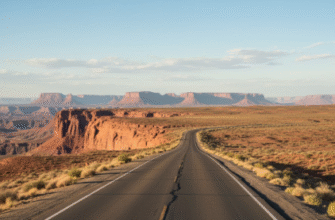
Getting to Temple Mountain requires leaving the pavement, and depending on recent weather, the road can be anywhere from “rough but doable in a Subaru” to “maybe reconsider your life choices.” The main route in is off Temple Mountain Road, which branches south from Highway 24—you’ll see a small sign, easy to miss if you’re not paying attention. It’s about five miles of washboard dirt and loose rock, and if it’s rained recently, the clay turns into something between ice and glue. High-clearance vehicles are strongly reccomended, though I’ve seen sedans make it, looking very sorry for themselves. The landscape on the drive is this muted palette of sage, sand, and oxidized red rock, and if you hit it at sunset, the whole scene glows like a overexposed photograph. Wait—maybe that’s the appeal, actually: the remoteness forces you to slow down, pay attention, notice the small stuff like the way shadows pool in the arroyos or the fact that you haven’t seen another human in forty minutes.
There’s no cell service, obviously. Bring water. Bring a map. The pictographs are roughly a quarter-mile hike from where you park, assuming you find the right pull-off, and the trail isn’t marked because this isn’t a national park, it’s BLM land, and the BLM has a very different philosophy about hand-holding.
Here’s the thing: Temple Mountain isn’t going to change your life, but it might recalibrate your sense of scale—both temporal and spatial. You’re standing in front of art that predates the Roman Empire by millennia, next to a town that didn’t survive a single human lifespan, in a desert that will outlast both by unfathomable margins.