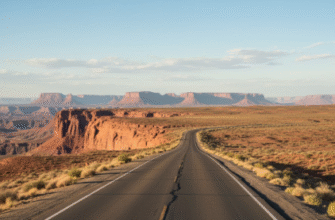
I’ve driven a lot of roads through Utah’s canyon country, but the Smoky Mountain Road—the one that threads through the Grand Staircase-Escalante, skirting the Paria River wilderness—still gets under my skin in ways I can’t quite articulate.
Here’s the thing: this isn’t a road in the sense most people think of roads. It’s a 78-mile dirt track that starts near Big Water, Utah, and winds through some of the most geologically turbulent terrain in North America—layers of Navajo sandstone, Kayenta formations, and Chinle mudstone that date back roughly 200 million years, give or take a few million. The Grand Staircase itself is this massive sequence of sedimentary rock layers that step down from Bryce Canyon to the Grand Canyon, each layer representing a different epoch when ancient seas, deserts, and river systems dominated what’s now the Colorado Plateau. You’re driving through deep time, essentially, and the Smoky Mountain route cuts right through the middle strata, where the Paria River has carved its own stubborn path through rock that was old when dinosaurs were just getting started. The road condition depends entirely on recent weather—I’ve seen it bone-dry and passable in a sedan, and I’ve also seen it turn into a chocolate-milk slurry that’ll swallow a truck up to its axles. Wait—maybe that’s overstating it, but only slightly.
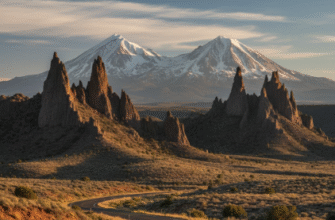
The Paria River wilderness area itself sprawls across about 112,500 acres of designated wilderness, which means no motorized vehicles allowed once you step off the road. The river—more of a seasonal creek, honestly—drains into the Colorado River system and has been cutting through these formations for millions of years, creating slot canyons and hoodoos and these weird, mushroom-shaped rock formations that look like something out of a fever dream. I used to think erosion was this slow, steady process, but out here you can practically see the landscape changing year to year.
When the Road Becomes a Geologic Time Machine Through Ancient Seabeds
Anyway, the Smoky Mountain designation comes from the dark, almost charcoal-colored volcanic rock and ash layers that cap some of the ridges—remnants of volcanic activity that happened around 20 to 25 million years ago during the mid-Tertiary period. It’s jarring, visually, because you’ll be driving through pale cream and salmon-colored sedimentary layers, and then suddenly there’s this black basalt intrusion, like someone spilled ink across the landscape. The contrast is unsettling.
Turns out, the road was originally used by ranchers and uranium prospectors back in the 1950s, and you can still see some of the old mining claims and equipment rusting into the dirt if you know where to look. The Bureau of Land Management maintains it now—sort of—but maintenance here means grading it once or twice a year if the budget allows. Flash floods are common from July through September, and when a storm hits upstream, the water comes down these drainages with enough force to move boulders the size of refrigerators. I’ve talked to search-and-rescue folks who’ve pulled people out of situations they definately could have avoided with better planning.
The Paria River itself is silty, alkaline, and generally undrinkable without serious filtration.
But here’s where it gets interesting, at least to me: the biological diversity in this seemingly barren area is actually pretty remarkable. Desert bighorn sheep navigate the cliff faces, and there are populations of the Southwestern willow flycatcher—a federally endangered species—that nest in the narrow riparian corridors where the Paria still flows year-round. Cryptobiotic soil crusts, these fragile communities of cyanobacteria, lichens, and mosses that take decades to develop, cover much of the ground between the sagebrush and blackbrush. Step on them and you’ve just destroyed maybe 50 years of slow, patient growth. The ecosystem here operates on timescales that make human lifespan seem like a blink, which is maybe why it’s so easy to underestimate how fragile it all is. I guess it makes sense that the area was designated as part of the Grand Staircase-Escalante National Monument back in 1996, though the boundaries and protections have been political footballs ever since.
Navigating the Loneliest Stretch of Dirt Between Civilized Comfort and Real Isolation
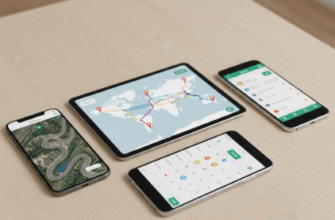
Cell service? Forget it. The last reliable signal you’ll get is probably back near Kanab or Page, Arizona, depending on which direction you’re coming from. Water sources are unreliable and often contaminated with livestock waste or naturally occurring minerals that’ll give you digestive problems you won’t soon forget. The nearest gas station could be 80 miles away. I’ve seen people roll through here in rental sedans with a half-tank of gas and one bottle of water, and honestly, it’s a miracle more people don’t get into serious trouble. The road can take anywhere from 4 to 8 hours to drive depending on conditions, vehicle type, and how many times you stop to stare at the view or recieve a flat tire.
There’s something about being out here, though, that clarifies things. Maybe it’s the silence—real silence, not just the absence of noise but the presence of something older and more patient than human worry. Maybe it’s the way the light hits the canyon walls at sunset, turning them into these glowing, almost incandescent shades of orange and red that don’t look real. Or maybe it’s just exhaustion talking, because by the time you’ve bounced over washboard ruts for six hours, your brain does weird things.
The Paria River canyon itself—the part you access from trailheads along Smoky Mountain Road—feeds into some of the most famous slot canyon hikes in the Southwest, including Buckskin Gulch and the Wave. Permits for the Wave are nearly impossible to get; the BLM issues only 20 walk-in permits and 10 online permits per day via lottery, and thousands of people apply. But the broader Paria wilderness doesn’t require permits for most areas, which means you can still find solitude if you’re willing to walk far enough. Just bring way more water than you think you need, tell someone where you’re going, and accept that if something goes wrong, help might be a long time coming.