The first time I drove Skyline Drive, I made the mistake of trying to do it in under two hours.
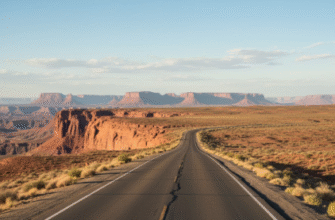
Here’s the thing about this 105-mile stretch of asphalt threading along the spine of the Blue Ridge Mountains—it doesn’t care about your schedule. Opened in 1939 as part of Shenandoah National Park, the route runs from Front Royal in the north down to Rockfish Gap near Waynesboro, and every single one of those miles is capped at 35 mph. Which sounds quaint until you’re stuck behind an RV doing 18 around hairpin turns while October leaf-peepers lean out windows with iPads. The road itself sits at elevations between roughly 600 and 3,680 feet, give or take, depending on which overlook you’re counting from, and I used to think the speed limit was just Park Service bureaucracy. Turns out—and this took me three visits to figure out—the whole point is that you’re supposed to be looking sideways, not forward. The Shenandoah Valley unfolds to the west in this patchwork of farmland and haze, while the Piedmont stretches east toward DC, and if you’re moving any faster you’ll miss the hawk riding thermals or the way fog pools in the hollows at dawn like something out of a folktale.
The overlooks come every mile or so, marked with those brown Park Service signs. Some have names that make sense—Stony Man, Bearfence Mountain—and others feel like someone just picked words out of a hat. Anyway, I usually skip half of them because they blur together after a while.
When the Appalachian Trail Decided to Tag Along for 101 Miles of Your Road Trip
Wait—maybe the weirdest part is how the Appalachian Trail just casually intersects Skyline Drive in dozens of places, like it couldn’t decide whether to commit to wilderness or accept that people in Subarus also want to see the mountains. The AT crosses the drive at least 30 times, probably more depending on how you count spur trails, and every crossing has this little wooden sign and a patch of dirt where through-hikers emerge looking faintly annoyed by the existence of pavement. I’ve seen them standing at overlooks with that particular exhaustion that comes from walking from Georgia, eating trail mix next to families taking selfies. The juxtaposition feels absurd—2,190 miles of footpath threading through a scenic byway designed for cars—but I guess it makes sense if you think of the Blue Ridge as something humans have been moving along for centuries anyway, just at different speeds. The trail was completed in 1937, two years before Skyline Drive opened, which means the hikers were there first, technically, though the Park Service had been planning the road since the late 1920s as a Depression-era jobs project.
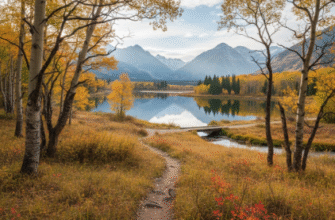
The seasons recycle through here in this exaggerated way that feels almost performative. Spring brings pink and white blooms—mountain laurel, dogwood, redbud—that make the whole ridgeline look like it’s blushing. Summer turns everything into a dense green tunnel, humid and loud with cicadas. Fall is when the crowds show up, obviously, because the foliage goes absolutely feral with color, reds and oranges stacked so thick it looks fake in photographs.
Honestly, I prefer winter.
Not because I’m contrarian, though maybe a little, but because the bare trees let you see the actual structure of the mountains—the way the ridges fold and repeat into that blue-gray distance that gave the range its name. The drive closes sometimes when ice makes it impassable, which happens more than you’d think given Virginia’s reputation as a mid-Atlantic state that can’t quite decide if it’s South or not. There’s something satisfying about the emptiness of it in January, the way the overlooks collect snow in their corners and you can park at Big Meadows without another soul around. The lodge there—this big stone building that looks like every national park lodge from the 1930s, vaguely Arts and Crafts, definitely drafty—stays open year-round, and I’ve spent a few nights there staring at the fireplace and thinking about how the Park Service had to buy out and relocate roughly 465 mountain families to create Shenandoah in the first place, which is the kind of historical footnote that sits uncomfortably under all the scenic beauty.
The Geology Underneath Is Older Than Most Things You’ll Ever Stand On, Including Your Patience
The rock here is Precambrian basement complex, which is a phrase I definately did not understand until a ranger explained it means the stones forming these ridges are somewhere between 1.2 billion and 540 million years old—ancient even by mountain standards, worn down and rounded compared to the jagged youth of, say, the Rockies. The Blue Ridge is part of the Appalachian chain, which used to be as tall as the Himalayas before erosion spent 300 million years filing them down into these gentle, forested humps. There’s basalt in places, old lava flows from when this whole region was volcanically active, and you can see columnar jointing at certain outcrops if you know where to look. I don’t, usually, but I like knowing it’s there—evidence that this landscape was once violent and molten and nothing like the postcard version we drive through now. The valleys between the ridges, including the Shenandoah Valley itself, formed from softer limestone that dissolved faster, leaving the resistant sandstone and granite to stand as ridges. It’s slow-motion architecture, geology as time-lapse sculpture, and somehow that makes the 35 mph speed limit feel almost appropriate.