I used to think Route 66 was just another highway until I drove it myself.
The Mother Road—as John Steinbeck called it, though honestly that name feels a bit precious now—stretches roughly 2,448 miles from Chicago’s Lake Shore Drive to the Santa Monica Pier, though the exact distance depends on which alignment you follow since the route changed multiple times between 1926 and 1985. It cuts through eight states: Illinois, Missouri, Kansas (just 13 miles, blink and you miss it), Oklahoma, Texas, New Mexico, Arizona, and California. What gets me is how many people think it’s still a functioning highway—it’s not, hasn’t been since it was officially decommissioned in 1985, replaced by the Interstate system that Eisenhower championed. But here’s the thing: that decommissioning is exactly what made it romantic, turned it from infrastructure into mythology, a monument to American restlessness and the idea that the journey matters more than the destination, which sounds cliché until you’re standing in some dusty town in New Mexico watching tumbleweeds actually tumble.
Planning Your Route Through the Heartland’s Most Iconic Small Towns and Roadside Attractions
Start in Chicago at Lou Mitchell’s Restaurant—it’s been there since 1923, serves donut holes while you wait, feels authentically worn in a way that can’t be faked. From there you’ll hit Pontiac, Illinois (the Route 66 Hall of Fame), then Springfield where Abraham Lincoln’s tomb sits, though most people skip it for the Cozy Dog Drive-In, birthplace of the corn dog on a stick. In Missouri, you’ve got Meramec Caverns (Jesse James supposedly hid here, maybe, the history gets fuzzy), and the Blue Whale of Catoosa in Oklahoma, a concrete beast built in the 1970s that’s equal parts charming and unsettling.
Navigating the Southwestern Deserts Where the Road Gets Properly Weird and Beautiful
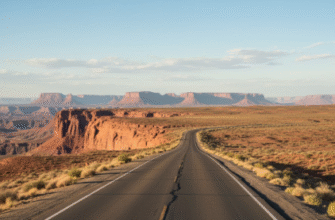
Texas owns the Cadillac Ranch outside Amarillo—ten Cadillacs buried nose-first in a wheat field, covered in graffiti, which sounds stupid until you’re standing there at sunset realizing it’s accidently profound. New Mexico hits different: the Route 66 Auto Museum in Santa Rosa, Tucumcari’s neon motel signs that still flicker at night, and somewhere around here the landscape shifts from plains to high desert and you can feel your brain recalibrating to the emptiness. Arizona delivers the Petrified Forest, Meteor Crater (a private attraction that costs $20 but worth it for the sheer existential weirdness of staring into a hole a space rock made 50,000 years ago, give or take), and Oatman where wild burros descended from mining pack animals just wander the streets begging for carrots.
The California Stretch Through the Mojave to the Pacific Ocean Finish Line
Crossing into California means Needles first, then the Mojave Desert where temperatures can hit 120°F in summer and you’ll definately want your AC working. Barstow has the Route 66 Mother Road Museum, but honestly the real attraction is Bagdad Cafe in Newberry Springs, made famous by the 1987 German film—it’s still there, still serving coffee, still looking like it might blow away in the next windstorm. The route fragments badly through the Inland Empire, Los Angeles swallowed most of it, turned it into boulevards and strip malls, but if you follow the signs you’ll eventually hit Santa Monica Boulevard and then suddenly you’re at the pier, the official end point marked by a plaque, and there’s usually a guy playing guitar badly and tourists taking selfies and the Pacific stretching out gray and indifferent. Wait—maybe that’s the point, that the road doesn’t really end so much as run out of continent, leaving you with nothing to do but turn around or stay put, and I guess it makes sense that America’s most famous highway concludes not with fanfare but with a shrug and some overpriced pier food.
What I didn’t expect was how much of Route 66 is just gone—paved over, bypassed, reclaimed by desert.