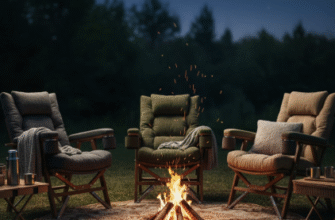
I used to think camping in winter was about layering clothes until you looked like a walking duvet.
Turns out—and this took me longer than I’d like to admit to figure out—the real game-changer isn’t what you wear, it’s what you bring to generate heat in that tiny nylon capsule you’re calling home for the night. Portable heaters have evolved from clunky propane monsters that made you choose between frostbite and carbon monoxide poisoning to genuinely clever devices that won’t kill you in your sleep. I’ve tested maybe a dozen different models over the past few winters, from the Rockies to the Adirondacks, and here’s the thing: the right heater doesn’t just make camping tolerable, it makes it something you might actually want to do when there’s frost on the ground. The technology has shifted dramatically in the past five years or so, with battery-powered electric models finally reaching the point where they’re not just expensive hand warmers pretending to heat a tent.
Wait—maybe I should back up. The physics of tent heating is actually fascinating in a deeply nerdy way. Your body generates roughly 100 watts of heat just existing, which sounds like a lot until you realize a small tent can lose heat faster than that through the floor alone.
Propane Heaters Still Dominate the Cold-Weather Camping Scene for Good Reason
Mr. Heater’s Buddy series has been around since the early 2000s, and it’s still what you’ll see at most serious winter campsites. The original Buddy puts out 4,000 to 9,000 BTUs, which translates to warming a space of maybe 200 square feet—plenty for all but the largest family tents. These things run on those green one-pound propane cylinders you can find at literally any hardware store, and they include an oxygen depletion sensor that shuts everything down if CO2 levels get dangerous. I’ve used mine in temperatures down to about 15°F, and it kept a four-person tent comfortable enough that I could sleep in just a base layer. The catch, and there’s always a catch, is that you’re burning fuel indoors, which means you need ventilation even with the safety sensors, and you’re adding moisture to the air—propane combustion produces water vapor, which can actually make your tent damper if you’re not careful about airflow.
Honestly, I still get nervous running any combustion heater in an enclosed space overnight, no matter how many safety features it has.
Electric Heaters Have Finally Become Viable Options for Campers with Power Access
The battery-powered electric heater market has exploded in the past couple years, driven partly by the same lithium-ion tech that powers electric cars and partly by overlanders who have massive battery banks in their vehicles. Models like the Hcalory diesel heater—which is technically diesel-powered but uses electric ignition and fans—can run for 10 hours on a single tank while drawing minimal electricity. Pure electric models like certain ceramic heaters pull 150-400 watts, meaning you need a serious power station (think 500Wh minimum) to run one through the night. I tested a 200W ceramic heater with a Jackery 500 last February, and it kept my tent at a survivable 45°F when it was 20°F outside, but the battery died after maybe six hours. The math matters here: if you’re car camping with access to your vehicle’s 12V system or you’ve invested in solar panels and a proper battery setup, electric makes sense. If you’re backpacking, forget it—the weight-to-warmth ratio is absurd.
Catalytic Heaters Offer a Flameless Middle Ground That Nobody Talks About Enough
Coleman’s SportCat catalytic heater doesn’t get the attention it deserves, probably because it looks like something from a 1970s RV. Instead of an open flame, it uses a catalytic reaction on a platinum-coated pad to generate heat from propane—no flame, just a glowing surface that puts out about 3,000 BTUs. The advantage is dramatically lower carbon monoxide production and better fuel efficiency; I’ve run one for eight hours on a single small propane cylinder. The downsides are real though: they take a few minutes to warm up, they’re fragile (drop it wrong and you’ll crack the catalyst pad, which costs half the price of a new unit to replace), and they still produce moisture and consume oxygen, just less aggressively than open-flame models.
I guess what surprised me most was how much the tent itself matters.
Heat Retention Depends on Your Shelter Design More Than Your Heater Output Capacity
A four-season tent with a proper rainfly and minimal mesh will hold heat infinitely better than a three-season tent with huge mesh panels, which seems obvious but apparently wasn’t to me the first time I tried winter camping with my summer backpacking tent. I watched my propane heater struggle to maintain 40°F inside while burning through fuel like it was going out of style, and it wasn’t until I upgraded to an actual cold-weather tent that I realized I’d been fighting physics. Double-wall construction, minimal ventilation openings, and a full-coverage rainfly create an envelope that traps heat—suddenly that same heater was almost too effective, and I had to dial it down. Ground insulation matters too; a closed-cell foam pad or insulated tent footprint stops heat from bleeding straight into the frozen earth beneath you, which can account for maybe 30-40% of your heat loss if you’re on snow or frozen ground.
Safety Protocols Aren’t Optional When You’re Burning Fuel in a Confined Flammable Space
Here’s where I get serious, because I’ve heard too many stories about close calls. Every year, a handful of campers die from carbon monoxide poisoning in tents, usually because they ran an unvented heater overnight in a sealed space. Even with oxygen depletion sensors, you need ventilation—crack a window, leave a vent open, do something to ensure fresh air circulation. Keep heaters at least two feet from tent walls and sleeping bags; most tent fabrics are treated with flame retardants, but they’ll still melt or catch fire if they contact a hot surface directly. I saw someone melt a hole the size of a dinner plate in a $400 tent because they put their heater too close to the wall and didn’t notice until they smelled burning nylon. Carbon monoxide detectors designed for camping (small, battery-powered units) cost maybe $25 and could save your life—I clip one to my tent ceiling anytime I’m running a fuel-based heater. Also, and this should be obvious but apparently isn’t: never use a heater designed for outdoor use only inside a tent, no matter how cold you are or how much you think you can ventilate properly.
The truth is, staying warm while winter camping is a system, not a single piece of gear. Your heater is just one component, working alongside your sleeping bag rating, your insulation layers, your tent design, and your own body’s heat production. But when you get it right—when you wake up in the morning and it’s 10°F outside and you’re genuinely comfortable inside your little heated bubble—there’s something almost magical about it. You’ve beaten the cold with technology and planning, and you get to experiance the winter wilderness without suffering through it. Which I guess is the whole point.