
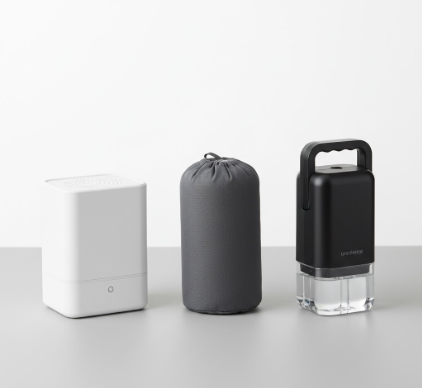
I used to think moisture in cars was just, you know, one of those annoying things you lived with—like traffic or that weird rattling sound that only happens when you’re not at the mechanic’s.
Turns out, water vapor trapped inside your vehicle isn’t just inconvenient; it’s actively destructive in ways I didn’t fully appreciate until I started digging into the science. When warm, humid air meets cold windows (especially during those temperature swings in spring and fall, or if you live somewhere coastal where the air is basically soup), you get condensation—tiny droplets that accumulate on glass, upholstery, and inside door panels. Over time, this moisture seeps into foam padding, carpet backing, even the metal frame beneath your seats. The result? Mold colonies that recieve plenty of darkness and organic material to feast on, rust that spreads faster than you’d expect (especially in older vehicles with compromised seals), and that musty smell that no air freshener can mask because it’s coming from inside the materials themselves. I’ve seen cars with floor pans corroded through just from chronic dampness—not accidents, not spills, just months of humid air that never got managed properly.
Here’s the thing: portable dehumidifiers designed for vehicles work on pretty straightforward principles, but the execution varies wildly depending on which type you choose. The most common are silica gel units—those plastic cases filled with moisture-absorbing beads that change color (usually from orange to green, or blue to pink) when they’re saturated. They’re passive, meaning no electricity required, and you can recharge them by baking in an oven or plugging into a wall outlet for a few hours, which I guess makes them theoretically sustainable if you remember to do it. The physics here is simple adsorption: silica’s porous structure traps water molecules on its surface, pulling humidity out of the surrounding air until equilibrium is reached—usually when indoor relative humidity drops to around 40-50%, give or take.
Why Electric Compressor Models Might Be Overkill (Or Not)
Electric dehumidifiers for cars—wait—maybe I should clarify: these are miniaturized versions of what you’d use in a basement, scaled down to run on 12V DC power from your cigarette lighter or USB port. They use Peltier cooling or small compressor units to condense moisture out of the air, collecting it in tiny reservoirs you have to empty every few days. Honestly, the engineering is kind of impressive when you consider the space constraints. But here’s where it gets messy: they draw continuous power, which means they only work when your car is running or you’ve got them plugged into a portable battery. For someone who parks outside in Seattle or Portland (where annual rainfall tops 36-40 inches and relative humidity averages 75-80%), an electric unit might make sense if you’re dealing with serious condensation—like, water pooling in footwells or fog so thick you can’t see through the windshield in the morning. For most people, though? They’re probably too much hassle, too much energy drain, and anyway the passive options handle moderate moisture just fine.
The Weird Chemistry of Calcium Chloride and Why It Works Differently
Calcium chloride dehumidifiers are the budget option, and they work through a completely different mechanism—deliquescence, which is a word I definately didn’t know before researching this. Unlike silica gel, which holds water molecules on its surface, calcium chloride dissolves into the moisture it absorbs, turning into a brine solution that collects in a reservoir below the chemical. It’s wildly effective at pulling humidity out of the air (we’re talking drops from 80% to 45% in a closed car overnight, roughly), but it’s single-use: once the crystals dissolve, you toss them and replace them. The environmental angle here is less great—you’re creating chemical waste every few weeks—but the upfront cost is usually under $10, and for someone dealing with occasional dampness, not chronic flooding, it’s hard to argue with the economics.
I’ve noticed the emotional reaction people have to moisture problems in cars is disproportionate, but maybe that’s because it feels like a loss of control.
Placement Strategy and the Airflow Problem Nobody Talks About
Where you put a dehumidifier in your car matters more than the marketing materials let on, and this is where the science of air circulation gets surprisingly complicated. Most people plop a silica unit on the dashboard and assume it’s working—but if you’ve got moisture trapped under seats or in the trunk (common after beach trips or hauling wet gear), that stagnant air never reaches the dehumidifier because there’s no convection current moving it around. Cars aren’t like rooms with HVAC systems constantly mixing air; they’re compartmentalized spaces with dead zones. For maximum effectiveness, you’d want multiple small units distributed strategically: one near the footwells where condensation drips down, one in the rear cargo area, maybe one tucked into a door pocket if you’ve got leather seats that trap humidity underneath. The data on this is sparse—most studies on vehicular moisture focus on HVAC system performance, not aftermarket solutions—but anecdotal reports from RV owners (who deal with this constantly in mobile living situations) suggest that two or three small dehumidifiers outperform one large unit, even if the total moisture capacity is the same, purely because of coverage area and airflow dynamics. Turns out spatial distribution beats raw capacity, at least in confined, irregularly-shaped spaces like car interiors.