
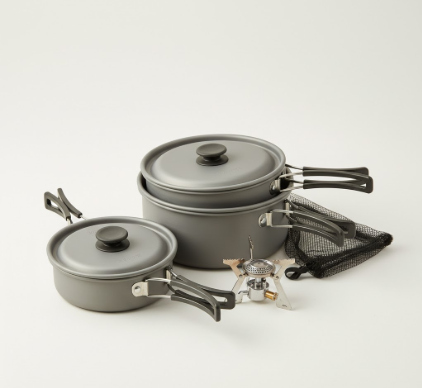
I used to think camping cookware was just about weight—lighter always better, right?
Turns out, the physics of heat transfer in portable camping pots tells a completely different story, one that involves thermal conductivity coefficients, specific heat capacity, and the maddening reality that aluminum conducts heat roughly three times faster than stainless steel but dents if you look at it wrong. When you’re at 8,000 feet and your water refuses to boil because the air pressure dropped and your pot’s too thin to retain heat properly, you start caring about things like gauge thickness and base construction in ways that feel almost obsessive. I’ve watched experienced backpackers argue for twenty minutes about whether titanium’s 21.9 W/(m·K) thermal conductivity justifies its cost compared to hard-anodized aluminum’s 237 W/(m·K), and honestly, they both had points. The thing is, efficient outdoor cooking isn’t just about the flame—it’s about how your pot captures, distributes, and holds that energy long enough to actually transform your freeze-dried whatever into something resembling food. Some pots lose half their heat through poor base contact with camp stoves, others through inadequate lid seals, and a few rare designs manage to optimize both while still nesting inside each other like those Russian dolls.
Wait—maybe I should back up. The modern camping pot evolved from military mess kits, which prioritized durability over everything else because soldiers couldn’t exactly requisition replacements mid-campaign. Commercial designs started appearing in the 1970s when backpacking became recreational rather than survivalist, and companies like MSR and Snow Peak began experimenting with materials.
Why the Material Science of Camp Cookware Actually Matters When You’re Exhausted and Hungry
Here’s the thing: material choice affects everything from boil time to fuel efficiency to whether your risotto burns before it cooks. Aluminum pots heat fast—sometimes too fast, creating hot spots that scorch food unless you’re constantly stirring, which defeats the purpose of one-pot meals designed for minimal effort. Stainless steel distributes heat more evenly but takes longer to reach temperature, meaning you burn through more fuel, and if you’re carrying canister gas at $8 per 110-gram cartridge, that cost adds up over a multi-day trip. Titanium occupies this weird middle ground where it’s impossibly light (a 900ml pot can weigh under 100 grams) but conducts heat so poorly that some designs incorporate aluminum bases or copper discs to compensate, which adds weight and defeats the original advantage. I guess it makes sense that no perfect solution exists—physics doesn’t care about our convenience.
The best camping pots I’ve tested use hard-anodized aluminum with thick bases, roughly 3-4mm, which sounds excessive until you realize that thickness creates thermal mass that prevents temperature spikes and maintains steady heat even when you reduce flame. Coatings matter too: ceramic non-stick lets you cook eggs without oil, saving pack weight, though the coating degrades faster than manufacturers admit, usually lasting maybe 30-40 uses before food starts sticking. PTFE coatings last longer but can’t handle the accidental overheating that happens when you get distracted by a stellar sunset.
Anyway, volume calculations get weirdly specific.
A solo backpacker needs roughly 600-900ml capacity for boiling water and rehydrating meals, but if you’re cooking actual food—pasta, rice, anything that expands—you want at least 1.2 liters to prevent boilover disasters. Couples often carry a 2-liter pot plus a small frying pan, which seems excessive until you’ve tried cooking breakfast and coffee simultaneously in a single vessel and ended up with coffee that tastes like bacon (not as good as it sounds). Nesting designs that stack pots inside each other save pack space but create issues with handles and lids—some handles fold, some detach completely and get lost in your pack, and a few clever designs integrate the handle into the lid itself, which works until the lid gets too hot to touch. I’ve definately burned my fingers more times than I’ll admit trying to pour boiling water from pots with poorly insulated grips.
The Overlooked Engineering Details That Separate Functional Cookware From Gear That Makes You Want to Eat Cold Food
Lid design matters more than anyone discusses. A proper lid should fit snugly enough to trap steam (reducing boil time by 20-30% according to MSR’s testing data) but not so tight that pressure builds dangerously or you can’t remove it without tools. Strainer holes let you drain pasta without losing half of it into the dirt, though those same holes whistle annoyingly when steam escapes during cooking. Some lids double as plates or cutting boards, which sounds practical until you realize you’re eating off the same surface that just touched raw chicken or worse. Weight-conscious designs use aluminum foil lids that crumple after three trips, while overbuilt stainless versions add 80+ grams for functionality you might not need.
Base construction separates cheap pots from ones that actually work on different heat sources—flat bases with good surface contact matter enormously for camp stoves, while slightly concave bases can actually perform better on open fires by channeling heat toward the center. I used to think those heat-exchange fins on pots like the Jetboil were just marketing gimmicks until I saw controlled tests showing they reduce boil time by nearly 40% by increasing surface area contact with flame. The tradeoff? They only work with proprietary stove systems, lock you into one manufacturer’s ecosystem, and collect soot that’s impossible to fully clean.
Honestly, the best camping pot is the one you’ll actually use, which sounds like a cop-out but reflects the reality that personal cooking style matters more than theoretical specifications—some people thrive with ultralight titanium and cold-soaked meals, others want the versatility of stainless steel that can handle everything from simmering sauces to baking bread over coals. The gap between gear reviews and actual field performance remains frustratingly wide, partly because controlled tests can’t replicate variables like wind, altitude, fuel quality, and the chaotic reality of outdoor cooking where nothing goes exactly as planned.