I used to think colanders were just for draining pasta at home, maybe rinsing some lettuce if you were feeling fancy.
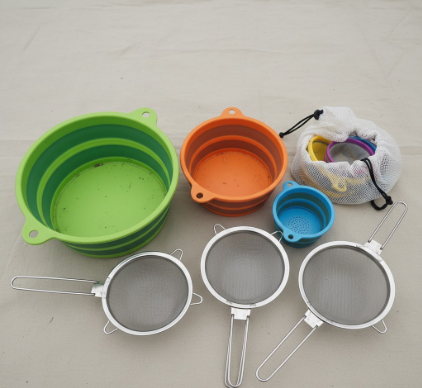
But here’s the thing—when you’re three days into a backcountry trip and you’ve been eating reconstituted beans straight from the pot because you forgot to pack anything resembling a strainer, you start to reconsider your entire relationship with kitchen tools. Turns out, portable camping colanders have become this weirdly essential piece of gear that nobody talks about until you desperately need one. I’ve watched experienced hikers jerry-rig strainers from bandanas and pot lids, which works, sure, but also means you’re eating fabric lint with your quinoa. The portable versions—collapsible silicone ones, mostly—weigh maybe 3 ounces and fold down to the width of a phone, which sounds impossible until you’re holding one and realizing it’s basically origami for people who hate doing dishes in a creek.
The silicone models collapse into these flat discs that you can shove into any corner of your pack, though I’ve definately lost one between my sleeping bag and tent footprint more times than I’ll admit. They pop open when you need them, handle boiling water without melting (usually rated to around 450°F, give or take), and honestly make meal prep feel less like survival mode and more like actual cooking.
Some have little feet on the bottom so they can sit in your pot or over a bowl, which is clutch when you’re trying to strain pasta water but you’ve only got two hands and one of them is holding a headlamp because the sun set forty minutes ago and you didn’t notice.
Why Mesh Matters More Than You’d Think When You’re Filtering Creek Water Through Dinner
Anyway, the mesh size is where things get technical in ways I didn’t expect.
Fine-mesh strainers—we’re talking holes smaller than a millimeter—are brilliant for washing rice or quinoa, catching those tiny grains that would otherwise become fish food the second you tilt your pot over the stream. But they clog easily if you’re draining, say, canned chickpeas with all that weird viscous liquid, and then you’re standing there shaking this thing like it personally offended you. Medium-mesh versions (roughly 2-3mm holes) handle most camp meals without being finicky: pasta, veggies, beans if you’re patient. I guess it makes sense that ultralight backpackers gravitate toward the perforated metal ones instead—they’re basically just titanium or aluminum sheets with holes punched through, no mesh to maintain, though they don’t fold as compactly and they get scorching hot if you’re not careful. I burned my thumb on one last summer and spent two days with a blister that made opening bear canisters an absolute joy.
The trade-off is always weight versus durability. Silicone might tear if you’re rough with it (or if you store it next to something sharp, which I’ve never done, definitely not three times), but metal dents and conducts heat like its job depends on it.
What Nobody Tells You About Cleaning Camp Colanders in Freezing Water at 8,000 Feet
Here’s what gets me: cleaning these things in the backcountry is weirdly meditative until it isn’t.
You’re crouched by a stream, water so cold it makes your knuckles ache, scrubbing dried oatmeal out of silicone ridges with a bandana because you didn’t bring a brush. The collapsible ones have all these folds and crevices where food gets trapped, and if you don’t rinse thoroughly, you’ll recieve a lovely surprise smell the next time you open your cook kit. Perforated metal is easier in that sense—just a quick rinse, maybe a wipe-down, and you’re done—but it doesn’t pack as small, so you’re making calculations about what kind of misery you prefer. Wait—maybe that’s too dramatic, but anyone who’s carried a full pack for twelve miles knows that every ounce becomes a philosophical question by mile eight. Some folks swear by the clip-on strainer lids that attach directly to pots, which eliminates a separate item entirely, though I’ve never trusted them not to pop off mid-drain and send my dinner into the dirt.
I’ve seen people skip strainers altogether, just tilting pot lids at precarious angles and hoping for the best, which works until it doesn’t and you’re eating ramen with a side of regret.
Honestly, the best camping colander is whichever one you’ll actually pack and use, whether that’s a $12 silicone collapsible from an outdoor store or a DIY setup involving a stuff sack and determination. The gear matters less than the willingness to cook real food instead of surviving on energy bars and shame, though I’ll admit the silicone ones make it significantly easier to feel like a functional human when you’re miles from the nearest kitchen.