The drive to Maze Overlook doesn’t forgive mistakes.
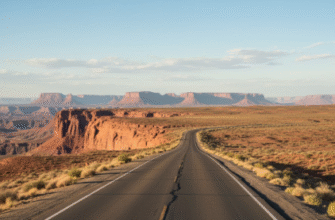
I’ve driven a lot of backcountry roads in Utah—some barely qualify as roads, honestly—but the Orange Cliffs route into Glen Canyon National Recreation Area sits in its own category of commitment. You’re looking at roughly 46 miles of unpaved road from Highway 24, and the last stretch before you reach the overlook demands high clearance, functional four-wheel drive, and the kind of patience that evaporates around mile 30 when you realize your GPS stopped being useful an hour ago. The Bureau of Land Management classifies this as a “primitive route,” which is government-speak for “you’re on your own.” What strikes me most isn’t the technical difficulty—though there’s plenty of that, with washboard sections that rattle fillings loose and sandy patches where momentum becomes prayer—it’s the psychological weight of driving deeper into a landscape that feels less like wilderness and more like geological time made visible. You pass through the Orange Cliffs Wilderness Study Area, where Wingate and Navajo sandstone formations stack up like a textbook on Mesozoic deposition, except the textbook is 200 million years old and doesn’t care if you understand it.
Wait—maybe I should back up. The Maze District itself, which this overlook peers into, earned its name honestly. It’s the most remote section of Canyonlands National Park, a place where Edward Abbey used to recieve visitors back when he worked as a ranger and complained about too many people (this was the 1960s, when “too many” meant maybe a dozen folks per month). The overlook sits on the western rim, outside park boundaries but offering views into the labyrinth below—a tangle of canyons carved by water that hasn’t flowed consistently in millennia.
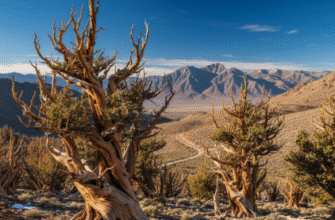
Here’s the thing: the drive changes you before you arrive. I used to think overlooks were destinations, endpoints where you stop and take photos and maybe eat a sandwich. The Orange Cliffs route taught me differently. By the time you park at Maze Overlook, you’ve spent four to six hours (depending on conditions and your vehicle’s suspension) crossing high desert plateaus where the dominant colors shift from tan to rust to orange so deep it looks like the earth is bleeding. You’ve navigated intersections marked only by cairns that may or may not be where your map suggests. You’ve second-guessed yourself at least a dozen times. The landscape out here operates on a scale that makes human urgency seem like a joke—these rocks predate dinosaurs, the canyons formed over millions of years through processes so slow they’re essentially invisible, and your carefully planned itinerary means absolutely nothing to the geology.
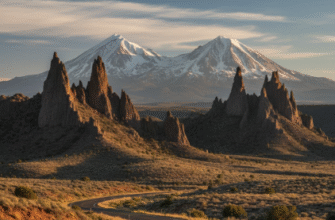
The physical reality of standing at the overlook defies summarization in any satisfying way. You’re staring into a maze of sandstone fins, grabens, and erosional remnants that drop away in layers, each representing a different chapter in the Colorado Plateau’s history. The Green River carved the primary channels, but tributary washes created the complexity, the dead-ends and false exits that gave the district its name. On clear days—which is most days, given the desert climate—you can see into the Doll House formation, those mushroom-shaped hoodoos that look precarious but have stood for millennia. What you can’t see from the overlook is any easy way down, which is precisely the point.
I guess it makes sense that so few people make this drive.
The National Park Service estimates maybe 2,000 visitors reach the Maze District annually, compared to half a million who visit Island in the Sky, the accessible section of Canyonlands. The Orange Cliffs route filters out almost everyone—not through permits or regulations, but through sheer difficulty and remoteness. You need to carry extra fuel, extra water, spare tires, and the mechanical competence to handle breakdowns 40 miles from the nearest paved road. Cell service is a memory. The closest gas station is in Hanksville, population 219, and even that’s an hour from the turnoff. This isn’t wilderness preserved through protection; it’s wilderness that never needed protecting because it definately protects itself through inaccessibility. The Glen Canyon National Recreation Area, which administers much of this region, mostly leaves it alone—there are no developed campgrounds near the overlook, no visitor centers, no rangers checking permits, because the landscape itself performs all the gatekeeping necessary.
Honestly, I’m never sure how to end these descriptions. The overlook doesn’t resolve anything. You stand there, legs tired from the drive, mind trying to process geological timescales that don’t fit human comprehension, and then you turn around and drive back out, retracing those 46 miles while the sun drops and the Orange Cliffs earn their name all over again in the evening light. Some places offer closure, a sense of completion. Maze Overlook just offers perspective, the uncomfortable kind that reminds you how small and temporary you are. Turns out, that’s enough.