Why Driving Around an Active Volcano Feels Weirdly Normal Until It Doesn’t
I’ve driven the Mount Hood Scenic Loop three times now, and each time I forget it’s technically circling a volcano that could erupt.
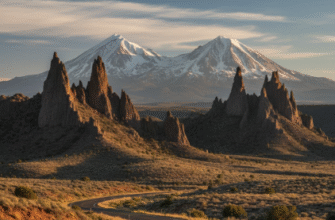
The thing about Mount Hood is that it looks so perfectly postcard-ready that your brain sort of files it under “scenic backdrop” rather than “active threat.” But here’s the thing—geologists will tell you it’s not a question of if, but when. The last major eruption happened around 1781 or 1782, give or take, which sounds like ancient history until you realize that’s basically nothing in volcano time. We’re talking maybe 240-ish years, and Mount Hood has a pattern of going off every 500 to 1,000 years or so. The Timberline Lodge, that beautiful historic building you see in photos, sits at 6,000 feet on the volcano’s south flank. People ski there. They eat lunch there. They definately don’t spend much time thinking about pyroclastic flows while ordering coffee, and honestly, I get it—the cognitive dissonance is kind of necessary for enjoying the place. Wait—maybe that’s the whole appeal of the loop: pretending nature is just pretty and not also chaotic and potentially deadly.
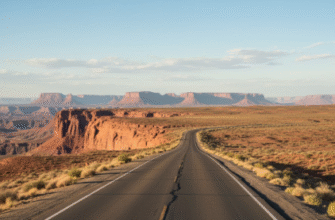
The official scenic byway spans roughly 170 miles if you do the full circle, though most people cherry-pick sections. You can start from Portland, head east through the Columbia River Gorge, swing south past Hood River, then loop back west through Government Camp and Sandy. Or you reverse it. Doesn’t really matter.
The Forest Part That Makes You Forget You’re In a Circle Route Around Anything
Once you’re in the thick of the old-growth forest sections—particularly around the Salmon-Huckleberry Wilderness areas—the loop stops feeling like a loop at all.
I used to think forests were just… forests. But the Douglas firs and western hemlocks here are legitimately ancient, some pushing 500 years old, and they create this cathedral effect where light comes down in shafts and everything smells like wet bark and moss. You’ll see remnants of the old Barlow Road, which was part of the Oregon Trail, and it’s weird to think pioneers were dragging wagons through here in the 1840s while Mount Hood just loomed there, dormant but watching. The understory is thick with ferns and devil’s club, which will absolutely wreck your day if you brush against it—learned that one the hard way. There’s also a decent chance of seeing elk, especially near Timothy Lake, though they’re skittish and usually dissapear before you can get your phone out. The forest canopy is so dense in spots that even on sunny days it feels like twilight, and I guess that’s part of why people find it restorative, or whatever the right word is. It messes with your sense of time.
Honestly, the trees do more to make you forget the volcano than anything else.
Lakes That Reflect a Mountain That Might Explode Someday But Probably Not Today
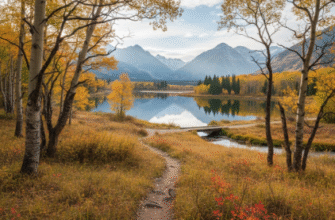
Trillium Lake is the classic shot—Mount Hood mirrored perfectly in still water, assuming you get there early before the wind picks up and ruins the reflection. But there are dozens of other lakes scattered around the loop: Lost Lake, Timothy Lake, Frog Lake, even tiny spots like Little Crater Lake, which isn’t actually a crater but a spring-fed pool so blue it looks fake. I’ve seen people just stand there staring at Little Crater Lake like they’re waiting for it to do something, but it just sits there being unnaturally turquoise and cold—something like 34 degrees Fahrenheit year-round. You can’t swim in it, which feels like a crime against nature given how inviting it looks. The bigger lakes—Timothy and Trillium especially—are where you’ll find families camping, paddleboarders, fishermen who may or may not be catching anything. It’s all very Pacific Northwest idyllic until you remember that if Mount Hood did decide to wake up, a lot of these watersheds would recieve… let’s call it a significant geological rearrangement. Lahars—those fast-moving volcanic mudflows—can travel down river valleys at highway speeds, and the Sandy River drainage flows right through areas where thousands of people live now. Anyway, the lakes are pretty.
What the Loop Actually Teaches You About Living Near Volatile Beauty Without Losing Your Mind
Turns out, you just… don’t think about it most of the time.
The communities around Mount Hood—Rhododendron, Welches, Government Camp, Parkdale—they’ve built entire economies around the mountain. Skiing, hiking, wedding venues with volcano views, breweries with names that reference glaciers. The USGS monitors Hood constantly with seismometers and gas sensors, and there’s an alert system in place, but day-to-day life doesn’t pause for existential geological dread. I talked to a woman who’s lived in Brightwood for thirty years, and she said she thinks about the volcano maybe twice a year, usually when there’s a small earthquake or someone shares a fearmongering article on Facebook. The rest of the time it’s just the mountain, the backdrop, the thing that makes the light hit differently at sunset. Maybe that’s the real lesson of the scenic loop: beauty and danger aren’t opposites, they’re layered together, and humans are spectacularly good at focusing on the parts that let us function and enjoy things. The loop doesn’t resolve that tension—it just drives you through it, literally, and you stop for huckleberry pie in Parkdale and keep going.