I used to think mountain driving was just regular driving, but with better views.
Turns out, high-altitude roads are their own ecosystem of mechanical stress, atmospheric weirdness, and human biology doing things you don’t expect. The air pressure at 10,000 feet is roughly 30% lower than at sea level—which means your engine gets about 3% less power for every 1,000 feet you climb, give or take. Your turbocharger helps, if you have one, but naturally aspirated engines? They’re gasping. And here’s the thing: it’s not just your car that struggles. Your body does too. I’ve seen people pull over at mountain passes, dizzy and nauseous, convinced something’s wrong with them, when really it’s just altitude sickness kicking in around 8,000 feet. The headache creeps in first, then the fatigue, and suddenly you’re making decisions with a brain that’s running on 15% less oxygen than it’s used to.
Anyway, most people don’t check their brakes before a mountain trip, which is wild considering you’ll use them maybe ten times more than usual. Descending a long grade—say, the kind you find on Colorado’s I-70 or the Beartooth Highway—generates massive heat. Brake fluid boils at around 400°F under normal conditions, but moisture contamination (which happens over time, unavoidably) drops that to 300°F or lower. When your brakes overheat, the pedal goes soft, and you get what’s called brake fade. I guess it makes sense why runaway truck ramps exist.
Why Your Vehicle’s Fluids Behave Differently Up There (And What Actually Matters)
Coolant boils at a lower temperature when atmospheric pressure drops. At sea level, a 50/50 mix with a 15 PSI radiator cap boils around 265°F. At 10,000 feet? Closer to 245°F. Which means your engine—already working harder because of thin air—has less thermal margin before things go wrong. I used to think those “check coolant” warnings were overprotective, but I’ve seen steam pouring from hoods on mountain passes enough times to reconsider. Oil viscosity changes too, though not as dramatically. Cold mountain mornings make oil sluggish, and if you’re using the wrong grade (say, 10W-40 instead of 5W-30 in a modern engine), your startup wear increases. Not catastrophically, but measurably.
The Tire Pressure Thing Everyone Gets Wrong Because Physics Is Counterintuitive
Wait—maybe this is obvious, but: your tires gain pressure as you climb. For every 1,000 feet, you lose about 0.5 PSI from atmospheric pressure drop, but you gain 1-2 PSI from heat generated by driving. So if you filled your tires to 32 PSI at sea level and drove to 12,000 feet, they might read 34-36 PSI when you check them. Underinflation at the start of your trip means worse handling on switchbacks. Overinflation means less traction on gravel or wet pavement, which mountain roads have in abundance. Honestly, I’ve watched people adjust their tire pressure at the top of a pass and then wonder why their ride feels harsh on the way down.
How to Actually Prepare Your Body Without Sounding Like a Wellness Influencer
Hydration matters more than you think.
At altitude, you lose water faster through respiration—the air is drier, and you’re breathing harder to compensate for low oxygen. Dehydration makes altitude sickness worse, which makes your reaction time slower, which makes mountain driving more dangerous. The feedback loop is annoying. Caffeine helps with acute mountain sickness (there’s actual research on this from the late 1990s), but it also dehydrates you, so you’re stuck in this weird balancing act. Ibuprofen can dull the headache, but it doesn’t fix the underlying problem, which is that your body needs time to adjust. If you’re driving from 1,000 feet to 11,000 feet in one day, your physiology is just… behind. Some people acclimatize in hours; others take days. There’s no good predictor, which is frustrating if you’re trying to plan a road trip.
Descending Is Actually Harder Than Climbing (Which Nobody Tells You Until It’s Too Late)
Going uphill, you can downshift and let your engine do the work. Going downhill, gravity is relentless, and your brakes are all that stand between you and physics. The standard advice is to use a lower gear and let engine braking handle most of the deceleration, but automatics don’t always cooperate—some modern transmissions are too eager to upshift for fuel economy. Manual mode helps, if your car has it. Otherwise, you’re riding the brakes, and that’s when heat becomes a problem. I’ve smelled burning brakes on mountain descents more times than I can count, that acrid, chemical smell that means someone’s pads are glazing over. If you stop to let them cool, don’t pour water on them—thermal shock can warp rotors. Just wait. It’s boring, but it works. The other thing about descents: your depth perception gets weird. Steep grades make distances harder to judge, and if you’re tired (which you probably are after hours of high-altitude driving), your brain doesn’t process speed accurately. You think you’re going 30, but you’re doing 45, and the next hairpin turn is tighter than it looked.
What to Keep in Your Car That Isn’t Obvious but Definately Should Be
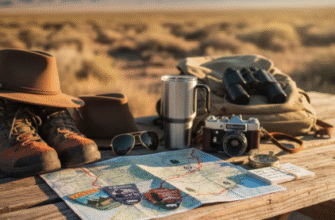
Extra water, obviously. But also: snacks with salt and carbs, because altitude messes with your appetite and blood sugar. A real flashlight, not just your phone. Paper maps, since cell service drops in and out. A blanket, because mountain weather shifts fast—I’ve been in 70°F sunshine and then a snowstorm within two hours. Sunglasses, even if it’s cloudy, because UV exposure increases about 10% per 1,000 feet. Sunscreen too, for the same reason. A tire pressure gauge, since gas station air pumps at altitude are often miscalibrated. And maybe some aspirin or ibuprofen for the headache you didn’t think you’d get but probably will.