I used to think dispersed camping was just for hardcore wilderness types who ate pine needles for breakfast.
Turns out—and this surprised me when I first started digging into Forest Service regulations about five years ago—that most National Forests actually want you out there, scattered across their land, as long as you follow a handful of rules that honestly aren’t that complicated. The whole system operates on this principle of “if there’s no sign saying you can’t, you probably can,” which feels weirdly liberating compared to the reservation-lottery hell of popular campgrounds. You’re allowed to camp pretty much anywhere that’s not explicitly restricted, typically for free, for up to 14 days in most districts (though some places cut that to 7, and a few stretch it to 21—it varies, which is annoying but manageable). The catch is you need to be at least 100 feet from water sources in most regions, you can’t set up camp on vegetation that’ll get destroyed, and you’re supposed to stay a certain distance from developed areas, which makes sense when you think about it.
Where the Maps Actually Tell You What You Need (Mostly)
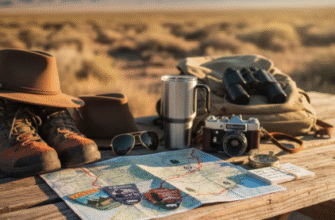
Here’s the thing: Motor Vehicle Use Maps are your real starting point. Every National Forest publishes these—they’re free on the Forest Service website or available as physical copies at ranger stations—and they show which roads you can legally drive on. Roads marked with a solid line are open to all vehicles; dashed lines mean restrictions apply, usually related to seasonality or vehicle type. If you can drive there, you can generally camp within a certain distance of that road, which is usually around 300 feet but definately varies by forest.
I’ve spent more hours than I care to admit cross-referencing these maps with apps like FreeRoam and Campendium, which aggregate user-reported dispersed sites. The frustrating part is that official maps won’t show you the actual good spots—just where you’re legally allowed to be. Local ranger districts sometimes maintain lists of popular dispersed areas, but honestly, calling them is hit-or-miss depending on whether you get someone who’s been there twenty years or someone who started last month.
You’ll also want to check for temporary closures, which can pop up due to fire danger, wildlife protection (like during elk calving season), or road conditions. The Forest Service website has a “Alerts & Notices” section for each forest that’s usually—though not always—kept current.
The Actual Mechanics of Showing Up and Not Screwing It Up
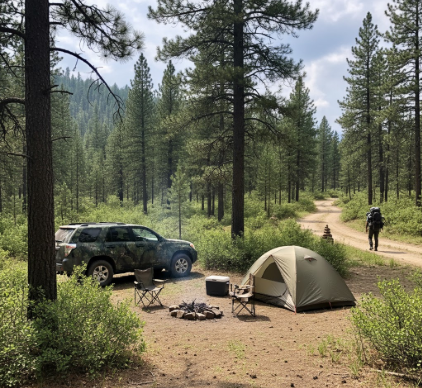
When you arrive at a potential site, you’re looking for what’s called a “disturbed” area—places where people have clearly camped before, where the ground’s already compacted and there’s usually a fire ring someone built from rocks. This matters because setting up on pristine ground damages vegetation and creates new scars that take years to recover, especially in alpine or desert environments where growing seasons are short. Wait—maybe this seems obvious, but I’ve seen plenty of people park their RV directly on wildflowers because they didn’t realize those first few weeks of spring growth are critical.
Fire regulations are weirdly specific and change constantly. During high fire danger (usually late summer), you might face a complete fire ban, or restrictions that allow only gas stoves, or rules permitting fires only in established rings. These update daily sometimes, so check the forest’s website or call the ranger district the day before you go. I learned this the hard way when I drove four hours to a spot in the Coconino National Forest only to find Stage 2 restrictions had been implemented that morning.
What Nobody Mentions Until You’re Already There Wondering Why Your Phone Doesn’t Work
Cell service is going to be nonexistent in most dispersed camping areas—I’m talking no bars, no emergency texts, nothing. Download offline maps before you leave, and honestly, consider a Garmin inReach or similar satellite communicator if you’re going solo or into really remote territory. The Forest Service doesn’t maintain these sites, so there are no toilets, no water, no trash service. Pack it in, pack it out applies to everything, including human waste, which means bringing a trowel to dig catholes at least 6 inches deep and 200 feet from water, trails, and camp.
The other thing that catches people off guard is how exposed you are to weather shifts. I guess it makes sense when you think about it—you’re not in a designated campground with some tree cover strategically preserved—but I’ve watched afternoon thunderstorms roll through dispersed sites with an intensity that would’ve been merely uncomfortable in a developed area but felt genuinely threatening when we were the tallest objects around. Check extended forecasts and have a backup plan, even if that backup is just “drive to the nearest town and get a motel room.”
Anyway, the whole experience recalibrates your relationship with public land in a way that’s hard to articulate without sounding overly romantic about it.