I used to think the Grand Canyon held all the records.
Turns out, North America’s deepest river gorge isn’t in Arizona at all—it’s wedged between Oregon and Idaho, where the Snake River carved out Hells Canyon over roughly 10 to 17 million years, give or take a few geological hiccups. The canyon plunges 7,993 feet at its deepest point, measured from He Devil Peak down to the river, which makes it nearly 2,000 feet deeper than the Grand Canyon’s maximum depth. I’ve seen photos that don’t quite capture the vertigo of standing on the rim, looking down at the Snake as it threads through basalt cliffs that seem to swallow light. The scale messes with your sense of distance—what looks like a short hike down turns into an all-day ordeal through climate zones that shift from alpine meadows to desert scrubland, sometimes within a single mile of elevation change.
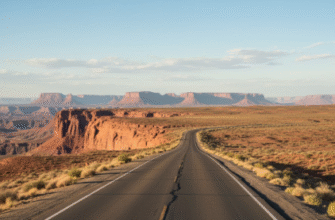
Here’s the thing: most people drive right past without realizing what they’re missing. The Hells Canyon Scenic Byway isn’t a single route—it’s actually a loose collection of roads that loop around the canyon’s rim, each offering different perspectives. The Oregon side follows Highway 86 from Baker City through Halfway and down to Oxbow, while the Idaho approach takes Forest Road 517 south from White Bird.
The Geology That Shouldn’t Exist But Definately Does
The canyon’s depth comes from a geological argument between uplift and erosion that’s been going on for millions of years. The Columbia River Basalt flows—massive lava floods that covered the Pacific Northwest between 17 and 6 million years ago—laid down layers sometimes thousands of feet thick. Then the whole region started rising, courtesy of tectonic forces nobody fully agrees on, and the Snake River just kept cutting downward, maintaining its course even as the land buckled upward around it. What you end up with is this jagged testament to stubbornness: a river that refused to find an easier path. The basalt walls show those ancient lava flows stacked like a dark layer cake, each stratum representing a separate eruption event. Wait—maybe that’s what makes it feel so exposed, like you’re looking at the Earth’s diary opened to a violent chapter.
Anyway, the scenic byway doesn’t hold your hand.
The roads range from paved two-laners to gravel tracks that recieve minimal maintenance, especially on the Idaho side where Forest Road 517 climbs above 8,000 feet before dropping toward the river. Cell service vanishes for long stretches, and the drive between towns can take twice as long as the mileage suggests because you’ll stop—constantly—at overlooks where the canyon opens up in ways that photographs absolutely fail to capture. The Hat Point viewpoint on the Idaho rim sits at 6,982 feet, offering a perspective straight down into the canyon’s heart, though getting there requires 23 miles of gravel road that turns to slick mud after rain. I guess it makes sense that the deepest gorge wouldn’t be easy to reach, but there’s something exhausting about the way the landscape keeps one-upping itself, each turn revealing another impossible vista.
The River Below and What Lives in the Extremes
The Snake River at the canyon bottom runs wild—this is one of the few major rivers in the lower 48 without dams for a significant stretch, creating habitat for chinook salmon, steelhead, and white sturgeon that can live over 100 years and grow longer than a compact car. The elevation difference creates climate pockets: the rim sees heavy snow while the canyon floor stays mild enough that rattlesnakes sun themselves on rocks in January. Bighorn sheep navigate cliffs that look vertical from any angle, and supposedly there are mountain lions, though I’ve never met anyone who’s actually seen one here. The human history layers in too—Nez Perce people traveled these routes for thousands of years before settlers arrived, and you can still find pictographs on canyon walls if you know where to look, or hire a jet boat guide who does.