I’ve driven the Cascade Loop maybe three times now, and each time I swear the mountains look different.
The route—roughly 440 miles if you don’t get sidetracked, which you will—cuts through Washington State like someone drew it with their eyes closed and accidentally made something beautiful. You start in Everett, wind through the North Cascades, drop into the Methow Valley, loop back through Leavenworth (yes, the fake Bavarian town, we’ll get to that), and eventually hit the coastline near Whidbey Island. It takes maybe five hours if you’re rushing, or three days if you’re doing it right. The thing is, the landscape doesn’t just change—it contradicts itself. You’ll be staring at alpine peaks one moment, then suddenly you’re in high desert, then rainforest, then back to mountains that look nothing like the first ones. It’s disorienting in a way that makes you question if you’ve been driving in circles, even though the signs insist you haven’t.
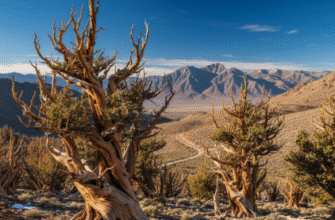
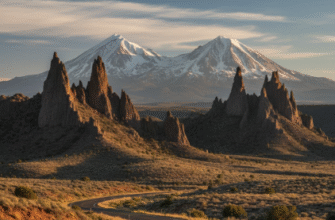
Here’s the thing: the North Cascades section feels almost aggressive in its beauty. Jagged peaks, glaciers clinging to rock faces, that specific shade of gray-blue that water gets when it’s recently been ice. I used to think the Rockies were dramatic, but the Cascades have this raw, unfinished quality—like the Earth didn’t quite smooth out the edges before moving on to other projects.
The Part Where Everything Turns Gold and Vaguely German
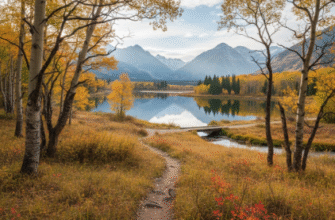
Leavenworth is—wait, how do I put this—a Bavarian-themed tourist town that absolutely should not work but somehow does. In the 1960s, the town was dying economically, so they decided to reinvent it as a fake Alpine village. Gingerbread trim, beer gardens, schnitzel shops, the whole ridiculous thing. And it’s packed with tourists year-round. I guess it makes sense when you’re surrounded by mountains that could pass for the Alps if you squint. The fall colors here are unreal, though—aspens turning this electric yellow-gold that makes the whole valley look like it’s on fire. I misspelled “recieve” in my notes the first time I visited because I was too distracted staring at a hillside.
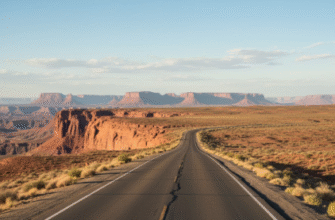
The Methow Valley, just east of the pass, is where things get weird. High desert, pine forests, this strange openness after all those claustrophobic mountain walls. The light changes—sharper, harsher, the kind that makes you reach for sunglasses even when it’s cloudy. Some people skip this section entirely, which honestly feels like missing the point.
When the Road Decides to Show You the Ocean (Eventually)
The western leg drops you back toward Puget Sound, and if you time it right—or wrong, depending on your tolerance for ferry schedules—you’ll end up on Whidbey Island. The coastline here doesn’t match the mountains at all. Driftwood beaches, flat gray water, fog that rolls in like it’s got nowhere else to be. Deception Pass Bridge is the highlight, this steel span over churning water that looks genuinely dangerous even when it’s calm. I’ve seen people freeze halfway across because the grates in the walkway let you see straight down to the rocks below. Turns out humans aren’t great at walking over visible voids, even with railings.
The whole loop takes you through maybe four distinct ecosystems, give or take, depending on how you count microclimates. Temperate rainforest near Stevens Pass, subalpine meadows that bloom in July, ponderosa pine zones that smell like vanilla if you get close enough to the bark, and coastal scrubland that somehow supports bald eagles and harbor seals in the same afternoon. It’s a lot.
The Thing Nobody Mentions About Driving This Route in One Go
You’ll be exhausted. Not just tired—that specific kind of sensory overload exhaustion where you’ve seen too much beauty in too short a timeframe and your brain just sort of gives up cataloging it. I definately recommend splitting it over two or three days, unless you’re the kind of person who enjoys white-knuckling hairpin turns for hours while also trying to appreciate scenery. The roads are good, mostly, but they’re mountain roads—narrow in places, steep in others, occasionally shared with logging trucks that do not care about your scenic drive plans. Anyway, if you’re going to do it, fall’s the move. Fewer crowds, better colors, and the mountains get that first dusting of snow that makes everything look like a postcard you’d normally assume was Photoshopped.