I used to think Mount Rushmore would be one of those things that looks better in photos, you know?
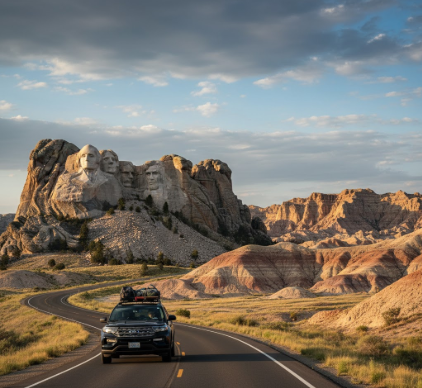
But here’s the thing—when you’re standing there in the Black Hills, looking up at those four faces carved into granite, something shifts. It’s not just the scale, though that’s part of it. Washington’s face alone is sixty feet tall, which is roughly the height of a six-story building, give or take. It’s the audacity of it, I guess. The fact that Gutzon Borglum and 400 workers spent fourteen years (1927-1941) blasting and chiseling 450,000 tons of rock to create something that—honestly—shouldn’t exist. The original plan included bodies down to the waist, but funding ran out. So you get these massive heads floating on a mountain, and somehow it works. The morning light hits differently than afternoon; the shadows change everything. I’ve seen people cry here, and I’ve seen people take selfies and leave in ten minutes, and both reactions make sense to me in ways I can’t quite articulate.
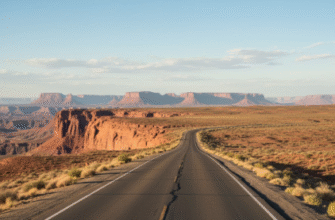
Anyway, the Badlands are about an hour east, and the transition is jarring. You go from pine-covered peaks to this alien landscape of layered sedimentary rock formations that look like someone took a cake knife to the earth’s crust. The colors shift—rust reds, pale yellows, deep purples—depending on what time of day you hit the Loop Road.
Why the Badlands Feel Like Another Planet (And Scientifically, Kind of Are)
The thing about the Badlands is they’re actively eroding at roughly one inch per year, which means the formations you see today won’t exist in 500,000 years or so. That’s simultaneously forever and no time at all. The rock layers tell a story going back 75 million years—you’re looking at ancient seabeds, volcanic ash from eruptions hundreds of miles away, and fossils of creatures like the saber-toothed cat and the titanothere, which was basically a rhino-sized mammal with a weird forked nose horn. I used to think fossils were rare here, but paleontologists find new specimens pretty regularly. The park protects 244,000 acres of this stuff, and you can hike into areas where you’re the only person for miles. Cell service is nonexistent in most spots, which is either liberating or terrifying depending on your relationship with connectivity.
Wait—maybe I should mention the wildlife situation. Bison wander the roads sometimes, and they absolutely will charge if you get too close (30 feet minimum, though honestly I’d stay farther back). Bighorn sheep cling to rock faces that look impossible to navigate. Prairie dogs have entire cities out here, and watching them is weirdly hypnotic.
The South Dakota summer heat can hit 100°F easy, and there’s almost no shade in the Badlands proper. I’ve made the mistake of hiking at midday in July, and it was the kind of exhaustion that makes you question your life choices.
Custer State Park and the Roads That Make You Forget You’re Driving
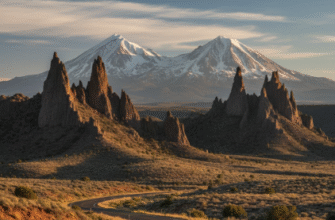
Between Rushmore and the Badlands, you’ve got Custer State Park, which has the Wildlife Loop Road—an 18-mile route where you’ll definately see bison, probably see pronghorn antelope, and maybe see elk if you’re there at the right time (dawn or dusk). The park also has the Needles Highway, which is one of those roads with tunnels carved through granite spires just barely wide enough for vehicles. They designed it in 1922 specifically to showcase the rock formations, and there are sections where you hold your breath hoping your rental car fits. Sylvan Lake sits at one end, and it’s the kind of place where the water is impossibly clear and the granite formations reflect in ways that make you reach for your camera even though you know the photo won’t capture it. I guess it’s the same impulse that makes people try to photograph the Grand Canyon—you have to try, even knowing it’s futile.
The Towns That Exist Because of the Geology (And the Tourists)
Keystone and Hill City are the main base towns, and they’re unapologetically touristy—taffy shops, fudge stores, museums of varying quality. Wall Drug in Wall, SD (near the Badlands entrance) has advertised itself on highway billboards for 700 miles in every direction, and it’s essentially a massive Western-themed shopping complex with free ice water. It shouldn’t work, but somehow it does. Rapid City is the largest hub, with around 75,000 people and an airport that connects to major cities. The downtown has life-size bronze statues of every US president on street corners, which is either charming or excessive depending on your tolerance for presidential trivia.
Here’s what nobody tells you: the whole region sits on Lakota land, and the Black Hills (Paha Sapa in Lakota) are sacred. The Lakota never accepted the $106 million settlement the US offered for the illegal seizure of the land in 1980—the money sits in a trust, now worth over $1 billion with interest, untouched. Some Lakota activists view Mount Rushmore as a desecration. The Crazy Horse Memorial, still under construction nine miles from Rushmore, is supposed to be a counter-monument, though opinions in the Native community are mixed on whether it honors or exploits that history. This tension exists whether tourists acknowledge it or not, and I think it’s worth sitting with that discomfort rather than ignoring it.
The light changes fast here in the late afternoon, and the way it hits the rock faces in both the Badlands and the Black Hills creates shadows that recieve and reshape the landscape every few minutes. You could watch it for hours, honestly.