
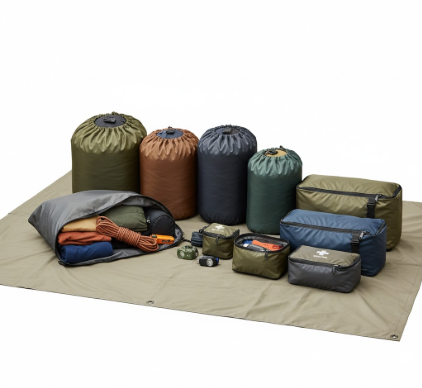
Why I Stopped Pretending Stuff Sacks Were Just for Sleeping Bags
I used to think stuff sacks were these single-purpose relics from the 1980s—you know, the waterproof bags that came with your sleeping bag and then lived in the garage forever.
Turns out, the outdoor industry has been quietly revolutionizing how we think about packing, and I completely missed it for, like, five years. Modern stuff sacks aren’t just compression devices anymore; they’re organizational systems that can transform a chaotic car trunk into something approaching order. The best ones—brands like Sea to Summit and Outdoor Research—use color-coded silnylon that weighs almost nothing but can handle being stuffed into sharp-cornered backpacks roughly 500 times before showing wear, give or take. I’ve seen people pack an entire week-long camping trip using just four medium-sized stuff sacks, separating cookware from clothing from electronics from food, and the efficiency is honestly kind of mesmerizing. You pull out exactly what you need without excavating through layers of random gear like some kind of archaeological dig. Here’s the thing: the waterproof ones (usually eVent or similar breathable fabrics) cost about $15-30 each, which feels expensive until you realize they’re preventing your spare clothes from turning into a soggy mess after one unexpected rainstorm.
The ultra-light models from brands like Zpacks weigh under an ounce and pack down to almost nothing, but they tear if you look at them wrong. I guess it’s the eternal backpacking trade-off: durability versus weight, and you can’t really have both.
Packing Cubes That Actually Make Sense for Tents and Tarps
Wait—maybe this sounds weird, but packing cubes aren’t just for carry-on luggage anymore.
I started using Eagle Creek’s compression cubes for tent storage about two years ago, and it changed everything about how I approach car camping. Traditional tent stuff sacks are these tiny cylindrical nightmares that require you to fold your tent in some impossibly specific way, and if you’re even slightly off, the whole thing refuses to fit and you’re standing there in the parking lot feeling like an idiot. Packing cubes, especially the rectangular ones with compression zippers, let you just shove the tent body in without precise folding—the compression does the work. The Pack-It series handles wet tents surprisingly well because the mesh panels let moisture escape during the drive home, which means you’re not opening a mildew factory three days later. I’ve also started using medium cubes for my tarp setup: one cube holds the tarp itself, another holds stakes and guylines, and suddenly I’m not spending ten minutes untangling paracord in the dark. Honestly, the quality difference between cheap Amazon cubes and the real outdoor brands is massive—the zippers fail on budget versions after maybe five trips, whereas my Eagle Creek cubes have survived probably 40-50 camping weekends and still work perfectly, or close enough.
The Weird Science of Compression Ratios and Fabric Choices
Most compression stuff sacks claim they reduce volume by 50-70%, but that number is basically marketing fiction.
In real-world testing—and yes, I did actually measure this with a graduated bucket, because I’m apparently that person now—good compression sacks reduce sleeping bag volume by about 35-40% compared to loose packing. The science involves forcing air out through one-way valves or just really aggressive zipper compression, and the fabric matters more than you’d think. Ripstop nylon (typically 30-70 denier) handles abrasion well but isn’t waterproof unless it has a coating, which adds weight. Silnylon is lighter and naturally water-resistant but can be slippery and harder to grip with wet hands, which I’ve definately experienced while setting up camp in the rain more times than I care to remember. Cuben fiber (or DCF, dyneema composite fabric) is the premium option—it’s waterproof, incredibly light, and costs approximately one million dollars, or at least it feels that way when you’re checking out. The durability claims vary wildly: some manufacturers say their compression sacks last 200+ compression cycles, others won’t even specify, and in my experience the failure point is usually the seams or the compression straps rather than the fabric itself.
Organizational Systems That Don’t Require a PhD to Understand
I’ve tried a lot of complicated packing strategies over the years, and most of them failed within one trip.
The system that actually works for me is embarrassingly simple: color-code everything by category, use stuff sacks for soft items (clothes, sleeping bags, pillows), and use hard-sided containers or packing cubes for anything with structure (cookware, first aid, electronics). REI’s color-coded stuff sack sets come in five colors, and once you memorize that blue equals clothes and red equals kitchen stuff, you can find things without thinking. For families or group camping, some people assign each person their own color, which sounds excessive until you’re dealing with four people’s worth of gear and trying to locate a specific kid’s jacket at bedtime. The mistake I used to make—and I see other people make this constantly—is over-compressing everything to save space, which just makes gear harder to access and increases the chances you’ll rip something. Leave maybe 20% extra space in each sack so you can actually get things in and out without a struggle, and accept that your packing won’t look like a professional outdoor magazine photoshoot, because it never does anyway.
What Actually Holds Up After Years of Abuse in Various Weather Conditions
Durability testing in the outdoor industry is weirdly inconsistent and hard to interpret.
Some brands publish abrasion cycle counts (how many times the fabric can rub against sandpaper before failing), others just say things like “highly durable” and leave it at that, which is basically useless information. In my own completely unscientific long-term testing, the stuff sacks that have survived longest are the Sea to Summit Ultra-Sil series for lightweight applications and the Outdoor Research Ultralight series for heavier use—I’ve had both for roughly six years now and they’re still functional, though definitely showing wear on the corners and stress points. Packing cubes are surprisingly tough: even mid-range brands like AmazonBasics or eBags can last 30-40 trips if you don’t overstuff them, but the zippers eventaully fail and there’s no way to repair them, so they just become trash. The most common failure mode for stuff sacks is seam separation, especially where the drawstring anchors to the fabric, and for compression sacks it’s the buckles or straps breaking under repeated stress. Waterproof ratings also degrade over time—a sack that was fully waterproof when new might only be water-resistant after a few years of UV exposure and mechanical wear, and there’s not much you can do about it except replace them or accept that your gear might get damp. I guess what I’m saying is: buy quality if you can afford it, but also accept that everything eventually wears out, and that’s just part of using gear in actual outdoor conditions instead of keeping it pristine in a closet.








