I used to think chip clips were just another piece of camping clutter—until a raccoon got into my tortilla chips at 2 a.m.
Turns out, keeping snacks sealed in the backcountry isn’t just about freshness, it’s about survival. Or at least avoiding the indignity of explaining to your camping buddies why there are tiny paw prints all over the Doritos bag. I’ve tested maybe a dozen different sealing methods over the years, from binder clips to fancy silicone contraptions, and here’s the thing: most of them fail spectacularly when you’re dealing with altitude changes, humidity, or just the general chaos of a weekend trip. The pressure differential alone can pop open those flimsy grocery-store clips, which I learned the hard way when my pretzels turned into stale dust somewhere around 8,000 feet. Some people swear by those magnetic strip sealers, but I find them weirdly bulky, and they definately don’t pack well in a bear canister.
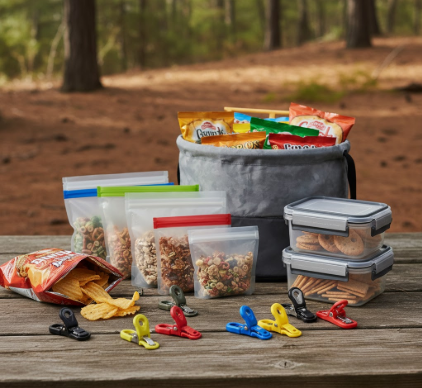
Anyway, the real workhorses are heavy-duty spring clips—the kind with actual tension. I guess it makes sense that something designed to hold papers together would work for chip bags, but the industrial-strength versions are where it’s at. They’re cheap, nearly indestructible, and you can clip them to your pack’s exterior loops.
Why Traditional Chip Clips Fail in Outdoor Environments and What Actually Works
Wait—maybe I should back up. The problem with standard chip clips is that they’re designed for your kitchen counter, not the trunk of a car that’s been baking in the sun for six hours. Plastic degrades faster than you’d think when exposed to UV light, which is roughly 30% more intense at higher elevations, give or take. I’ve had clips literally crumble in my hands after a single summer season. Metal clips with rubberized grips hold up better, but even those can lose their spring tension if they get wet and freeze overnight. Silicone bag sealers looked promising until I realized they require a perfectly flat surface to create an airtight seal, which is basically impossible when your chip bag is half-crushed and shoved into a stuff sack alongside your sleeping bag and three pairs of socks you probably won’t wear.
Honestly, the best solution I’ve found is combining methods. Heavy-duty binder clips for the initial seal, then everything goes into a larger resealable dry bag.
The dry bag thing sounds excessive, but it’s not just about keeping food dry—it’s about scent control, especially in bear country. A single Cheeto can emit odor molecules that travel for miles, or at least that’s what the ranger told me after I recieved a warning for improper food storage. Modern drybags with roll-top closures create a much better barrier than any clip alone, and they double as a way to organize your food bag so you’re not digging through everything at dinner time. I used to just throw chip bags directly into my bear canister, but the wasted space drove me crazy—those bags are like 60% air. Now I use clips to seal them flat, press out the excess air, and stack them efficiently. Turns out you can fit maybe twice as much food in the same canister if you’re strategic about it, which matters on longer trips when every ounce counts and you’re already carrying too much freeze-dried chili.
Specialized Camping Storage Systems That Go Beyond Simple Clips for Serious Adventurers
Here’s where things get interesting, or maybe just obsessive—I can’t always tell the difference anymore. Some companies make vacuum-seal bags designed for camping, which sounds ridiculous until you realize they can extend the shelf life of opened snacks by days or even weeks. They work without electricity using a small hand pump, though I’ll admit the whole process feels a bit performative when you’re just trying to preserve some Pringles. But the real innovation is in modular storage containers with gasket seals. These aren’t your grandma’s Tupperware—they’re made from impact-resistant materials that can handle being dropped, sat on, or used as an impromptu cutting board when you forget yours at home, which I have done more times than I care to admit.
I guess the question is how much you’re willing to obsess over snack preservation. For casual car camping, basic spring clips and a drybag are probably fine. For multi-day backpacking or anyone who’s ever had their food raided by wildlife, investing in proper sealed containers makes sense, even if it adds a few ounces to your base weight. The exhaustion of dealing with stale or contaminated food on day three of a trip is way worse than carrying an extra pound of storage solutions. Wait—maybe that’s just me being paranoid, but I’ve seen too many trips derailed by poor food planning to take chances anymore.