
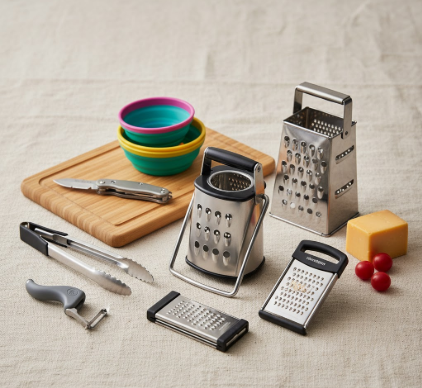
I never thought I’d care this much about grating cheese in the woods.
But here’s the thing—after you’ve spent three days at elevation eating nothing but trail mix and those weird freeze-dried meals that somehow taste like both cardboard and salt simultaneously, fresh parmesan shaved over a camp stove pasta becomes something close to religious experience. I’ve watched grown adults nearly weep over properly prepped vegetables at a campsite, which sounds ridiculous until you’re on day four of a backpacking trip and someone pulls out a compact grater and actual cheddar. The difference between eating and actually enjoying food outdoors comes down to whether you bothered to bring the right small tools, the ones that weigh maybe three ounces but transform your entire meal situation. I used to think this was bougie camping nonsense, the kind of thing you’d see in those glossy outdoor magazines where everyone’s wearing $400 jackets and nobody has dirt under their fingernails. Turns out I was wrong, or at least mostly wrong, because weight matters but so does not hating every meal you eat for a week straight.
Why Compact Graters Actually Matter More Than Your Fancy Titanium Spork
The GSI Outdoors compact grater weighs 1.2 ounces and fits inside a stuff sack with your cooking kit. It’s got this fine-grate side that works for hard cheeses and a coarser side for vegetables, which means you can shred zucchini or carrots if you’re the kind of person who brings fresh vegetables camping—and honestly, you should be, because they last longer than you’d think, maybe four or five days if you keep them dry. I’ve tested probably a dozen different camping graters over the years, and most of them fall into two categories: too flimsy to actually grate anything harder than mozzarella, or so overbuilt they weigh as much as your tent stakes.
Wait—maybe that’s harsh. Some of the heavier ones work great for car camping, where weight doesn’t matter and you can bring your entire kitchen if you want. The Sea to Summit lightweight grater sits somewhere in the middle at 0.9 ounces, though I’ve definately noticed it dulls faster than the GSI version. The holes just aren’t stamped as cleanly, which you wouldn’t think matters until you’re trying to grate cold cheese at 8,000 feet and your knuckles keep hitting the surface.
Anyway, graters are only part of the equation.
Collapsible cutting boards changed my camping life in ways I didn’t anticipate, which sounds dramatic but it’s true—before I started using one, I was chopping vegetables on top of a flat rock or, worse, on top of my bear canister lid, which is technically food-safe plastic but also seems vaguely cursed as a cutting surface. The Epicurean Non-Slip Cutting Board weighs 4.8 ounces for the small version and has these little rubber corners that actually keep it from sliding around on uneven camp tables or that wobbly log you’re using as a counter. It’s made from compressed wood fiber, so it doesn’t absorb smells the way plastic does, and I guess it makes sense that the same material properties that work in home kitchens also work outdoors, though somehow I expected camping gear to require completely different physics. You can also find ultralight silicone versions that roll up, but they’re so floppy that dicing an onion becomes this weird wrestling match where the board keeps curling at the edges.
The Small Tools That Seperate Mediocre Camp Cooking From Actually Good Meals
Here’s what nobody tells you: a good vegetable peeler matters more than most of the gear you obsess over.
The Kuhn Rikon Swiss peeler weighs half an ounce and costs maybe four dollars, and it’ll peel potatoes or carrots faster and cleaner than trying to scrape them with your pocket knife, which I absolutely used to do and which was both dangerous and incredibly inefficient. I’ve seen people bring those Y-shaped peelers camping, and they work fine I guess, but the straight Swiss-style ones take up less space in your kit and the blade stays sharper longer, something about how the metal is stamped rather than attached. You can also use the pointed tip to dig out potato eyes or bad spots on apples, which sounds minor until you’re trying to salvage produce that’s been rattling around in your pack for three days and has some questionable bruises. Light Grater makes this combination tool that’s a grater-peeler hybrid at 1.4 ounces, though honestly the peeler side is kind of mediocre and I’d rather just carry both separately since the weight difference is negligible—maybe point-three ounces total.
Collapsible colanders seem excessive until the first time you need to drain pasta water and realize you have no good options. The MSR Alpine Deluxe Kitchen Set includes a small strainer insert that nests inside their pots, which is clever design, but if you’re not using MSR cookware it doesn’t help you. The Sea to Summit X-Strainer collapses to half an inch thick and weighs 3.2 ounces, and I’ve used mine to wash vegetables, drain pasta, and once to strain debris out of creek water before filtering it, which probably wasn’t the intended use but it worked. The silicone holds up better than I expected, though after maybe fifty uses the rim started to feel slightly less rigid.
Honestly, the whole category of “camp kitchen accessories” gets dismissed as unnecessary weight by the ultralight crowd, and I get it—every ounce matters when you’re counting grams. But there’s this tipping point where saving four ounces means eating worse food for a week, and that trade-off stops making sense to me. I’d rather carry a tiny grater and actually enjoy my meals than save the weight and eat sad chunks of unmelted cheese on flavorless pasta. Your priorities might be different, and that’s fine, but after roughly fifteen years of camping trips ranging from weekend overnights to two-week expeditions, I’ve landed on a kit that includes a grater, a cutting board, a peeler, and a small silicone spatula, and the whole thing weighs less than eight ounces. Which is about the same as two energy bars, and I know which one improves my trip more.